Author: Dan Barnard

  • Three Things that Play can do in a University (or indeed anywhere) Part 3: Focus

    Three Things that Play can do in a University (or indeed anywhere) Part 3: Focus

    [et_pb_section admin_label=”section”][et_pb_row admin_label=”row”][et_pb_column type=”4_4″][et_pb_text admin_label=”Text” background_layout=”light” text_orientation=”left” use_border_color=”off” border_color=”#ffffff” border_style=”solid”]

    In the first of this series of 3 blogs I identified 3 things that play can do to help bring university students to a place where they are ready to learn:

    1. Play can help people bond with each other; to relax in each other’s company
    2. Play can energise and awaken people
    3. Play can focus people

    In the last blog I focused on play to energise and on strategies to cope with when my students are either not yet awake (my 9am Monday lectures) or are flagging part way through the class/Semester. Sometimes though I face the reverse problem: there is a lot of energy in the room but it is dispersed and scattered; it dissolves into giggling or discussion that distracts from the task in hand. At these moments certain types of play can be used to get the group into a focused state of mind.

    Play to Focus

    The Counting Game

    This can be played standing in a circle or seated around a seminar table. The aim of the game is to count aloud to 20 (or another number that you chose). Each person must speak at least once. If two people speak at the same time then you go back to 1. It is very simple but can produce an extraordinary sense of focus.

    Story Games

    These can be played going around a circle but it can be more fun (and keep people more on their toes) to throw a soft ball from player to player to indicate who should speak next. You can play The One Word at a Time Game where the group tells a story one word at a time. Or you can play Fortunately/Unfortunately where each player says one sentence of the story, alternating between sentences that start “Fortunately….” and sentences that start “Unfortunately….”

    The Chair Game

    This game sits part way between Focusing and Energising and is one of my favourite games. You need a clear space and as many chairs as players. Each player takes a chair and sits somewhere in the room with all the chairs facing in different directions. A player is selected and leaves their chair, going to the other end of the room. They then have to walk (sometimes with knees together to slow them down) and sit in an empty chair. The aim of the rest of the players is to stop the walker sitting down. They do this by getting up and moving chairs. The rule is that once your bum has left the seat you have to go and you cannot return to your own seat once you have left it. If the walker manages to sit down then the last player left standing becomes the new walker. The game is very simple but the strategies and teamwork that develop are very interesting – and the group learns that the more calmly they play, the more likely they are to win. I sometimes part way through the game introduce a rule that it has to be played in silence.

    A Post Script: Learning Structured Through Play

    What I haven’t really touched on in this blog series is how curriculum learning itself can happen through play. I learned so much about this and the different technologies that can support it at the recent Playful Learning conference at Manchester Metropolitan University. It’s a really rich area and something I want to explore further this coming semester.

    [/et_pb_text][et_pb_post_nav admin_label=”Post Navigation” in_same_term=”off” hide_prev=”off” hide_next=”on” prev_text=”Three Things that Play can do in a University (or indeed anywhere) Part 2: Energising and Awakening” use_border_color=”off” border_color=”#ffffff” border_style=”solid”] [/et_pb_post_nav][/et_pb_column][/et_pb_row][/et_pb_section]
  • Three Things that Play can do in a University (or indeed anywhere) Part 2: Energising and Awakening

    Three Things that Play can do in a University (or indeed anywhere) Part 2: Energising and Awakening

    [et_pb_section admin_label=”section”][et_pb_row admin_label=”row”][et_pb_column type=”4_4″][et_pb_text admin_label=”Text” background_layout=”light” text_orientation=”left” use_border_color=”off” border_color=”#ffffff” border_style=”solid”]

    In my previous blog I identified 3 things that play can do to help bring university students to a place where they are ready to learn:

    1. Play can help people bond with each other; to relax in each other’s company
    2. Play can energise and awaken people
    3. Play can focus people

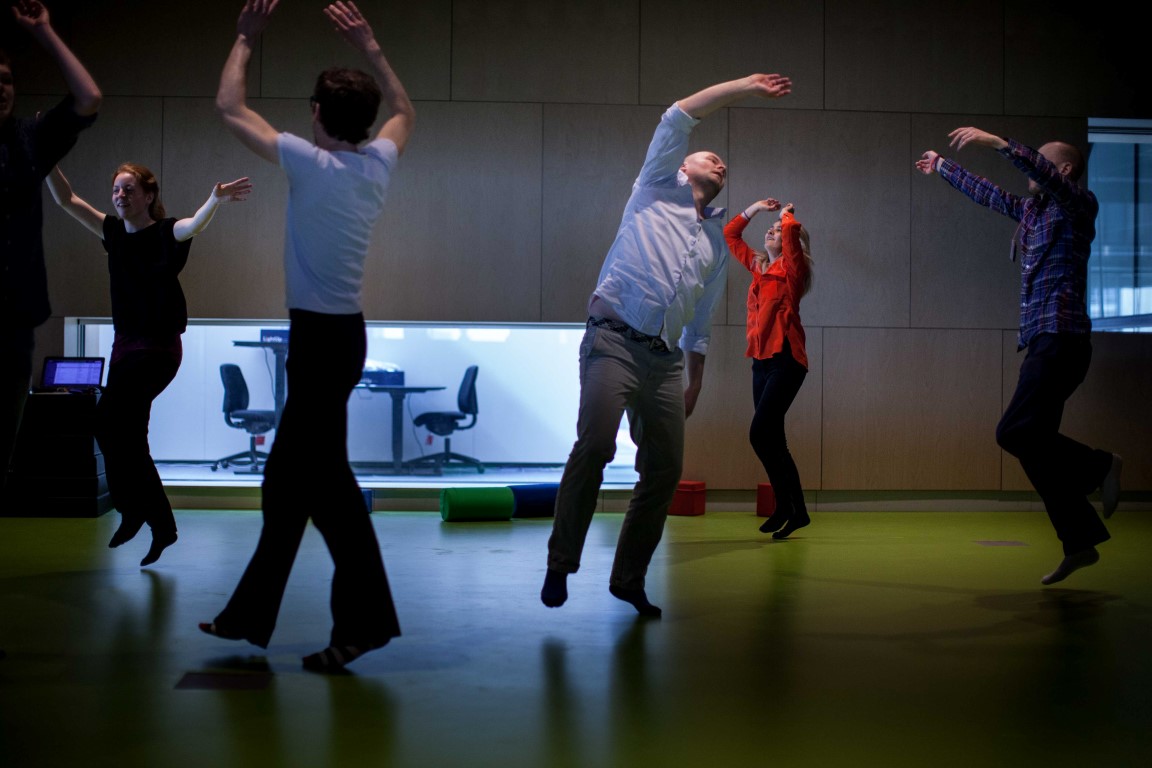
    In this blog I’m going to focus on energising and awakening. This semester I have to teach a lecture series at 9am on Monday mornings. I can pretty much guarantee that a significant proportion of my students will not be fully alert and ready to work at that time. Also in my afternoon classes I encounter post-lunch slumps and during our long semesters a fatigue that all the lecturers recognise sets in about 2/3 of the way through the term. Again, there are root causes of these things that need to also be addressed (noisy student accommodation, a habit of not eating breakfast etc) but 5 minutes of play can do so much to energise and enliven people, whether it be at the start of a 9am lecture or half way through a 3 hour class

    [/et_pb_text][et_pb_image admin_label=”Image” src=”http://www.counterplay.org/wp-content/uploads/2016/08/IMG_2701-Medium.jpg” show_in_lightbox=”off” url_new_window=”off” use_overlay=”off” animation=”left” sticky=”off” align=”left” force_fullwidth=”off” always_center_on_mobile=”on” use_border_color=”off” border_color=”#ffffff” border_style=”solid” /][et_pb_text admin_label=”Text” background_layout=”light” text_orientation=”left” use_border_color=”off” border_color=”#ffffff” border_style=”solid”]

    Play to Energise

    Thumb Wars

    Thumb wars are a short, fun game that can be played in lecture halls or other contexts where people are sitting down. You can play with a partner or, after a warm up of that, it can be fun to play against two people at once, interlocking your fingers to do this. It is good to remind people with this game to be careful to not get overexcited and hurt each other.

    Paper Scissors Stone

    If I want people to do a pair exercise where each has a different role, I sometimes get them to play paper scissors stone (in a best of 3) to decide who should have which role. Or obviously it can be played just for fun.

    Circle Clapping Games

    In a room where a group can stand in a circle, it can be great to play circle clapping games to energise the group. Zip Zap Boing is very popular – you can see the rules here

    Another game I really like is where a clap is passed around the circle but each person must turn and face the person next to them, make eye contact and they clap together and this clap is passed around the circle. Once this has been established (it can take a while to get used to clapping at exactly the same time but this can create a real complicity) you can add a rule where the receiver of the clap can choose to clap a second time (and the person who has passed the clap to them must clap with them) and then the direction of the clap changes. A third rule can then be introduced where the clap can be passed across the circle – you just need to get the eye contact of the person you are passing it to to make sure you can clap together.

    Running Games

    Running games can also energise (as long as they are not played for too long). Any of the variations on Tag can work for this, as can other games. Two of my personal favourites include Ship Ahoy (my students love being pirates) and Giants, Wizards and Elves

    [/et_pb_text][et_pb_post_nav admin_label=”Post Navigation” in_same_term=”off” hide_prev=”off” hide_next=”on” prev_text=”Three Things that Play can do in a University (or indeed anywhere) Part 1: Bonding” use_border_color=”off” border_color=”#ffffff” border_style=”solid” /][/et_pb_column][/et_pb_row][/et_pb_section]

  • Three Things that Play can do in a University (or indeed anywhere) Part 1: Bonding

    Three Things that Play can do in a University (or indeed anywhere) Part 1: Bonding

    [et_pb_section admin_label=”section”][et_pb_row admin_label=”row”][et_pb_column type=”4_4″][et_pb_text admin_label=”Text” background_layout=”light” text_orientation=”left” use_border_color=”off” border_color=”#ffffff” border_style=”solid”]

    Counterplay was a brilliant experience for me in so many ways, and made a big difference to how I approach things both as an artist and a teacher. I’m going to focus in a series of 3 short blogs on some ways it has affected my teaching and inspired me to share these ideas with others at my university.

    The biggest thing that Counterplay did for me was probably to give me the faith to do some of the things I had already wanted to do but hadn’t because I somehow felt like they weren’t productive or useful enough. But then I realised that play can do 3 key things that can bring students to a place where they are ready to learn:

    1. Play can help people bond with each other; to relax in each other’s company
    2. Play can energise and awaken people
    3. Play can focus people

    Obviously there are loads of other things that play can do, and Bernie de Koven has written eloquently about many of them. And of course, play, like art, doesn’t need to have any purpose beyond itself. But these are the things I’m going to focus on in these blog posts, starting with relaxation and bonding.

    Relaxation and Bonding

    IMG_2093 (Medium)When my students arrive in the first semester of their first year, they are terrified. Terrified because they are away from home, terrified of university, terrified of us the teachers and most of all terrified of how they will be judged by their fellow students, the impression that they will make on each other, whether anyone will want to be their friend, whether anyone will fancy them. In this state of fear it is difficult for them to learn anything. Play can go a long way towards banishing this fear by breaking down barriers, helping people laugh together, learn about each other, complete a shared goal together or just be silly and overcome social awkwardness. Its not only at the start of the first year that students need to bond. At the start of every new semester they are in new groups, sometimes with people they’ve never worked with. And sometimes during a semester itself the pressures of group work can start to rupture a group. Although the causes of these ruptures need to be addressed in themselves, play can help complete this healing process.

    Play to Bond

    The Map Exercise

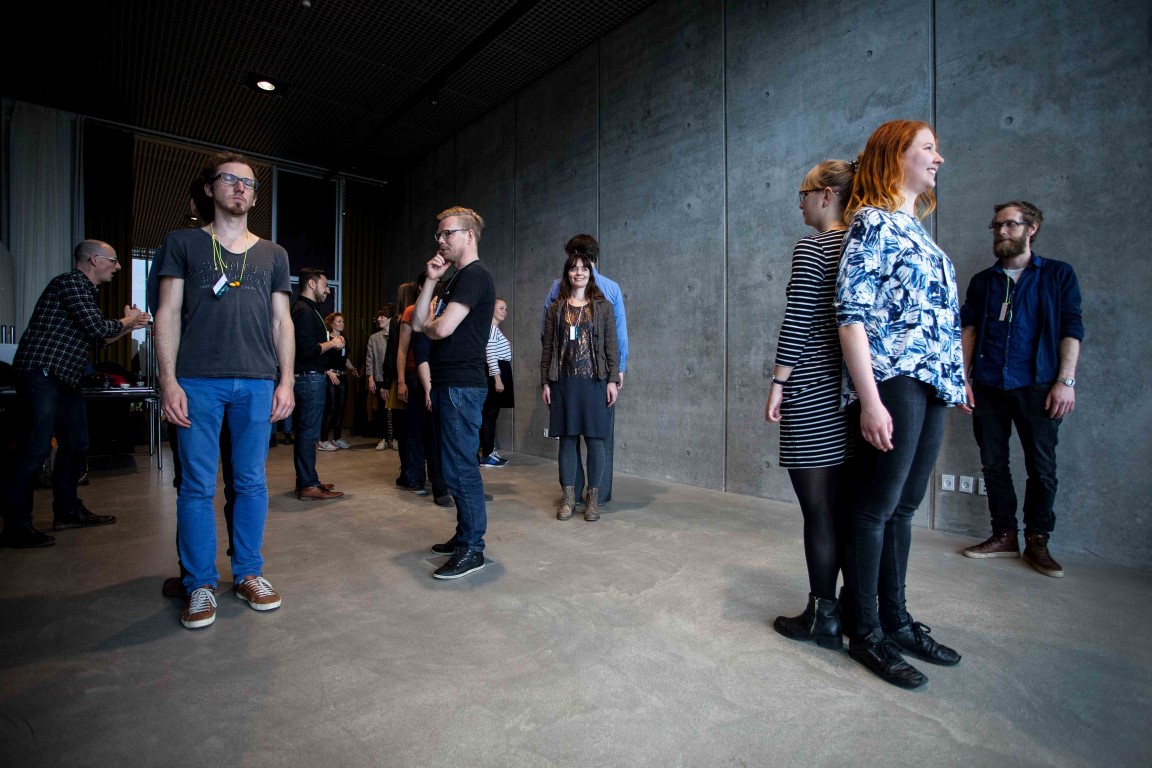
    This is my favourite bonding activity and I learned it from the theatre director Ian Rickson. By the end of it I (and the rest of the group) know everyone’s names, have an insight into who they are and everyone feels closer together. You can feel the atmosphere change as the activity progresses. Start by establishing that the room represents a map of the world and indicate which direction north, south, east and west are. I always say that the UK (or whichever country I’m in) is enlarged so it doesn’t get too cramped! The activity has 4 phases:

    Go to the place in the world where you were born. Then everyone in turn (you can work north to south, east to west or whatever) says their name, the place where they were born and 1 thing about their name: either what it means, why it was given to them or how they feel about it.
    Go to the place in the world where you were when you were 5 years old. Then everyone it turn says their name again, where they are now and either their first memory or an early memory.
    Go to the place in the world where you were when you were 15 years old. Then everyone in turn (you can work in a different direction each time) says their name, where they are now and briefly shares what it was like being 15 and what they wanted or what their biggest ambition was at this time.
    Go to the place where you slept last night (at this point normally everyone comes closer together). Everyone in turn says their name, where they are and briefly how they feel about this place.

    [/et_pb_text][et_pb_image admin_label=”Image” src=”http://www.counterplay.org/wp-content/uploads/2016/08/IMG_2192-Medium.jpg” show_in_lightbox=”off” url_new_window=”off” use_overlay=”off” animation=”left” sticky=”off” align=”left” force_fullwidth=”off” always_center_on_mobile=”on” use_border_color=”off” border_color=”#ffffff” border_style=”solid”] [/et_pb_image][et_pb_text admin_label=”Text” background_layout=”light” text_orientation=”left” use_border_color=”off” border_color=”#ffffff” border_style=”solid”]

    Two Truths One Lie

    This game is quite well known. I like to do it if I don’t have time to do the map exercise or perhaps at the start of semester 2 when I have a new class. In a circle everyone says their name and two things about themselves that are true and one thing that is a lie. You can play it in different ways – either everyone can guess immediately after the person has spoken which was the lie or, at the end of the circle people can mingle and guess about each other, depending on the sort of dynamics you want to create. There is a variation where you can play it twice, inviting people to try and give a different impression of themselves than they gave before – I find this useful with students as they are often trying to project something about themselves and it can be good to suggest they show a different side to themselves.

    Name Tag

    I sometimes play this after one of the above as it gets people to make active use of the names they have learned. It can help to play a short game of normal tag as a warm up. In name tag, the person who is being chased by IT can call out the name of someone else in the group, who immediately then becomes IT. It can get quite chaotic but is fun and definitely makes you try to remember the names of all the people around you.

    Hug Tag

    Hug Tag works like normal tag except from that you can escape IT by hugging someone else. Additional rules are that you can’t hug someone for more than 5 seconds, you can’t hug the same person twice in a row and IT can’t hang around a hugging pair waiting for 5 seconds to be up.

    [/et_pb_text][et_pb_post_nav admin_label=”Post Navigation” in_same_term=”off” hide_prev=”on” hide_next=”off” next_text=”Three Things that Play can do in a University (or indeed anywhere) Part 2: Energising and Awakening” use_border_color=”off” border_color=”#ffffff” border_style=”solid” /][/et_pb_column][/et_pb_row][/et_pb_section]