Tag: Participation

  • The double-edged sword of the modern library

    The double-edged sword of the modern library

    [et_pb_section bb_built=”1″][et_pb_row][et_pb_column type=”4_4″][et_pb_text _builder_version=”3.0.89″ background_layout=”light”]

    The classic library is a conundrum in and of itself, a building dedicated to the imaginary worlds of fiction, of curious characters from the minds of authors and playwrights, and a space where you are asked not utter a word louder than your breath, and where more angry stares hit your eyes than at a busy train station.

    For us CounterPlayers the library is a valued venue, it is a space for us to explore our ideas, and moreover it’s a collaborator and friend that enables our annual festival to become a reality. My job as a volunteer was to make sure that the allocated rooms and spaces where ready for both participants and hosts, and required both a laptop in one arm and a friendly face when walking around asking students, library guests and the like to kindly leave the space open for our festival.

    Luckily for me, most students seemed to understand the relevance of a debate staged in the library, others, however, had their doubts as to what a festival of play was doing, first of all in the library, and second of all, why it involved adults.

    It was and still is curious to me how the users of such a vast mecca of literature and knowledge are unaware of their own need and desire to play. Are we not, as readers, part of an adventure that far exceeds ordinary life? I would even argue that the pages of non-fiction and newspaper as well as literature require us to step out of our immediate present and let words form the bridge between us and somewhere else. To learn and experience is to take a leap of faith.

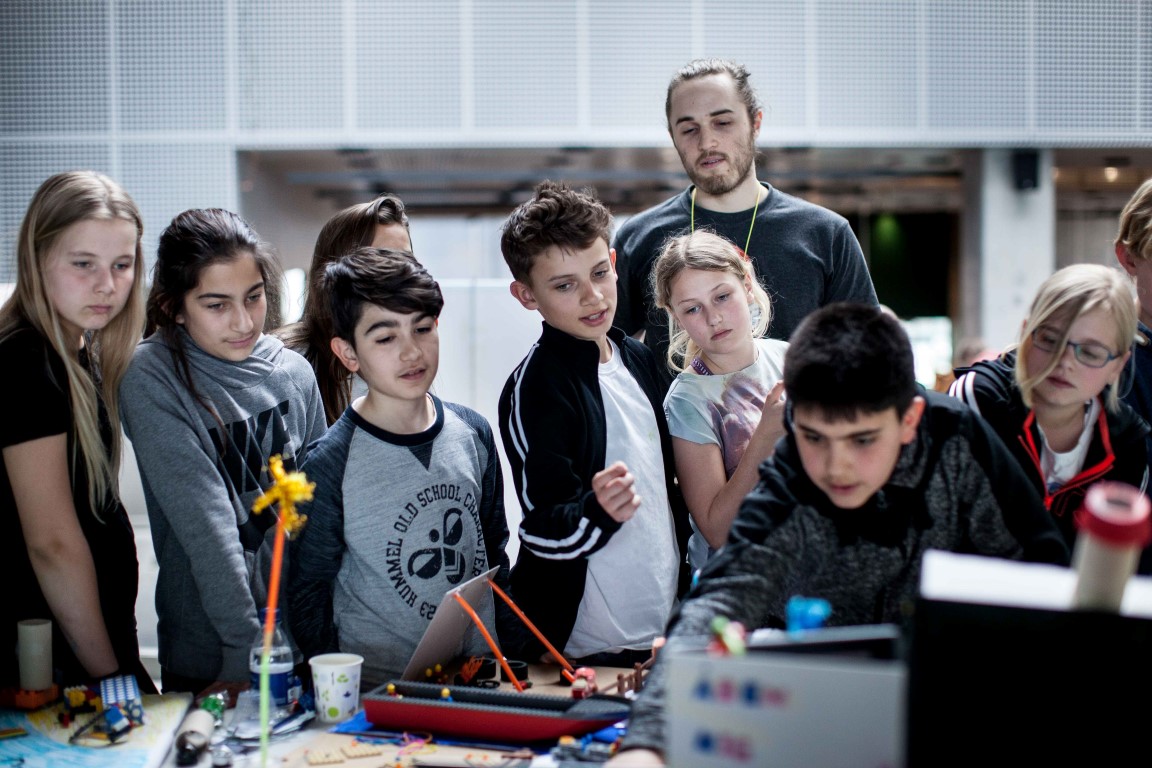
    Exactly this dilemma was what brought the participants and listeners to the debate in the spring. What are the possibilities of the library, and how do we change the norms adherent to it? Kindergardens, schools and organizations as well as us at CounterPlay, wish for the library to evolve into a room and community that embraces imagination not just in the written word.

    Here on our blog I wish to take the question even further: how is it that the library, the home of books, adventures, fairy princesses, epic wars and deceptive murderers is a space of silence? Even the division of a children’s wing indicate a need to separate the immediate imagination and play (and noise?) of children from the seriousness of the adult reader. But I believe that just as much action is present within the mind of the adult reader, and thus the physical space of the library, the seriousness and silence seems to be in clear opposition to the realm of the inner experience.

    Perhaps the library should be a place for us to explore and to play, where children are free to move around and experience narrative in their own way? Perhaps a place where old prejudices can be challenged by who knows – a laughing kid, a bubble show, a reading or performance art? Even smaller libraries without the resources for separate rooms for play or immersion might open up the space for a little less quiet and a little more laugh.

    We all here at CounterPlay dare you to challenge the conventions of the home of the written word and accept, show and respect the inner need for play and imagination.

    [/et_pb_text][/et_pb_column][/et_pb_row][/et_pb_section]
  • Playing With Power – an Invitation

    Playing With Power – an Invitation

    [et_pb_section admin_label=”section”][et_pb_row admin_label=”row”][et_pb_column type=”4_4″][et_pb_text admin_label=”Text” background_layout=”light” text_orientation=”left” use_border_color=”off” border_color=”#ffffff” border_style=”solid”]

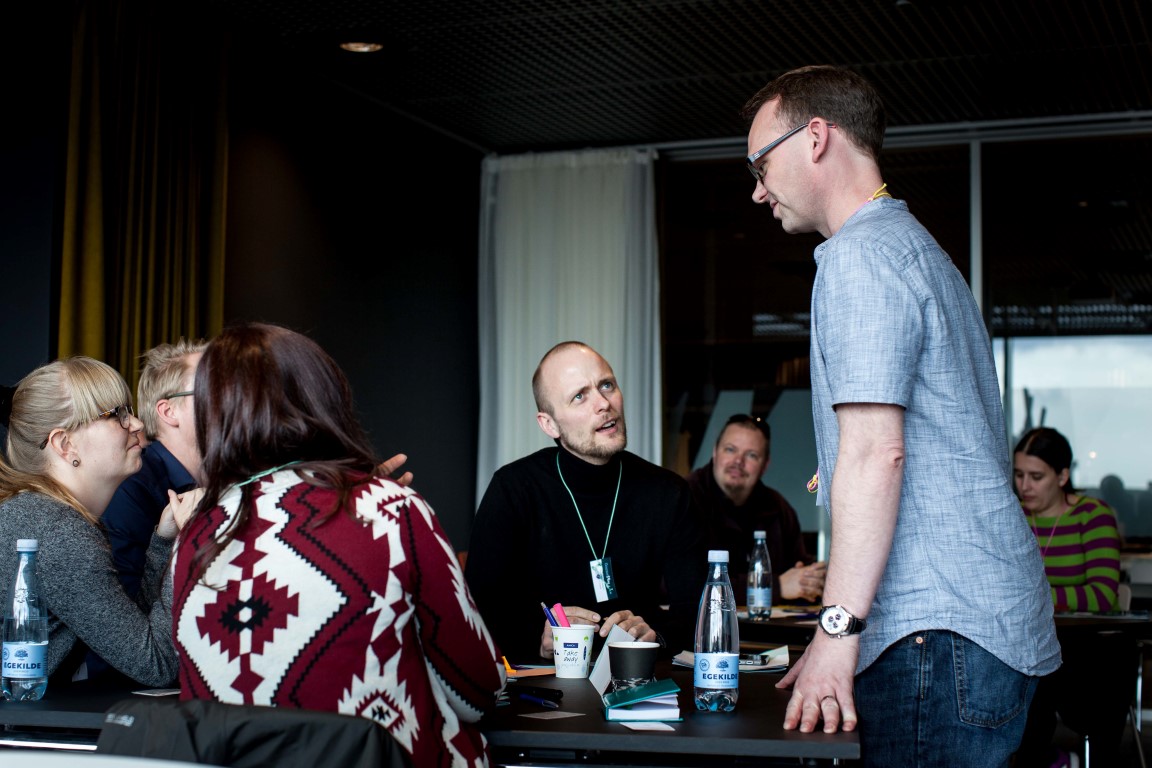
    [Image text: Alex is a friendly guy, but what if he was not? How could this pose be a demonstration of power?]

    The theme for CounterPlay ’17 is “The Power of Play“, and I urge you to not solely understand it in the “usual” sense. I believe the phrase is commonly used to point towards, well, “the power of play”, the way play is powerful and holds transformative potential in a wide range of situations throughout our lives.

    I obviously agree that play is massively powerful, and I think this is, in part, due to the participatory nature of play, which again means play is powerful because it invites us to play with power:

    This is to say that if there is not a shift of power, if those expected to participate are not powerful (to a never precisely defined extent), “at some point participation simply stops being participation”. Participation, then, should not be used as a glossy term to hide the fact that often, there is no real power for the socalled participants. Exactly the same can be said about play and playfulness. Do you want to cultivate a playful culture in the workplace? Well, it can’t be sugarcoating (like ping-pong tables or other gimmicks), it needs to be embedded in the fabric, and it requires actual power and decision making to be put in the hands of those you expect to play along.

    I reiterated this in my discussion of “playwashing“:

    play is only real if it entails real participation and participation is only real if it entails a redistribution of power among the participants. Consequently, an organization is not playful if there is not a connection between the proclaimed presence of play in the organization and the distribution of power.

    Do the opportunities to play (if they are at all there) come with real agency and influence? Are employees frequently engaging in negotiations of rules and purpose of the work they’re doing? Is there a real sense of ownership and a shared responsibility?


    [/et_pb_text][et_pb_image admin_label=”Image” src=”http://www.counterplay.org/wp-content/uploads/2017/01/IMG_2386-Medium.jpg” show_in_lightbox=”off” url_new_window=”off” use_overlay=”off” animation=”left” sticky=”off” align=”left” force_fullwidth=”off” always_center_on_mobile=”on” use_border_color=”off” border_color=”#ffffff” border_style=”solid” /][et_pb_text admin_label=”Text” background_layout=”light” text_orientation=”left” use_border_color=”off” border_color=”#ffffff” border_style=”solid”]

    This way of framing or understanding play, as inherently participatory, subversive, rebellious even, is rapidly becoming more important as politicians all around the world are increasingly ignoring or downright limiting our opportunities for civic participation and, eventually, our freedom. As Bernie DeKoven has told us time and again, “play is freedom” and games are metaphors that allow us to “imagine freedom“. Clay Mazing shows it. Miguel Sicart writes about it:

    Play is like language— a way of being in the world, of making sense of it. It takes place in a context as a balance between creation and destruction, between adherence to a structure and the pleasures of destruction. Playing is freedom.

    Playfulness frees us from the dictates of purpose through the carnivalesque inheritance of play. Through playful appropriation, we bring freedom to a context.

    Thomas S. Henricks touch upon similar perspectives:

    If play has a central quality, it is that this behavior (as action, interaction, and activity), first of all, celebrates people’s abilities to craft their own responses to circumstances free from interference. That distinctive process of making and interpreting, what I have called ascending meaning, is connected intimately to the project of human freedom.

    I’m convinced that playful people are better equipped to play with power, to challenge power, and to insist on freedom, but I also believe we need to explore this in more breadth and depth. Following our logic of cross-pollination and deploying a kaleidoscopic view on play is what leads me to the “invitation” part of this (already too long) post:

    Let’s collect and share bits and pieces that demonstrate the power of play to play with power.

    I’m thinking we could do a series of blog posts right here, but as always, I’m open to any suggestion that will make us, as a community, more knowledgeable on the power of play. Who knows, maybe it can lead to real, powerful and playful activism?

    Do you want to play along? Will you share your experiences, insights and ideas?

    [/et_pb_text][/et_pb_column][/et_pb_row][/et_pb_section]
  • (Don’t do) Playwashing

    (Don’t do) Playwashing

    [et_pb_section admin_label=”section”][et_pb_row admin_label=”row”][et_pb_column type=”4_4″][et_pb_text admin_label=”Text” background_layout=”light” text_orientation=”left” use_border_color=”off” border_color=”#ffffff” border_style=”solid”]

    Image credits: Alex Proimos via Wikimedia


    [/et_pb_text][et_pb_text admin_label=”Text” background_layout=”light” text_orientation=”left” use_border_color=”off” border_color=”#ffffff” border_style=”solid”]

    “It’s greenwashing when a company or organization spends more time and money claiming to be “green” through advertising and marketing than actually implementing business practices that minimize environmental impact. It’s whitewashing, but with a green brush” – Greenwashing Index 

    [/et_pb_text][et_pb_text admin_label=”Text” background_layout=”light” text_orientation=”left” use_border_color=”off” border_color=”#ffffff” border_style=”solid”]

    Inspired by the fairly well known concept “greenwashing”, I have coined a similar phrase that has proven useful to me:

    Playwashing

    So far, I have only used it casually in conversations, but building on the description of greenwashing above, I suggest the following working definition:’

    “Playwashing describes the situation where a company or organization spends more time and money claiming to be “playful” through advertising and marketing than actually implementing strategies and business practices that cultivate a playful culture in said organization”

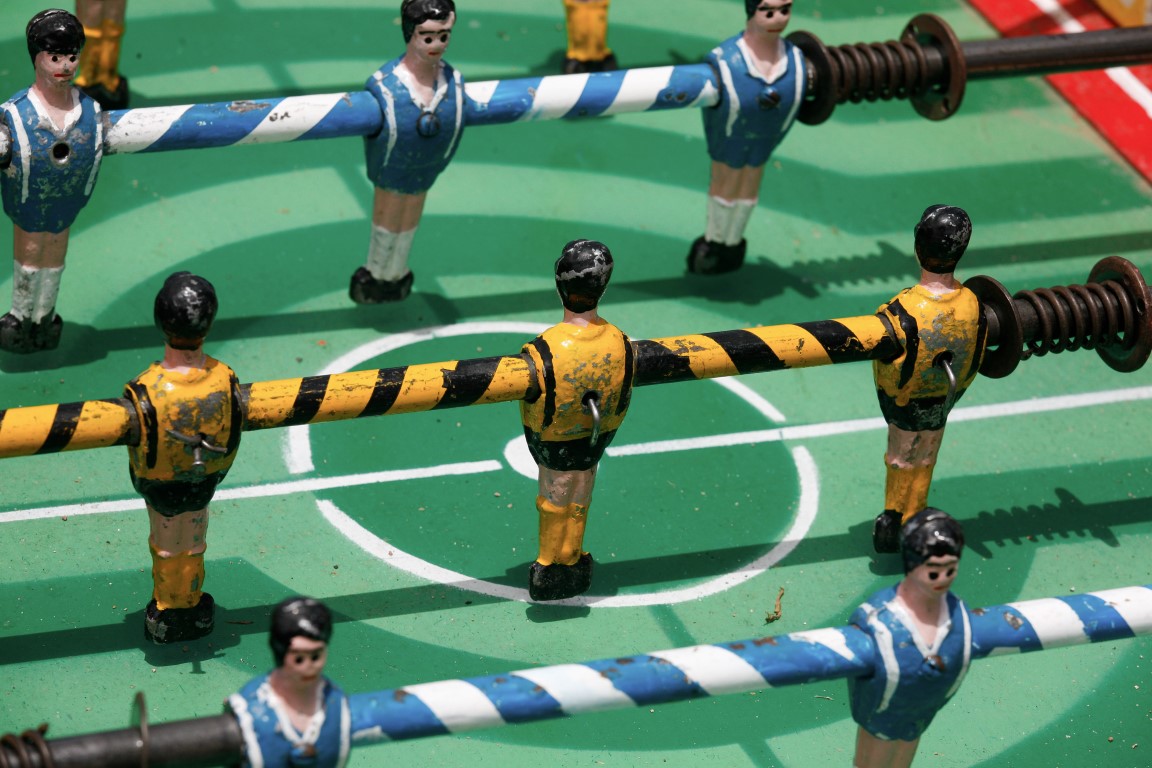
    With this initial definition (which very much is up for debate), I consider it playwashing when a company conveys the image of allowing its employees to engage in work that share central characteristics with play without living up to this promise. You may be allowed to play a game at work, but this often happens in confined spaces and disconnected from the actual work. The popular foosball table is a good example of this, as it signifies play, but how often does the activity of playing this game have deeper ties to company culture?

    Like greenwashing, playwashing paints an inaccurate or downright false picture of the organization in question. This is a dishonest practice and hence a problem in itself. It is used in many forms of branding, including that which is directed at potential future employees – “employer branding”. Many people might want to work in a playful organization, but will likely be disappointed if this amounts to no more than a ping-pong table or video games to be played during breaks.

    img_1602-mediumIn the best case, these games provide people with a much needed break, whereas in the worst case it is used to disguise or sweeten what could perhaps most accurately be described as exploitation; Mere sugarcoating on an otherwise unacceptable proposal, a means of coercion to make people work harder and more. Yes, the games can be a first step in a more playful direction, and they can certainly be part of an ambitious playful strategy (I recall the notion of “the necessary hypocrisy” from organization studies: you say something that is not yet aligned with your actions, but you say it to guide you in that direction). If they exist in isolation, however, disconnected from management decisions, company culture and daily work practices, it is probably playwashing.

    Playwashing is not illegal, of course, but it doesn’t have much to do with the primary purpose of CounterPlay: to cultivate playful communities, and, in turn, contribute to a more playful world. I suspect that most forms of playwashing doesn’t do much to help us achieve that goal. It is common and tempting to hope for easy solutions to complex problems, and many seem to believe that games or technologies will work wonders if simply dropped into whichever context (be it work, education or life in general). In most situations, it won’t. It will only lead to disappointment and frustration if there is no willingness to address the underlying problems and pursue real transformation.

    Do you want to cultivate a playful culture in the workplace? Well, it can’t be sugarcoating (like ping-pong tables or other gimmicks), it needs to be embedded in the fabric, and it requires actual power and decision making to be put in the hands of those you expect to play along.

    As I have argued elsewhere, play is only real if it entails real participation and participation is only real if it entails a redistribution of power among the participants. Consequently, an organization is not playful if there is not a connection between the proclaimed presence of play in the organization and the distribution of power. In fact, the foosball table might be a more appropriate metaphor than I first imagined, since the players are all fixed in one place, without any real maneuverability or agency, they can only go round and round in circles, while controlled by someone else.

    Do the opportunities to play (if they are at all there) come with real agency and influence? Are employees frequently engaging in negotiations of rules and purpose of the work they’re doing? Is there a real sense of ownership and a shared responsibility?

    There are many other characteristics of play to look for, of course, that we can use to determine if playwashing is taking place in any given organization. Does a culture of fear permeate the organization? Do employees dare to experiment, take risks and suggest new solutions? Is there room for creativity and serendipity? Is silliness allowed?

    We experience a growing interest in play these years, which is mostly good, but I find reason to question how much of it is sincere and founded in a deeper understanding of and respect for play. Maybe the notion of “playwashing” can be a useful tool to examine the depth of engagement with play; is it real or only skin deep, a decoy, a simple tool to avoid asking the hard questions and making more complex changes?

    [/et_pb_text][/et_pb_column][/et_pb_row][/et_pb_section]
  • Play as Participation

    Play as Participation

    [et_pb_section admin_label=”section”][et_pb_row admin_label=”row”][et_pb_column type=”4_4″][et_pb_text admin_label=”Jenkins” background_layout=”light” text_orientation=”left” use_border_color=”off” border_color=”#ffffff” border_style=”solid”]

    It might seem trivial to say that in order to play, you have to participate in some way.

    The apparent triviality of that statement changes as soon as you start looking a bit deeper at the meaning of participating, though. Participation, playful or not, is indeed a contested and complex phenomenon and ” we must thus keep in mind the multiple motivations for engaging in participatory processes, and this involves understanding cultural participation as a multidimensional concept” (Reestorff, Fabian, Fritsch, Stage, Stephensen).

    Looking to a popular definition, Henry Jenkins and compatriots think of “participatory culture” like this:

    A participatory culture is a culture with relatively low barriers to artistic expression and civic engagement, strong support for creating and sharing creations, and some type of informal mentorship whereby experienced participants pass along knowledge to novices. In a participatory culture, members also believe their contributions matter and feel some degree of social connection with one another (at the least, members care about others’ opinions of what they have created).

    As I mentioned in “The Play Community“, this covers a lot of what we’re hoping to achieve with CounterPlay. When seen like this, participation requires more than just being a more or less active attendant at any kind of event or activity or play session. You have to express yourself, make contributions, become part of shaping a meaningful community and care about the contributions of others.

    [/et_pb_text][et_pb_image admin_label=”Image” src=”http://www.counterplay.org/wp-content/uploads/2016/06/IMG_1279-Medium.jpg” show_in_lightbox=”off” url_new_window=”off” use_overlay=”off” animation=”left” sticky=”off” align=”left” force_fullwidth=”off” always_center_on_mobile=”on” use_border_color=”off” border_color=”#ffffff” border_style=”solid”] [/et_pb_image][et_pb_text admin_label=”Carpentier” background_layout=”light” text_orientation=”left” use_border_color=”off” border_color=”#ffffff” border_style=”solid”]

    There is an underlying theme at play, namely that you must have agency to really participate. As argued by Nico Carpentier, “the key defining element of participation is power”:

    The debates on participation in institutionalized politics and in all other societal fields, including media participation, have a lot in common in that they all focus on the distribution of power within society at both the macro- and micro-level

    This is to say that if there is not a shift of power, if those expected to participate are not powerful (to a never precisely defined extent), “at some point participation simply stops being participation”. Participation, then, should not be used as a glossy term to hide the fact that often, there is no real power for the socalled participants. Exactly the same can be said about play and playfulness. Do you want to cultivate a playful culture in the workplace? Well, it can’t be sugarcoating (like ping-pong tables or other gimmicks), it needs to be embedded in the fabric, and it requires actual power and decision making to be put in the hands of those you expect to play along.

    If we stay with Carpentier a little bit longer, he covers another shared trait between play and participation (without mentioning play, that is):

    These kinds of reflections allow participation to be seen as invitational, which implies that the enforcement of participation is defined as contradictory to the logics of participation, and that the right not to participate should be respected. 

    Participation can’t be forced, but only invited. Most play scholars agree with Carpentier, and often points back to Huizinga’s “Homo Ludens” when doing so:

    First and foremost, then, all play is a voluntary activity. Play to order is no longer play: it could at best be but a forcible imitation of it. By this quality of freedom alone, play marks itself off from the course of the natural process

    [/et_pb_text][et_pb_image admin_label=”Image” src=”http://www.counterplay.org/wp-content/uploads/2016/06/IMG_1510-Medium.jpg” show_in_lightbox=”off” url_new_window=”off” use_overlay=”off” animation=”left” sticky=”off” align=”left” force_fullwidth=”off” always_center_on_mobile=”on” use_border_color=”off” border_color=”#ffffff” border_style=”solid”] [/et_pb_image][et_pb_text admin_label=”Henricks” background_layout=”light” text_orientation=”left” use_border_color=”off” border_color=”#ffffff” border_style=”solid”]

    All of this, the voluntary participation and the actual agency is also covered in Thomas S. Henrick’s most recent book, “Play and the Human Condition“, where he “celebrates the role of agency in human affairs”:

    play events capitalize on people’s capacities for creativity, or externalization. Nothing exists— at least, nothing that is playful in character— until the participants decide to invest the moment with this quality. When they withdraw that energy and enthusiasm, the moment dies. Play makes people aware of their capacities for social agency.

    To me, this is the essence of play: to be able to playfully participate, and not just in more or less arbitrary acts of play, but in society and life as a whole.

    [/et_pb_text][/et_pb_column][/et_pb_row][/et_pb_section]