Tag: People

  • The double-edged sword of the modern library

    The double-edged sword of the modern library

    [et_pb_section bb_built=”1″][et_pb_row][et_pb_column type=”4_4″][et_pb_text _builder_version=”3.0.89″ background_layout=”light”]

    The classic library is a conundrum in and of itself, a building dedicated to the imaginary worlds of fiction, of curious characters from the minds of authors and playwrights, and a space where you are asked not utter a word louder than your breath, and where more angry stares hit your eyes than at a busy train station.

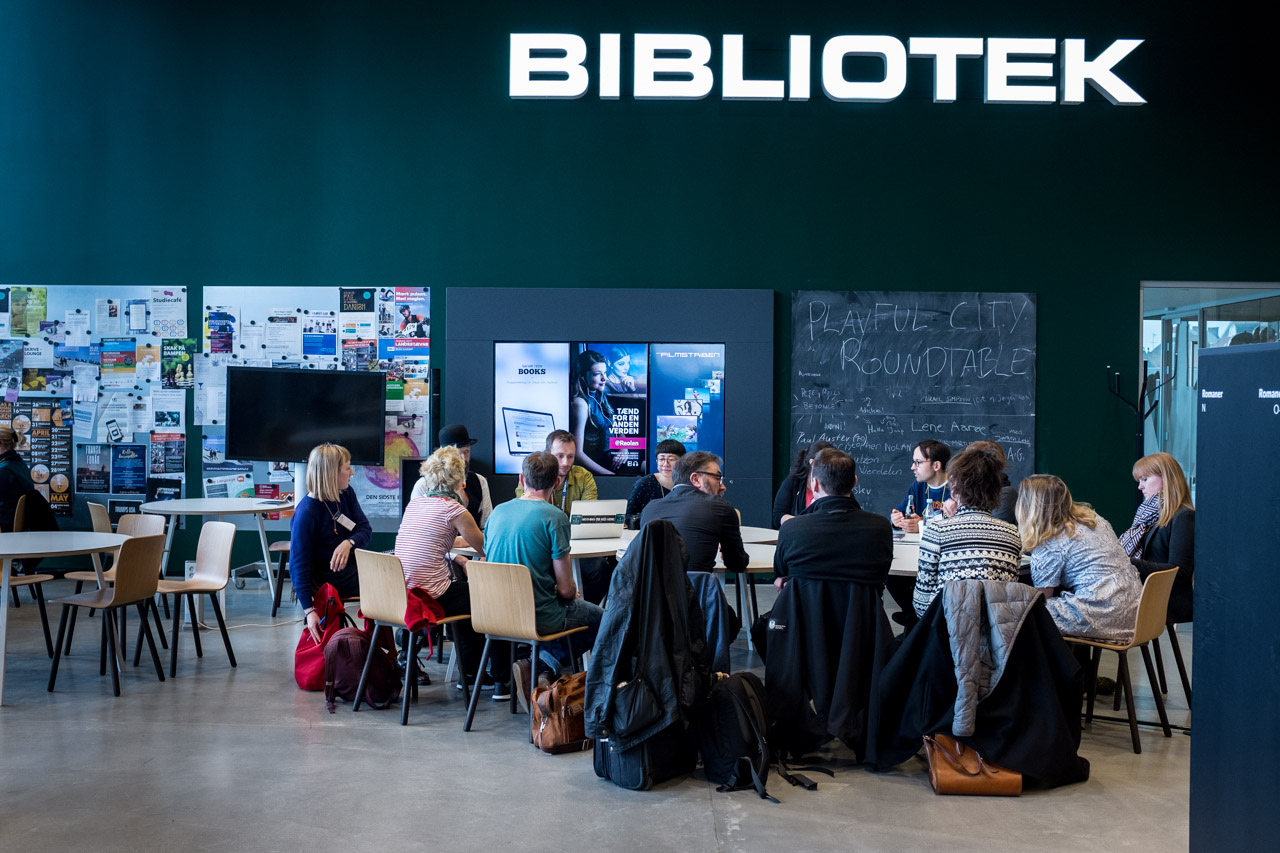
    For us CounterPlayers the library is a valued venue, it is a space for us to explore our ideas, and moreover it’s a collaborator and friend that enables our annual festival to become a reality. My job as a volunteer was to make sure that the allocated rooms and spaces where ready for both participants and hosts, and required both a laptop in one arm and a friendly face when walking around asking students, library guests and the like to kindly leave the space open for our festival.
    Luckily for me, most students seemed to understand the relevance of a debate staged in the library, others, however, had their doubts as to what a festival of play was doing, first of all in the library, and second of all, why it involved adults.

    It was and still is curious to me how the users of such a vast mecca of literature and knowledge are unaware of their own need and desire to play. Are we not, as readers, part of an adventure that far exceeds ordinary life? I would even argue that the pages of non-fiction and newspaper as well as literature require us to step out of our immediate present and let words form the bridge between us and somewhere else. To learn and experience is to take a leap of faith.

    Exactly this dilemma was what brought the participants and listeners to the debate in the spring. What are the possibilities of the library, and how do we change the norms adherent to it? Kindergardens, schools and organizations as well as us at CounterPlay, wish for the library to evolve into a room and community that embraces imagination not just in the written word.

    Here on our blog I wish to take the question even further: how is it that the library, the home of books, adventures, fairy princesses, epic wars and deceptive murderers is a space of silence? Even the division of a children’s wing indicate a need to separate the immediate imagination and play (and noise?) of children from the seriousness of the adult reader. But I believe that just as much action is present within the mind of the adult reader, and thus the physical space of the library, the seriousness and silence seems to be in clear opposition to the realm of the inner experience.

    Perhaps the library should be a place for us to explore and to play, where children are free to move around and experience narrative in their own way? Perhaps a place where old prejudices can be challenged by who knows – a laughing kid, a bubble show, a reading or performance art? Even smaller libraries without the resources for separate rooms for play or immersion might open up the space for a little less quiet and a little more laugh.

    We all here at CounterPlay dare you to challenge the conventions of the home of the written word and accept, show and respect the inner need for play and imagination.

    [/et_pb_text][/et_pb_column][/et_pb_row][/et_pb_section]
  • The Play Community

    The Play Community

    [et_pb_section admin_label=”section”][et_pb_row admin_label=”row”][et_pb_column type=”4_4″][et_pb_text admin_label=”Community” background_layout=”light” text_orientation=”left” use_border_color=”off” border_color=”#ffffff” border_style=”solid”]

    In the previous post, I reflected on “the diversity of play” as one strategy for “inviting playfulness” by allowing people to approach play in a way that feels meaningful to them.

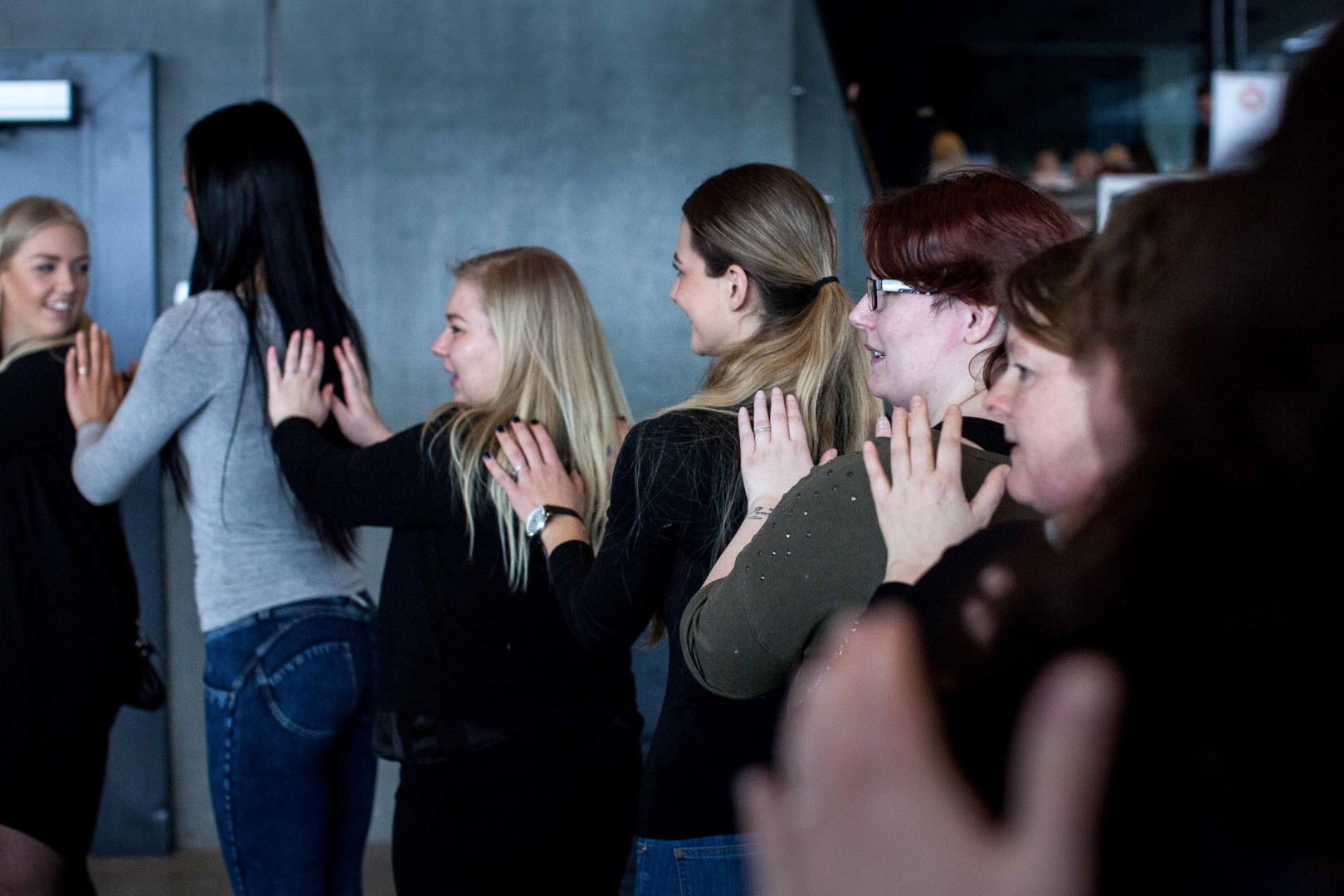
    While we can design for diversity in the way we represent play, and we can invite a diverse group of contributors, it’s impossible to control what makes up the core of the festival: the people, the community. We approach the notion of community as a space for mutual participation, or, in the words of Henry Jenkins (et al), a “particpatory culture”:

    “A participatory culture is a culture with relatively low barriers to artistic expression and civic engagement, strong support for creating and sharing creations, and some type of informal mentorship whereby experienced participants pass along knowledge to novices. In a participatory culture, members also believe their contributions matter and feel some degree of social connection´with one another” 

    Cultivating a diverse play community where people are actively participating to explore play is probably our best bet to foster a strong movement towards a more playful world. When we know for certain that we are not alone, that other people feel the same urge to be playful, then we can easier muster the courage that is necessary to challenge the non-playful structures around us. In that light, it was immensely satisfying to experience how the diversity of play was mirrored in the diversity of the play community.

    Like Bernie DeKoven said in his superbly playful keynote, and expanded upon in a blog post:

    “But we are a play community, and playing the way we do, for fun, for everyone’s fun, in public – our fun little community becomes something else. To those who want to be seen as people who embrace life, embrace each other, embrace spontaneity, freedom, laughter; we are an alternative. An invitation. We play as if the game isn’t important. The rules aren’t important. As if the only really important thing is each other” 


    [/et_pb_text][et_pb_image admin_label=”Image” src=”http://www.counterplay.org/wp-content/uploads/2013/03/IMG_1966-Medium.jpg” show_in_lightbox=”off” url_new_window=”off” use_overlay=”off” animation=”left” sticky=”off” align=”left” force_fullwidth=”off” always_center_on_mobile=”on” use_border_color=”off” border_color=”#ffffff” border_style=”solid”] [/et_pb_image][et_pb_text admin_label=”Text” background_layout=”light” text_orientation=”left” use_border_color=”off” border_color=”#ffffff” border_style=”solid”]

    In this community, there was an ongoing negotiation of meaning & purpose, just like when we play in other contexts. We came together from many different backgrounds, disciplines and parts of the world, and we challenged each other on everything from the rules of a game to the way we are together as people:

    “When people agree on the terms of their engagement with one another and collectively bring those little worlds into being, they effectively create models for living” (Henricks, 2016)

    Putting this much emphasis on the community, it’s obviously crucial that people actually feel that they are welcome and that the community is values their participation and contributions. Judging by the feedback we have received so far, it seems we are getting some things right:

    [/et_pb_text][et_pb_testimonial admin_label=”Testimonial” author=”Mel Taylor” company_name=”Playful Being” url_new_window=”off” quote_icon=”on” use_background_color=”on” background_color=”#f5f5f5″ background_layout=”light” text_orientation=”left” use_border_color=”off” border_color=”#ffffff” border_style=”solid”]

    I was inspired by the variety of people – ages, nationalities, interests, approaches – for whom playfulness and play are so key. There was such a powerful sense of a global community and a growing movement. I brought back renewed energy and enthusiasm and lots of happy memories.

    [/et_pb_testimonial][et_pb_testimonial admin_label=”Testimonial” author=”Stephan Marchant” url_new_window=”off” quote_icon=”on” use_background_color=”on” background_color=”#f5f5f5″ background_layout=”light” text_orientation=”left” use_border_color=”off” border_color=”#ffffff” border_style=”solid”]

    Counterplay is the place to be for playful people who are curious to new insights, new people and new adventures. It’s a journey, on both a personal level and on the level of the community. Counterplay = a way to transform the I into WE.

    [/et_pb_testimonial][et_pb_text admin_label=”Text” background_layout=”light” text_orientation=”left” use_border_color=”off” border_color=”#ffffff” border_style=”solid”]

    In the next and last post, I’ll take a look at how diversity and community can, in some cases, help cultivate a playful atmosphere.

    [/et_pb_text][et_pb_image admin_label=”Image”] [/et_pb_image][et_pb_post_nav admin_label=”Post Navigation” in_same_term=”off” hide_prev=”off” hide_next=”off” prev_text=”Read the previous post in this series: %title” next_text=”Read the next post in this series: %title” use_border_color=”off” border_color=”#ffffff” border_style=”solid” /][/et_pb_column][/et_pb_row][/et_pb_section]