Blog

  • Interview with Petra Stocker, Pro Juventute

    Interview with Petra Stocker, Pro Juventute

    [et_pb_section bb_built=”1″][et_pb_row][et_pb_column type=”4_4″][et_pb_text _builder_version=”3.0.91″ background_layout=”light”]

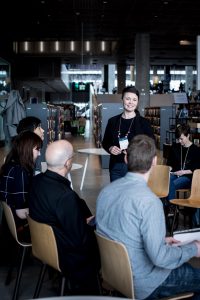
    Interview with Petra Stocker, Pro Juventute, Play Space and Playing Culture Programme Manager, Play Festival Project Management

    The aim of the Pro Juventute Play Festival 2018 is to support the development of cities of play and to help to further develop discussion of the role of play in urban development processes. In addition to the conference on the topic of “Playable Cities”, a Play Event will take place to mark World Play Day.

    Pro Juventute is organising a play festival in Biel on 25 and 26 May. What will it involve?

    It will actually be two events in one. We are organising a conference on the subject of “Playable Cities”. Experts from architecture, spatial planning, landscape architecture, social work, play space design, and art and design will discuss the potential of play on towns and cities as a place to live and, on the other hand, will discuss the design, use and importance of play spaces for a town or city. The conference offers more than 30 in-depth topics and practical examples such as, for example, planning play spaces and places to live, play as a catalyst for district development processes, architecture and playful building sites, playful access to creative technologies in public spaces, etc., and will take place in French, German and English. We are looking forward to promoting professional discourse and exchanges on the topic of playable cities beyond the linguistic regions.

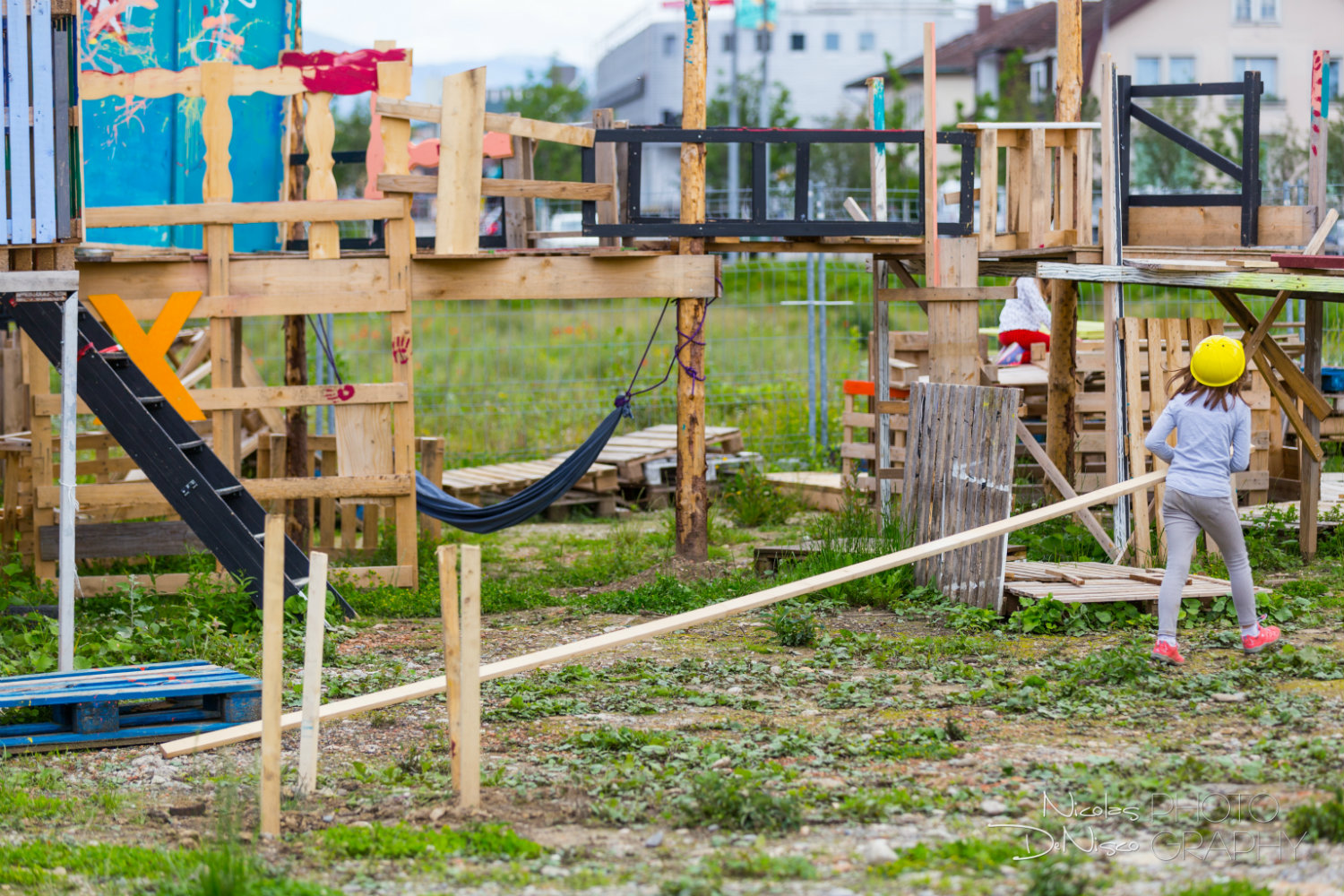
    And, of course, we will be playing as well. After all, it is World Play Day on 26 May. We will be creating what we believe will be an ideal play space on the Esplanade fairground in Biel, which will run in parallel to the conference: an exciting place which can be shaped and modified, a Robinson playground or adventure playground of the future, or simply: a “playable city”.

    Why is such an event necessary?

    There are various trends which are driving play and play spaces out of the cities. We know from studies that, nowadays, children in Switzerland only spend 29 minutes a day playing outdoors independently and without supervision. One of the reasons for this is the reduction in open spaces. Designing the remaining open spaces is becoming an increasingly important topic. Outdoor spaces are being claimed by many different interests and uses. Children’s right to play must not be at the back of the queue – on the contrary! We would like to remove play from the recesses of the playground and place it front and centre, make the city playable. Not only is playing a foundation for child development, but in those places where play is possible, there is also an opportunity for local recreation and exercise and to meet others – even in the most urban environments. Places where children can move freely and which they can shape and modify have a positive impact on a city as a whole. In addition, play has enormous potential to set processes of change in motion, so that spaces can be transformed from non-places into attractive places. This subject is given far too little consideration in our society and in current professional discourse, and it is this that we would like to change with the play festival.

    Is this subject new to Pro Juventute?

    No. Pro Juventute’s involvement in the subject of play and play spaces started approximately 80 years ago. The success of the Robinson playgrounds in Switzerland is thanks to Pro Juventute’s involvement. “Normal” playgrounds were also designed against the backdrop of encouraging free play. Up to 2005, Pro Juventute even imparted this know-how in the form of playground consultancy. The community centres in the Zurich region were also originally launched by Pro Juventute. The community centres, which were partly created as Robinson playgrounds, are good examples of play spaces which have become meeting places for the district. The play conference also takes up this idea of the playable city as a meeting space. Open spaces and play spaces for children are significant for society as a whole.

    Would Pro Juventute like to revive this tradition?

    Yes. However, the requirements today are very different to those of 40 years ago. There are far fewer open spaces and more and more people in the cities. In line with the trend towards increasing urbanisation, cities will become the most central places where the next generations of children will grow up. Pro Juventute is committed to ensuring that children’s right to play is not forgotten in this development. In order to prepare themselves for the future, cities must be designed, and allow themselves to be designed, to be child-friendly and play-friendly. There exists a close relationship between the play-friendly design of urban spaces and the objectives of the cities to support an active, healthy and sustainable community. A city in which children can play and move independently is also a place where older people feel safe. A city where children can play freely – including beyond the playground – is a place with a high quality of life for all ages.

    How does the play conference hope to influence this?

    The use of open spaces and play spaces in our towns and cities and the deliberate interdisciplinary examination of this represent an important issue. The understanding of the importance of play must also be debated. Ultimately, the conference will tackle the question of how communal life in our towns and cities should be shaped, and whether play could be used as a method to bring about real change. To this end, the play conference will bring together stakeholders from different disciplines – for example, sociocultural, architectural and spatial and urban planning experts. They can learn a great deal from each other. Architects and urban planners can benefit from the knowledge of the proponents of action-based education when it comes to designing participation processes. Conversely, sociocultural experts, for example, should be able to assist with spatial planning processes.

    And what is specifically required to make our towns and cities more play-friendly again?

    Children’s needs should be firmly integrated into the spatial planning processes. This is not the case today. And courage is needed to leave gaps, namely less rigidity in the planning and design of areas, so that these can still be shaped and allow a variety of uses. Children must be able to change things and integrate them into their play. This also requires non-specific equipment, not just play equipment which can only be used in one way. This has positive effects on communal life in a district and a city, as a whole. And this is becoming increasingly important, because the quality of life of the urban population, particularly of the children, will determine our future.

    Petra Stocker is the manager of the Play Space and Playing Culture Programme with the Pro Juventute foundation. She is a qualified sociocultural animator (facilitator and coordinator).

    [/et_pb_text][et_pb_image _builder_version=”3.0.91″ src=”http://www.counterplay.org/wp-content/uploads/2018/04/IMG_0320-2.jpg” show_in_lightbox=”off” url_new_window=”off” use_overlay=”off” always_center_on_mobile=”on” force_fullwidth=”off” show_bottom_space=”on” /][et_pb_text _builder_version=”3.0.91″ background_layout=”light”]

    [su_box title=”About the event” box_color=”#014341″ title_color=”#ffffff” radius=”5″]Pro Juventute Play Festival 2018 – Play Conference
    “Playable Cities” & Pop-up Play Event
    Experts will discuss play as a tool for helping to shape urban culture, and the design, use and importance of play spaces for a city. Different perspectives and experiences will be highlighted by means of exchanges between people playing in spaces from the disciplines of urban design, architecture, landscape architecture, spatial planning, social work, and art and design.
    The conference combines specialist input and presentations with specific pop-up play activities and workshops to create a playful atmosphere and to bring the theme of “Playable Cities” in urban areas to life.

    Dates: 25 May 2018 and 26 May 2018
    Venue: Biel/Bienne Congress Centre
    Further information[/su_box]

    [/et_pb_text][/et_pb_column][/et_pb_row][/et_pb_section]
  • The Player as Funambulist

    The Player as Funambulist

    [et_pb_section bb_built=”1″][et_pb_row][et_pb_column type=”4_4″][et_pb_text _builder_version=”3.0.91″ background_layout=”light”]

    Funambulist.

    That’s a tasty word. It feels playful, right? It even has “fun” in it!

    Who would have known, then, that it’s actually quite useful in capturing a thought I’ve been struggling to put into words?

    If you don’t know (like I didn’t, just a few hours ago), a funambulist is a tightrope walker.

    Back in ancient Rome, tightrope walking was a popular spectacle at public gatherings. The Latin word for “tightrope walker” is “funambulus,” from the Latin funis, meaning “rope,” plus ambulare, meaning “to walk.” – Merriam Webster

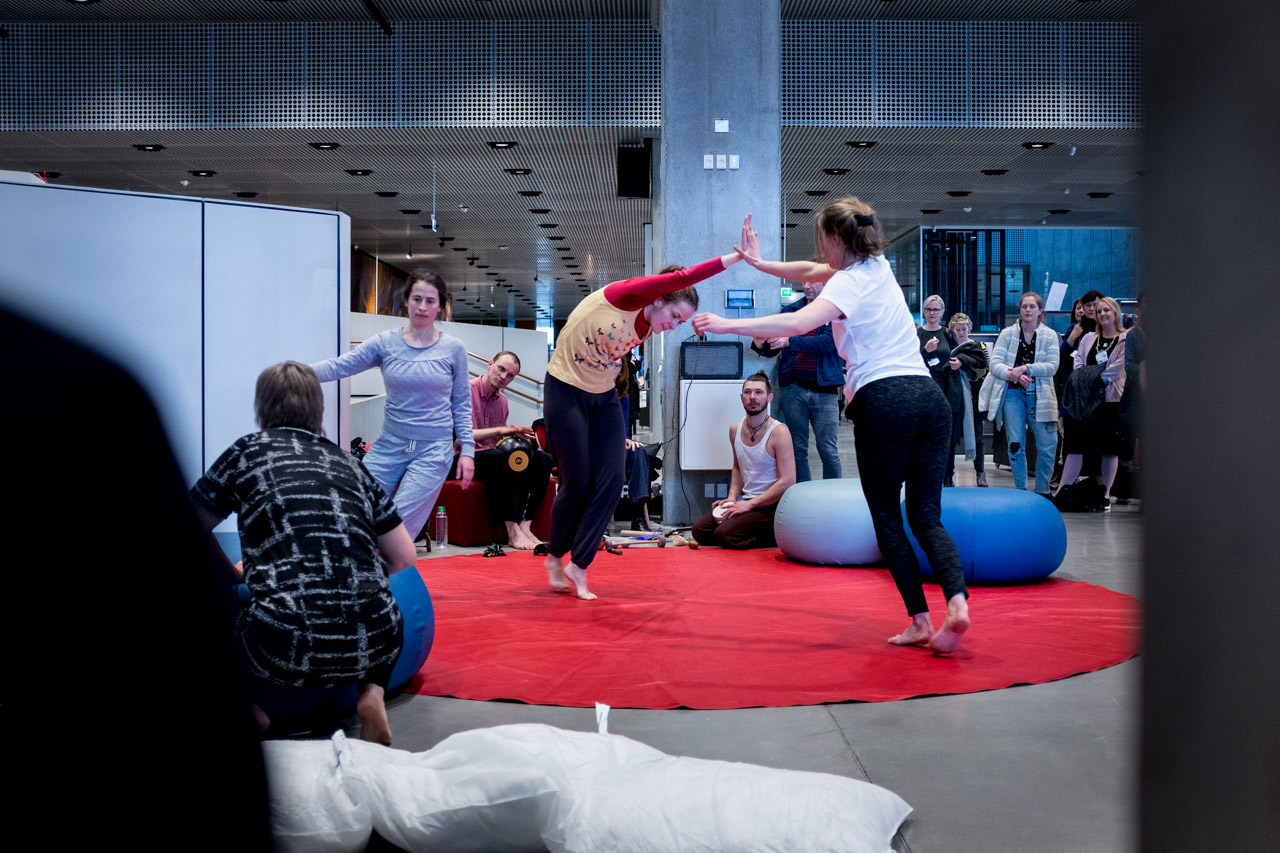
    I think we all need to embrace our inner funambulist (even though some of us are truly terrible at this particular discipline – seriously, it’s impossible). To the true funambulist, everything is a dance, a constant movement and a search for an equilibrium that is never permanent, always transient. This is not a loss or a failure on behalf of the funambulist, but the most basic condition, the one rule that can’t be changed.

    This is also exactly what we do when we play. As Thomas S. Henricks, whom I seem to quote quite often, writes:

    players combine order and disorder strategically. Although we intentionally court disorder, our aim is to see what we can do with it. Leaping into precarious circumstances, we try to find our balance. Unsatisfied with our newfound security, we destabilize ourselves again.

    This is because, as he writes, that it’s the process of striking the balance, not the balance itself, that is interesting to us. Once we’re there, it becomes boring and we leap again into new “precarious circumstances”, looking for new adventures.

    While a funambulist and a player knows that any state of equilibrium can only ever be momentary, a proper citizen in 2018 is taught to believe that if only the right systems, models and rules are applied and followed, no balancing is required. We can turn off our inner gyroscope, we can stop balancing, thinking, sensing, we can just follow the manual.

    Martin Weigel writes in the very interesting “The Case for Chaos” that “when we succumb to the fantasy that we can professionalise creativity, that we can extract the play, unpredictability, and human element out of the process, that it can be treated like the manufacturing process, repeatable and reliable in its methods, then we place the potential of creativity in serious jeopardy” and continues:

    Orthodoxies, models, best practises and universal theories might make life more simple and obviate the need for independent thinking and lighten the marketer’s cognitive load. We can follow the rules, accept the wisdom, tick the boxes or throw everything into a black box testing process and let it tell us what to do.

    But orthodoxy and best practise enslave us.

    We keep pretending that it’s all about removing doubt, increasing control to improve our certainty and the predictability of any human endeavour. We have come to rely so heavily on these “orthodoxies” that we have given up on what matters most – trust: we don’t trust each other, we don’t even trust ourself, we only trust these godforsaken systems and models and procedures and we’re all suffering because of it. We’re less creative, sure, but that’s not my biggest concern, no, the worst part is that we’re less human. Every time we trust a system or a model over our own empathy and judgement, we cede a little bit of our humanity.

    My friend Viktor wrote quite beautifully:

    As an artist it seems self evident but when I turn to anthropology I am yet to find the language to cope. My left hand cannot describe my right. We’re in the same body but struggling for dialogue. How might anthropology engage/describe “change” -which is so much about play- and the generative act of opening systems up & leaving them there? This moment of creation is one that artists & activists know well, it is about chasing an emerging event horizon that is a becoming that is always not-quite-yet something… how do we maintain that sense of hover? How do we study the butterfly without pinning it? How do we balance?

    Then she quoted Jean Claude Ellena on this impossible schisma between trust and doubt, between daring to do something, create something, without knowing where it might take you, giving in to the uncertainty:

    “You have to believe in yourself and at the same time you need to have doubt. Because it means you are creating. If you have no doubt, you have some problem. If you are too sure about yourself, you close your mind. Be sure, but at the same time be open. It’s not easy.”

    No, it’s certainly not easy. On the contrary, it’s super tricky, but that’s the point, I guess: it’s *supposed* to be tricky, and easy answers as well as unequivocal, clear-cut models and systems are comforting lies, allowing us the nice, fuzzy feeling of having everything under control in a world that is complex, chaotic and weird.

    Reminds me of David Lynch:

    I don’t know what I want to say to people. I get ideas and I want to put them on film because they thrill me. You may say that people look for meaning in everything, but they don’t. They’ve got life going on around them, but they don’t look for meaning there. They look for meaning when they go to a movie. I don’t know why people expect art to make sense when they accept the fact that life doesn’t make sense

    In our blind desire to make something in this weird, wicked world make sense, we boil the complex down until it becomes so ridiculously simple and straightforward that yes, we may understand it, but it lost all real meaning in the process. Nothing sublime, magnificient or beautiful will ever come from these precooked meals heated in the microwave, from adhering strictly to someone else’s recipe. Only when we dare to trust in each other, to engage in the balancing act, to rely on our judgement, increasing our sensibility towards the world, only then can true, deep meaning emerge.

    It feels like we’re collectively marching down this long, dark, blind alley with our eyes closed, and we’ll never really find a different, better path before we give up our desire to control things. It’s not a matter of total control or total anarchy, no, on the contrary, it’s about living life as a delicate balancing act, while embracing that no balance is permanent, no solution is final, no system is to be blindly trusted.

    Again, play is the perfect antidote, always reminding us to dance, balance, and perpetually “destabilize ourselves” over and over.

    [/et_pb_text][/et_pb_column][/et_pb_row][/et_pb_section]
  • Well Played, Bernie

    Well Played, Bernie

    [et_pb_section bb_built=”1″][et_pb_row][et_pb_column type=”4_4″][et_pb_text _builder_version=”3.0.91″ background_layout=”light”]

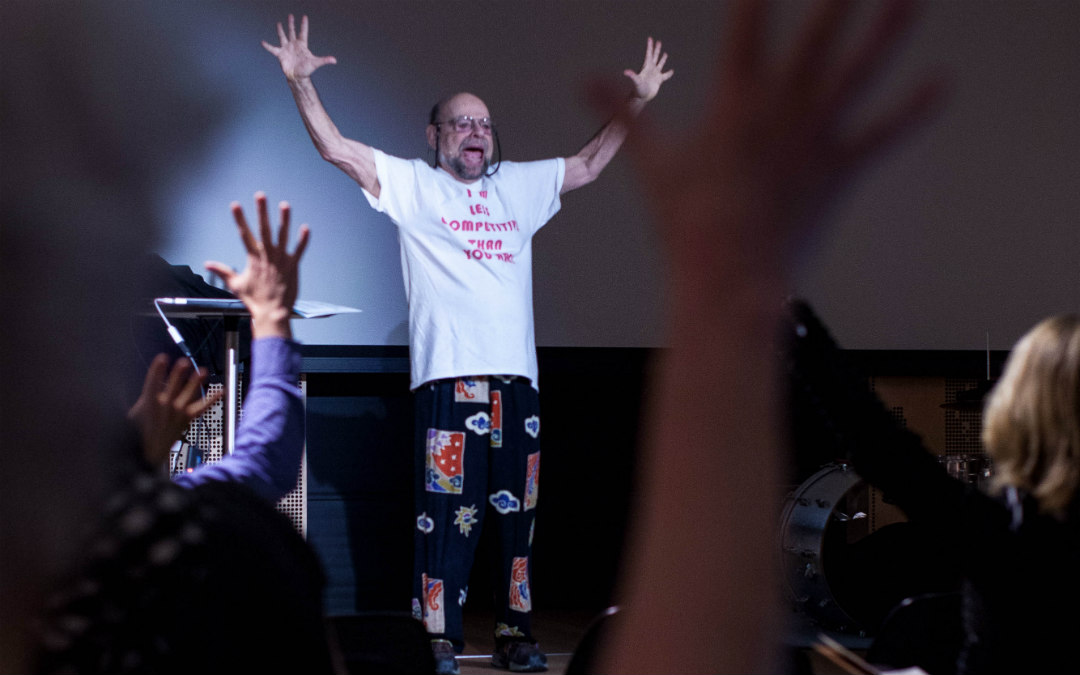
    One year ago, almost to this day, I got an email from my friend, Bernie. We had been somewhat regularly in touch for a while, sharing ideas, thoughts and dreams. Like so many playful souls fortunate enough to meet “Blue”, I found in him a true kindred spirit, a beacon of hope and light.

    So, the email. The subject was “hard news”, which was not a very Bernie-esque thing to write, you know, so I was instantly alarmed. Something was wrong. I knew he had health problems, but had no idea how severe, so suddenly reading “I was diagnosed with stage 4 cancer. The doctor said I could possibly live for another year” hit me hard and made me sad (as it happens, he almost did live exactly one year from that day).

    It was clear, however, that he had something other than sadness in mind. He didn’t want to dwell too much, and he certainly didn’t want me or anyone else to do so either:

    So, anyhow, it’s kind of weirding me out this whole thing, so forgive me if this note is less than coherent. Fact is, I want to have as much fun as I possibly can have for as long as I can, and some of the best fun I have is helping other people have fun. Good luck – never mind, you won’t need it. But have fun, delight in all the delight you have helped manifest itself, accept the love.

    Right there, my grief was almost entirely substituted with joy and hope, which, I guess, was exactly what he wanted. Shortly after I received the email, he bravely and completely unceremoniously announced it on his wonderful blog “Deep Fun”: “Hello. My Name Is Bernie. My Friends Call Me “Blue.” I Have Cancer And Maybe A Year To Live. This Is What I’d Like You To Do About It.

    Enough with the sadness. There’s too much of it in the world already. Way too. Do you really think I’d want there to be even more sadness? Who, me? Sure, a little grieving. Who can blame you? I, myself, am taking brief grief-breaks about every 22 minutes. But please, don’t let that distract you. Cancer, I say, schmancer.


    If you want to do something for me or because of me, grieving is not what I need. What I need is for you to continue your play/work however you can. Play games. Play the kind of games I like to teach – you know, those “funny games” – harmlessly intimate, vaguely physical games of the semi-planned, spontaneous, just-for-fun ilk, basically without equipment, or goal, or score or reason, even.


    Teach those games to everyone. Play them outside, these games. In public. With friends. And strangers. As many as want to play with you. Make up your own games. Make them up together with the people who play them. Play. Teach. Invent. Play some more.


    Also especially – look into this playfulness thing too. Deeply. Because we’re not talking just games here. We’re talking about how you can let yourself be as playful as you’ve always been, how you can be playful almost anywhere with almost anyone, how you can invite people to be playful with you, in school and office and in the checkout line: all kinds of people with all kinds of abilities from all kinds of backgrounds.

    He kept doing this, “Embracing Death. Celebrating Life“, openly and honestly, not pretending to be doing well, sharing the pain and suffering, admitting that “My body might not be able to keep my soul’s sometimes over-eager promises“, but insisting, nonetheless, on play. On living playfully, on seeing and accepting all the small invitations. As he kept saying, “playful people have more fun” (watching this now, hearing his gentle voice, almost makes me cry):

    Until, one day, he said “Shalom And Au Revoir” and wished for us all that “may we be playful to the end“.

    Some time before that, he wrote to me with the incredible generosity that was prevalent in everything he did: “Thinking of what I can do for you. What you need me to tell people about? what ideas of yours would you like my take on? Whatever is catching your heart”.

    In a world where we’re usually taught to think more about ourself than anyone else, to always consider our own gain, Bernie refused to play along. He had a completely different, and exceptionally refreshing approach. It was not just “what can I do for you”, but also “what can we do together”? He was a constant reminder that play is all about generosity, reaching out, stretching to connect with the other, making an effort to create a deep, meaningful experience together.

    See, this is what he talked about all the way back in the 70’s in “Creating the Play Community“:

    We each take responsibility for discovering what we can enjoy together. It makes so much more sense to change the game than to try to change the people who are there to play (…) We are beginning to create a play community – not a forever community with a fixed code, but a temporary community with a code we make up as we go along, a community that we can continue creating anywhere, any time we want to create it with us (…) We begin the play community by embracing each other, by giving each person the opportunity to experience him- or herself as a full and equal member.

    In play, we’re in it together, as we are in life.

    To this day, I’m in awe of how he handled everything. When you have to face death, you’re inevitably forced to reflect upon the path you’ve chosen. If you do that and you still say to yourself and the world – “I want to keep on doing this for as long as I can”, well, you’ve been travelling along the right path; the playful path. It reminded me, maybe more than anything else, that if you consciously choose to live a playful life, to fully embrace and nurture play, you’ll get to look back, fondly, at a life well played.

    I feel infinitely grateful for having known Bernie, for having had the privilege of calling him friend, for having joined him on his wonderful, playful path, if only for far too short a time. I felt he had some sort of trust in me, for whatever reason. He even told me that I should “be the champion of playfulness that I was in the way that you most want to be” and I was (and is) intimidated. As I told him, I could never do what he did. That magic touch, that graceful way of inviting play. I can’t do it. Always so kind, so eager to support and help, he assured me that “you don’t have to do what I do. Do what you do best.”.

    I promise, Bernie, I will. I will do everything I can to honor you through my work & life, carrying your torch of play as far as I can.

    While I’m saddened by his departure, and he leaves a big void behind with some huge shoes to fill, my spirits were instantly lifted when I saw the outpouring of love and reverence taking place across my social media streams:

    Amy Beaupre shared a beautiful quote by Flavia Weedn:

    “Some people come into our lives and quickly go. Some people move our souls to dance. They awaken us to a new understanding with the passing whisper of their wisdom. Some people make the sky more beautiful to gaze upon. They stay in our lives for awhile, leave footprints on our hearts, and we are never, ever the same.”

    Some people move our souls to dance. That’s exactly what Bernie did, and with such beautiful ease, just by being present in a room.

    https://twitter.com/MrChad/status/977605891091394560

    https://twitter.com/ElineMuijres/status/977617113446625280

    What could be more beautiful than, even in death, continuing to inspire & encourage people all over the world to play & live a rich, playful life? What more could someone like us, the dreamers of the play community, ever aspire to? This is what encourages and emboldens me, even in the deep sadness, knowing that Bernie would have wanted us to approach his death as, quite simply, yet another invitation to play.

    That’s how we honor him, remember him and keep his spirit alive for years and decades to come: we keep playing, we keep inviting people to join the play communities we cultivate all around the world, and we keep insisting that play needs no justification, no outcome, nothing but the sheer demonstration of freedom, joy and love that it is.

    [/et_pb_text][/et_pb_column][/et_pb_row][/et_pb_section]
  • Struggling in a ROI Society

    Struggling in a ROI Society

    [et_pb_section bb_built=”1″][et_pb_row][et_pb_column type=”4_4″][et_pb_text _builder_version=”3.0.91″ background_layout=”light”]

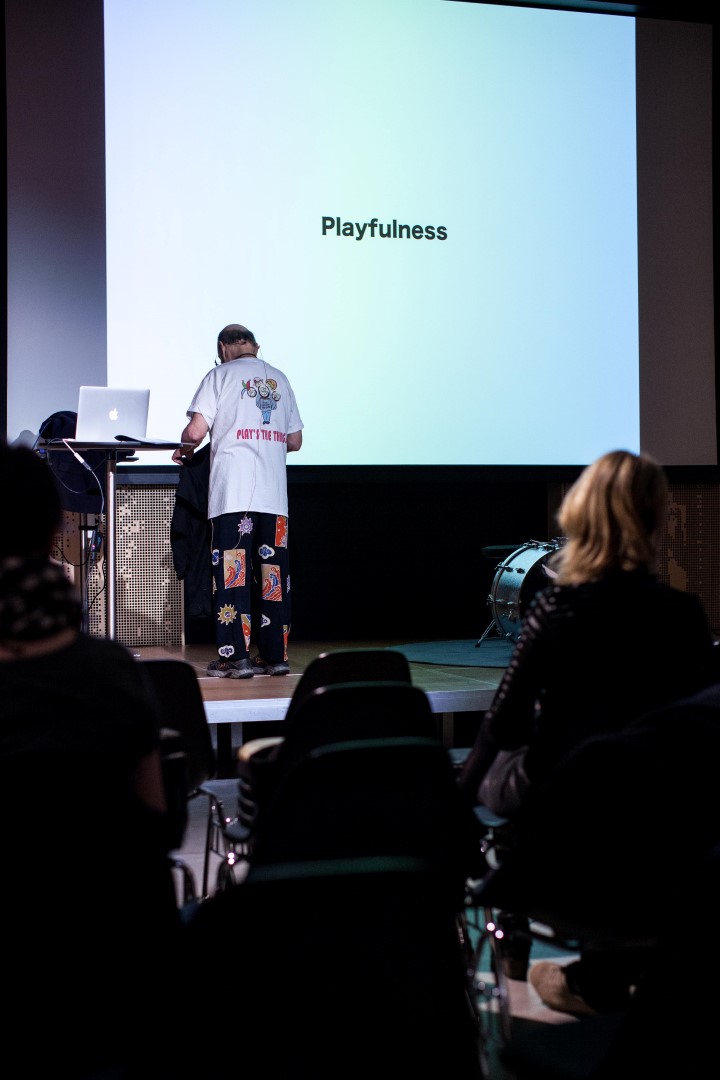
    I gave a talk at “Spilbar” at the National Film School of Denmark yesterday titled ”‘I’m just playing’; the radical act of expecting nothing in return” (follow link for my presentation), where I made an attempt to connect some of the thoughts and questions I’ve been wrestling with for a while now. As is most often the case, I hadn’t really thought this all the way through, but I really appreciated the opportunity to think out loud in public.

    For the occasion, I had made up the (rather depressing) notion of the “ROI society” to describe our collective obsession with “return on investment”. It’s like our current era is almost defined by the desire to always get something in return and the belief that no action is worth undertaking unless it pays off in some way. I consider this a scourge of contemporary society, a flaw (even if it’s a feature, not a bug) causing great misery.

    Here’s the sad face I put up whenever I think of ROI:

    A performance measure used to evaluate the efficiency of an investment or to compare the efficiency of a number of different investments. ROI measures the amount of return on an investment relative to the investment’s cost. To calculate ROI, the benefit (or return) of an investment is divided by the cost of the investment, and the result is expressed as a percentage or a ratio (Investopedia)

    The ROI mentality is evident everywhere in society: in politics, in private companies, public institutions, in education, in the arts, culture, from Kindergarten to University, from we’re born till we die. While I don’t pretend to know exactly how we got ourselves into this mess, the toxic cocktail of neoliberalism and New Public Management certainly contributed greatly:

    We have been induced by politicians, economists and journalists to accept a vicious ideology of extreme competition and individualism that pits us against each other, encourages us to fear and mistrust each other and weakens the social bonds that make our lives worth living (George Monbiot)

    [/et_pb_text][et_pb_text _builder_version=”3.0.91″ background_layout=”light”]

    When we’re all learning to think and act in a specific way, this eventually trickles down into every aspect of our lives, and play suffers as well. In my work, it’s one of the most frequently formulated dilemmas: is play a legitimate purpose or should we harness its ”magic” for other ends? Can play enhance learning? Creativity? Innovation? Efficiency? Loyalty? Motivation?

    Maybe it can, but should it?

    I’m not saying we should never consider returns, outcomes, rewards (or money for our labor), of course, but I’m merely proposing that we shouldn’t do it all the time. We shouldn’t accept living in a ROI regime and we’d benefit massively from also doing things just for the sake of doing them. The same goes for play. Play can have hugely important side effects, but we risk losing sight of play itself if all we care about are these side effects. If we only see play as meaningful when it has an externally defined ”purpose” or goal, we’ve already misunderstood the very nature of play.

    This far, it is all a bit (too) sad, but hey, there’s hope. There’s always hope. While play is clearly suffering from ROI, play is probably also the best antidote we have. To fight the ROI dragon, we must do the opposite of what it dictates, we must embrace play as a legitimate and legitimately rewarding activity in itself.

    What do we do, then? How do we turn hope into action? We have to believe that play matters. That ”just playing” is not only ok, but the initial, revolutionary act we can all take.

    Probably the biggest roadblock to play for adults is the worry that they will look silly, undignified, or dumb if they allow themselves to truly play. Or they think that it is irresponsible, immature, and childish to give themselves regularly over to play. (Stuart Brown)

    The first step for the resistance, then, is to, quite simply, play. Find ways of playing that appeals to you and jump right in. Experiment, goof around, take yourself less serious, join forces with other people, see how you feel about it and what really gets you in a good, playful mood. Take my friend Lynn, for example. Based around the #oneplaything hashtag on Twitter, she arms herself with chalk, heads out into the world, starts playing and embraces where that takes her (even when it snows):

    [/et_pb_text][et_pb_image _builder_version=”3.0.91″ src=”http://www.counterplay.org/wp-content/uploads/2017/11/CounterPlayLeeds-1701-Medium.jpg” show_in_lightbox=”off” url_new_window=”off” use_overlay=”off” always_center_on_mobile=”on” force_fullwidth=”off” show_bottom_space=”on” /][et_pb_text _builder_version=”3.0.91″ background_layout=”light”]

    Now that you’re volunteering for the cause of the playful resistance and want to do more, you can become a play activist, taking play to the streets, inviting more people to play, cultivating communities of play in the process. Finally, we can insist on the possibility of living playfully, making play a “life practice”, an approach to everything we do – as my friend and perhaps my single biggest source of inspiration, Bernie DeKoven, has been demonstrating for decades:

    “playfulness is an even more liberating way of being than play itself, more, well, freeing. More, in fact, revolutionary.”

    We shouldn’t forget to make the love visible. Play is a manifestation of love, and we shouldn’t hesitate to show it to the world. As someone (Jim Thompson, if I’m not mistaken) wrote during CounterPlay Leeds:

    [/et_pb_text][et_pb_image _builder_version=”3.0.91″ src=”http://www.counterplay.org/wp-content/uploads/2017/11/CounterPlayLeeds-1866-Medium.jpg” show_in_lightbox=”off” url_new_window=”off” use_overlay=”off” always_center_on_mobile=”on” force_fullwidth=”off” show_bottom_space=”on” /][et_pb_text _builder_version=”3.0.91″ background_layout=”light”]

    Tell the stories, stand tall, be proud. Don’t fear the weirdly widespread idea that playing is for kids or that it makes you less worthy of respect. It’s the other way around. If you dare to break the mold, challenge the common perceptions and show a different path through life, you’re a hero in my book.

    When we muster the strength and courage to pursue play in this way, something almost magical happens. In play, we negotiate meaning and purpose, we explore possibilities and other ways of being, and, as Miguel said yesterday, in play we create worlds. We imagine and develop worlds within the world and these worlds are not inconsequential, they are not entirely detached from what we tend to call “the real world”:

    When people agree on the terms of their engagement with one another and collectively bring those little worlds into being, they effectively create models for living (TS Henricks)

    There’s a massive, transformational, even revolutionary potential, in just playing. This immense power can’t be predictably controlled, but I think, nonetheless, that there are some things that will happen more often than others.

    When we are playing together, despite our differences, we celebrate a transcendent sameness, a unity that underlines the illusion of our separateness. You could call this an act of love – an enacted love that lets us keep the game going. Many acts of love, in fact, many acts of compassion, caring, trust, assurance.” (Bernie DeKoven, A Playful Path)

    Play cultivates “togetherness”, as it allows us to create and negotiate special conditions for being together. This is a connection I should have made clearer at Spilbar: the social dimension, the ”togetherness of play”, is not something I want to somehow artificially ”force” play to do, it’s what happens when play thrives and is allowed to develop on its own terms.

    [/et_pb_text][et_pb_text _builder_version=”3.0.91″ background_layout=”light”]

    This all resonates with an analysis made by George Monbiot, when he argues that we should develop a new, big and compelling political narrative around a sense of belonging:

    “But by coming together to revive community life we, the heroes of this story, can break the vicious circle. Through invoking our capacity for togetherness and belonging, we can rediscover the central facts of our humanity: our altruism and mutual aid. By reviving community, built around the places in which we live, and by anchoring ourselves, our politics and parts of our economy in the life of this community, we can restore the best aspects of our nature.”

    This is also the central theme in a book by Lynne Segal I’m currently reading, which bears the absolutely wonderful title ”Radical Happiness: Moments of Collective Joy”:

    As the world becomes an ever lonelier place, it is sustaining relationships, in whatever form they take, which must become ever more important. An act of defiance, even.

    It is very important to be aware that Segal is highly critical towards what has been called the “happiness industry” by William Davies and others:

    Today there is a booming field of management research on positivity at work, all designed to keep employees working longer, with corporations such as Google even installing play equipment in their workplaces. Yet Spicer argues that what he calls ‘the cult of compulsory happiness’ can actually render workplaces more miserable, since the implicit ban on negative sentiment often proves ‘emotionally stunting for employees’, especially in difficult situations, by preventing them from expressing the full range of their emotions.

    Play equipment at Google is what I have previously called “playwashing” and clearly in line with ROI thinking – no doubt Google expect a return on their investment. This is *not* what I’m advocating for.

    Even so, there’s a dilemma here: set play free, play without expecting ”returns on your investment”, but consider how it might change all of society for the better? Yeah, at this point, I felt obliged to state the obvious: there’s a fine line to walk between acknowledging the inherent value of play on its own terms and the instrumentatlisation I’m so deeply concerned about. It would be overly ironic if I end up turning play into an instrument to fight instrumentalisation, right?

    I think I’m onto something here, and that play is an essential component in any good life, but even if I’m wrong, what do we have to lose? A world where more people get to play more and live more playful lives? I can live with that. It gives me the same vibe as this classic:

    [/et_pb_text][et_pb_image _builder_version=”3.0.91″ src=”http://www.counterplay.org/wp-content/uploads/2018/03/hoax.jpg” show_in_lightbox=”off” url_new_window=”off” use_overlay=”off” always_center_on_mobile=”on” force_fullwidth=”off” show_bottom_space=”on” /][et_pb_text _builder_version=”3.0.91″ background_layout=”light”]

    During the Q&A and afterwards, it became evident to me that I should have more clearly said that while I’m interested in all kinds of play, I’m aiming to design spaces and create opportunities for a particular kind of play – let’s, for now, call it positive play or hopeful play. I celebrate the diversity of play and I insist that we embrace as broad a spectrum of play as possible, but as I describe in the “CounterPlay Manifesto”, “we do maintain that some ways of perceiving play are more beneficial and meaningful than others”.

    Anyway, it was all a bit rough around the edges, just like this post, but let me know what you think. Does it make sense? Am I disrespecting play while pretending to defend it?

    [/et_pb_text][/et_pb_column][/et_pb_row][/et_pb_section]

  • Længe Leve Legetænketanken!

    Længe Leve Legetænketanken!

    [et_pb_section bb_built=”1″][et_pb_row][et_pb_column type=”4_4″][et_pb_button _builder_version=”3.0.91″ button_text=”Skriv dig op til opdateringer om tænketanken” button_url=”https://docs.google.com/forms/d/e/1FAIpQLSfPl0UBNPDEtEb5JvN6qhYfDAO8eqHZsuVza0mY75KISWJUMg/viewform?usp=send_form” url_new_window=”off” background_layout=”light” custom_button=”off” button_icon_placement=”right” /][et_pb_text _builder_version=”3.0.91″ background_layout=”light”]

    Torsdag d. 8. februar var på alle mulige måder en særlig dag. En af den slags dage, man kan leve højt på i lang tid, fordi energien var så fantastisk, men også fordi der skete noget, som jeg tror er meget vigtigere end dagen i sig selv.

    Efter mange overvejelser, samtaler og forberedelser var det lykkedes at samle nogle af Danmarks bedste, skarpeste og mest krøllede legehjerner på Syddansk Universitet i Odense. Vi mødtes ene og alene fordi vi alle deler en dyb kærlighed til leg og et stort ønske om at give legen bedre vilkår overalt i samfundet.

    Hele vejen rundt var der en oprigtighed, åbenhed og en vital nysgerrighed på, hvordan vi måske kan gøre mere sammen end vi formår hver for sig. Det var på den baggrund, at vi besluttede at stifte Danmarks (og måske verdens!) første legetænketank, som dermed nu er en realitet.

    Ja, uanset hvor tosset det måske kan lyde, så findes der altså nu en ambitiøs tænketank for leg, hvis første, tidlige udkast til en formålsparagraf lyder omtrent sådan her:

    “Tænketanken er et tværfagligt, mangfoldigt forum hvor mennesker med en professionel interesse i leg kan mødes. Vi vil:

    • arbejde for bedre rammer for leg som værensform og livspraksis.
    • arbejde for en større forståelse af legens muligheder og betydninger for den enkelte og samfundet (politisk, etisk og æstetisk).
    • tale med et kor af stemmer på tværs af sektorer
    • udvikle et nuanceret, nænsomt fælles sprog om leg, der respekterer og rummer legens mange forskellige dimensioner og paradokser.

    Den er ikke helt på plads, men helt ærligt, det er da allerede temmelig lovende at have en tænketank med det udgangspunkt, hva’?

    [/et_pb_text][et_pb_image _builder_version=”3.0.91″ src=”http://www.counterplay.org/wp-content/uploads/2018/02/PlayThinkTank-0324-2.jpg” show_in_lightbox=”off” url_new_window=”off” use_overlay=”off” always_center_on_mobile=”on” force_fullwidth=”off” show_bottom_space=”on” /][et_pb_text _builder_version=”3.0.91″ background_layout=”light”]

    Baggrund:

    Initiativet til at etablere en national legetænketank er vokset ud af vores mange forskellige erfaringer med CounterPlay festivalen, som vi har afholdt i Aarhus de sidste fire år. Vores udgangspunkt har her været, at leg er vigtigt for alle mennesker, uanset alder, og vi tror på, at det bedste vi kan gøre for at leve gode liv i den her komplekse, kaotiske verden, det er at blive og være så legende som muligt. Vi insisterer på legens mangfoldighed, hvor leg kan have mange betydninger og se ud på mange måder, og vi nærmer os legen fra både forskning og praksis, gennem samtaler, refleksion og leg.

    Festivalen har over årene udviklet sig til et internationalt anerkendt forum og fællesskab, hvor mennesker fra hele verden sammen går på opdagelse i legen. Mens vi er både glade og stolte over hvad vi har opnået med CounterPlay, hvor meget kan lade sig gøre, så er det også blevet stadig mere tydeligt for os, at festivalen har sine egne indbyggede begrænsninger. Man kan måske nok godt sige, at festivalen er sådan lidt “avant-garde” og skæv, hvor vi kaster os selv og deltagerne ud i mange forskellige vilde eksperimenter på en gang . Det er krævende at deltage, det er på engelsk og det er ikke altid indlysende tydeligt, hvad man helt nøjagtigt får ud af det – præcis som enhver anden god leg. Vi kan tydeligt se, at netop sådan et forum har sin berettigelse, og vi fortsætter naturligvis udviklingen af festivalen, men der er også bare brug for noget andet og mere.

    Det er her, tænketanken kommer ind i billedet. Jeg har i et stykke tid drømt om et tværfagligt, mangfoldigt forum på nationalt plan, som formes og udvikles i samspil mellem så mange centrale aktører som muligt. Derfor har jeg gjort som jeg plejer, når jeg får en idé: jeg har spurgt dem, jeg forventer vil forstå mig, om de vil lege. I dette tilfælde har jeg simpelthen bare kontaktet de mennesker, der allerede har vist tilstrækkeligt stort mod og nysgerrighed til at være aktive på CounterPlay. Da der tegnede sig det mønster, at de fleste sagde “ja, og…”, så turde jeg godt samle hele flokken og flere til. Det skulle vise sig at være en af mine bedre beslutninger.

    [/et_pb_text][et_pb_image _builder_version=”3.0.91″ src=”http://www.counterplay.org/wp-content/uploads/2018/02/PlayThinkTank-4044-2.jpg” show_in_lightbox=”off” url_new_window=”off” use_overlay=”off” always_center_on_mobile=”on” force_fullwidth=”off” show_bottom_space=”on” /][et_pb_text _builder_version=”3.0.91″ background_layout=”light”]

    Drøftelser & drømme

    Selvom vi selvfølgelig både havde tænkt og talt på kryds og tværs inden vi mødtes i Odense, så havde jeg med vilje ladet mange store spørgsmål stå åbne, for fælles initiativer må jo nødvendigvis skabes i fællesskab og vokse frem af de drømme, vi hver især bærer på.

    Hvad skal formålet med sådan en tænketank være? Hvilke legedrømme kan tænketanken indfri?

    Først og fremmest var vi i vid udstrækning enige om, at sådan en tænketank må tage sit afsæt i leg og fungere på legens præmisser. Faktisk var det et centralt tema og et hyppigt formuleret ønske, at tænketanken netop skal turde værne om legen uden forbehold og modkrav. Nok kan legen have utallige positive afledte effekter, idet man fx kan risikere at lære noget, der måske endda er nyttigt. Det er vi ikke blinde for, men det er bare ikke det, der er legens primære formål og derfor heller ikke det, vi bygger vores fælles identitet på.
    Tænketanken er også udtryk for, at vi gerne vil ses noget mere, møde nye legekammerater, samt at vi gerne vil opdyrke nogle mere mangfoldige og levende “legefællesskaber”. Vi kan lære meget af hinanden, vi står stærkere når vi er flere, og så er det også bare enormt opløftende at være sammen med mennesker, der brænder for legen.

    Vi vil være en åben, modig og nysgerrig tænketank, der ganske vist insisterer på legens egenværdi, men som ikke altid kender svarene på forhånd. Vi vil turde omfavne legens mangfoldighed, de mange iboende paradokser og være i stand til at anlægge forskellige “prismer” på leg: det stille, rolige, kærlige, smukke, poetiske, fjollede, mærkelige og det vilde, skæve, kaotiske, farlige, ja, sågar det grimme. Med tænketanken vil vi derfor skabe et trygt og tillidsfuldt rum, hvor vi stoler på hinanden, tør være i tvivl og ikke er bange for at rejse vanskelige diskussioner. Vi har altså ikke én sandhed vi vil formidle, og imens vi nogle gange kommer til at udtale os som én tænketank, så kan vi sagtens være uenige, eller som Herdis Toft så fint formulerede det:

    “noget af det en tænketank også gør, det er at den tænker tanker, præsenterer forskellige legesyn og -opfattelser, og lader dem støde sammen og brydes”

    Selvom vi er en tænketank, der tænker tanker, så er vi samtidig en eventyrlysten gruppe af mennesker, der vil gøre tanke til handling, og som ønsker skabe reelle forandringer af og i praksis. Legen skal (også) ud af vores hoveder, ud og leve rundt omkring i samfundet gennem forskellige aktiviteter og eksperimenter.

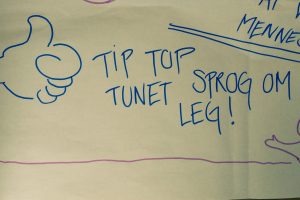
    Vi vil fra starten forsøge at kvalificere den måde, vi taler om leg. Som (Danmarks første professor i leg!) Helle Marie Skovbjerg fremhævede, så har vi brug for et “tip-top tunet sprog om leg”, et poetisk sprog, der nænsomt, men samtidig med stor præcision kan rumme legens mange nuancer og modsætninger. Det skal også være et sprog, der giver tænketanken en stemme i den offentlige debat, og som, uden at undergrave legen, sætter en dagsorden og fremmer den kollektive indsigt i leg som fænomen.
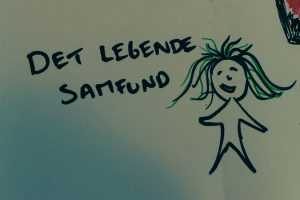
    Ret tidligt bed jeg mærke i, at alle disse drøftelser og drømme for tænketanken blev omtalt som noget “vi” kan sammen. Tænk, det er allerede nu, på et ganske tidligt stadie, noget VI gør.

    Alene frekvensen af det lille ord fylder mig med håb.

    [/et_pb_text][/et_pb_column][/et_pb_row][et_pb_row][et_pb_column type=”1_2″][et_pb_image _builder_version=”3.0.91″ src=”http://www.counterplay.org/wp-content/uploads/2018/02/PlayThinkTank-0327-2.jpg” show_in_lightbox=”on” url_new_window=”off” use_overlay=”off” always_center_on_mobile=”on” force_fullwidth=”off” show_bottom_space=”on” /][/et_pb_column][et_pb_column type=”1_2″][et_pb_image _builder_version=”3.0.91″ src=”http://www.counterplay.org/wp-content/uploads/2018/02/PlayThinkTank-0329-2.jpg” show_in_lightbox=”on” url_new_window=”off” use_overlay=”off” always_center_on_mobile=”on” force_fullwidth=”off” show_bottom_space=”on” /][/et_pb_column][/et_pb_row][et_pb_row][et_pb_column type=”4_4″][et_pb_text _builder_version=”3.0.91″ background_layout=”light”]

    Næste skridt

    Legen fortsætter selvfølgelig; ja, faktisk er den jo kun lige begyndt, og jeg kan helt ærligt ikke vente med at tage de næste skridt på det her eventyr.

    Vi har etableret tænketanken som et netværk mellem alle de skønne, dygtige mennesker, der på tværs af samfundet arbejder med leg på vidt forskellige måder. Det kommer altså til at være en “distribueret” tænketank, der især udvikler sig gennem medlemmernes daglige arbejde. Det er ikke så meget et pragmatisk-praktisk hensyn, som det er en erkendelse af, at det jo *netop* er det arbejde, der foregår decentralt, her, der og alle vegne, der for alvor betyder og flytter noget. Forskellen er, at vi i højere grad nu kan knytte de mange indsatser tættere sammen, så vi kan lære af hinanden, styrke bevidstheden om alt det, der spirer og gror, og at vi dermed samlet set bliver klogere, kommer længere og får flere med.
    Vi har aftalt at holde fire årlige møder i selve tænketanken, og mellem disse møder vil små arbejdsgrupper arbejdere videre med dels planlægning af møder og nye aktiviteter, dels udvikling af tænketanken, herunder fx skrive på et “charter” m.m.

    Der er allerede en række idéer til mere eller mindre konkrete tiltag og aktiviteter:

    • Kalender med relevante legeaktiviteter samt “legemail” med opdateringer
    • Netværk & matchmaking for nye legekammerater (inkl. CV-bank)
    • Debat- & samtalearrangementer
    • Kreative legeaktiviteter
    • Artikler, kommentarer, rapporter osv.

    En del er stadig ikke på plads, og der dukker helt sikkert meget mere op undervejs, for vi er jo ret åbne og siger ja til meget. Det centrale er sådan set også bare, at vi forfølger vores grundlæggende ambition om at skabe bedre vilkår for at legen kan trives, og at flere får mulighed for at gøre leg til livspraksis.

    Vi arbejder stadig på at gøre “legealliancen” endnu stærkere, og vil meget gerne høre fra mulige nye legekammerater, der deler vores ønske om mere leg gennem livet.

    [/et_pb_text][et_pb_image _builder_version=”3.0.91″ src=”http://www.counterplay.org/wp-content/uploads/2018/02/PlayThinkTank-4012-2.jpg” show_in_lightbox=”off” url_new_window=”off” use_overlay=”off” always_center_on_mobile=”on” force_fullwidth=”off” show_bottom_space=”on” /][/et_pb_column][/et_pb_row][/et_pb_section]

  • Skab Rum til Leg

    Skab Rum til Leg

    [et_pb_section bb_built=”1″][et_pb_row][et_pb_column type=”4_4″][et_pb_text admin_label=”Intro + Lotte” _builder_version=”3.0.91″ background_layout=”light”]

    Hvordan skaber man rum til leg i en verden, hvor legen ofte bliver trængt?


    Det spørgsmål stillede vi sammen med legeforskerne Helle Marie Skovbjerg og Ann Charlotte Thorsted på arrangementet “Skab Rum til Leg”, der foregik d. 6/12 i Lottes “Play Lab” på Aalborg Universitet.

    Jeg fik indledningsvist nævnt, at jeg er overbevist om, at legende mennesker er bedre klædt på til at leve gode, meningsfulde liv i en kompleks, kaotisk verden. For mig er formålet med legen (i det omfang der er sådan et uden for legen) at blive mere legende. Det er jo min mest grundlæggende motivation for at bruge så meget tid på noget, så mange er tilbøjelige til at ignorere. Det styrker selvfølgelig også min begejstring for legen, at leg gør os gladere, hvad jeg da bestemt ikke synes man skal undervurdere.

    Ann Charlotte lagde ud med at tale om sin forskning i “legefællesskaber”, hvor jeg blandt andet bed mærke i hendes begreb om “leg som en suveræn livsytring” (husk også Lottes bog “Den Legende Organisation: Når livet leger med os“):

    Lotte pegende også på diskussionen om magt og magtspil, der får en ny betydning i legen, hvor “ingen gider lege med nogen, der tror de er mere end andre”.

    Lotte sluttede af med at citere Peter A.G.:

    [/et_pb_text][et_pb_image _builder_version=”3.0.91″ src=”http://www.counterplay.org/wp-content/uploads/2017/12/PlayLab-2388-Large.jpg” show_in_lightbox=”off” url_new_window=”off” use_overlay=”off” always_center_on_mobile=”on” force_fullwidth=”off” show_bottom_space=”on” /][et_pb_text admin_label=”Helle” _builder_version=”3.0.91″ background_layout=”light”]

    Helle valgte at fokusere på “legestemninger”, som meget af hendes arbejde har kredset om (se fx bøgerne “Om Leg” og “Perspektiver på Leg“).

    Hun sluttede af med at tale om “legemod” og håb. Når vi leger, bliver vi modige nok til at håbe, at den anden vil lege med os, og gå åbent ind i legen:

    Deltagerne viste sig allerede her at være umådeligt nysgerrige og villige til at gå ind i svære spørgsmål om leg uden at lede efter et entydigt svar.

    [/et_pb_text][et_pb_text admin_label=”Play Jam” _builder_version=”3.0.91″ background_layout=”light”]

    Efter Lotte og Helles korte, spændende oplæg og deltagernes gode spørgsmål var tiden kommet til vores “play jam”, et laboratorium for udvikling af legeaktiviteter (se min præsentation her), hvor opgaven lød: design en ny leg på 45 minutter med de tilgængelige materialer.

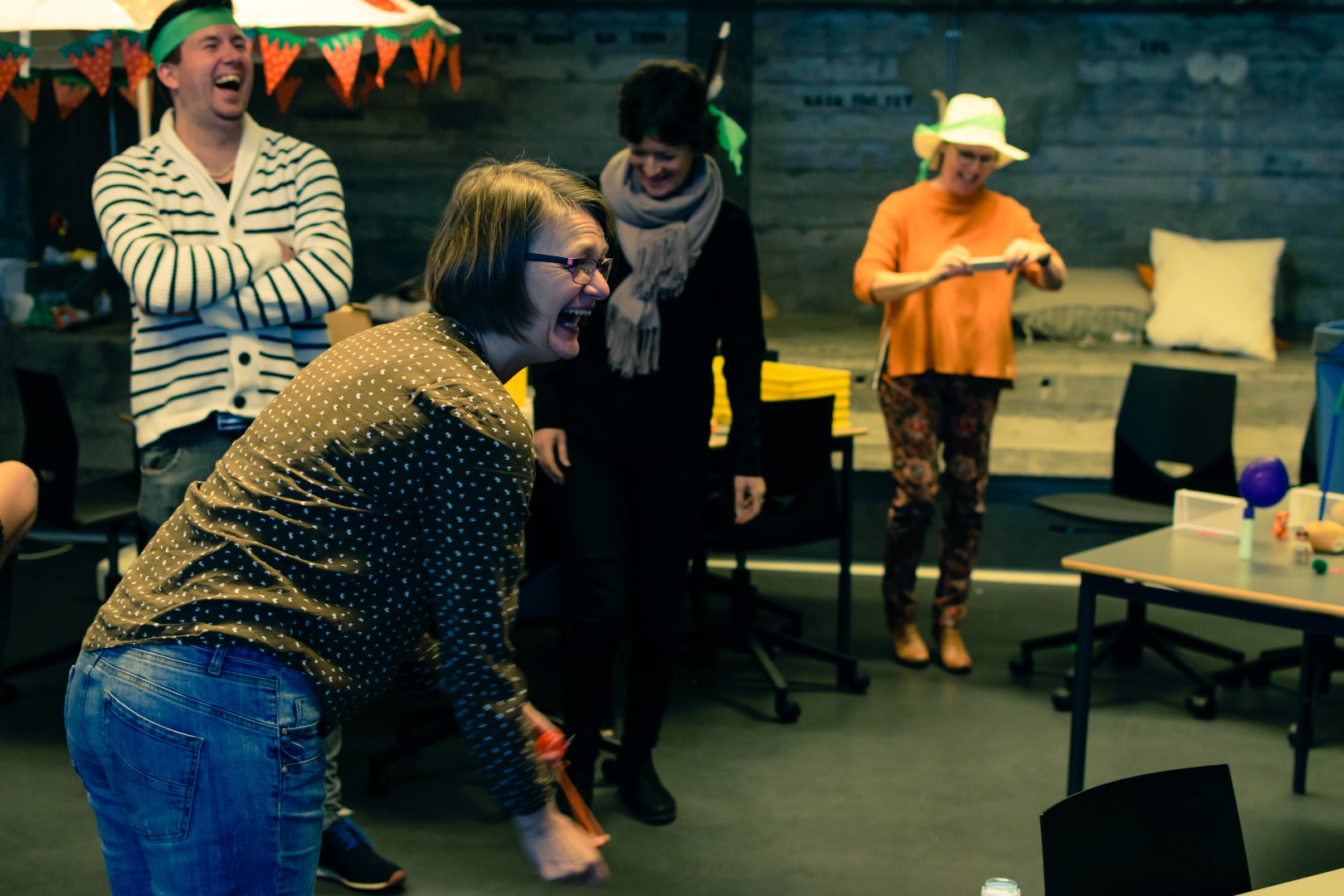
    Jeg har eksperimenteret med den her simple “metode” en del gange efterhånden (se fx mine erfaringer fra Philadelphia), og bliver næsten altid positivt overrasket. Jeg synes det er spændende at se processen som en slags “kreativ myndiggørelse”, hvor mange af de sædvanlige barrierer og hæmninger falder bort. De fleste af os er nok tilbøjelige til at nedtone vores egen kreativitet, men ofte trænger vi bare til et “wake-up call”, der minder os om, at vi, selvfølgelig, har meget at byde på. Ligesom med andre former for leg, så hjælper det ofte at have nogle materialer til rådighed, der kan sætte gang i legen: sæbebobler, balloner, kridt, bolde, elastikker, klemmer, papir, udklædning, ja, næsten hvad som helst kan bruges.


    [/et_pb_text][et_pb_image admin_label=”Født i et stog” _builder_version=”3.0.91″ src=”http://www.counterplay.org/wp-content/uploads/2017/12/PlayLab-2523-Large.jpg” show_in_lightbox=”off” url_new_window=”off” use_overlay=”off” always_center_on_mobile=”on” force_fullwidth=”off” show_bottom_space=”on” /][et_pb_text admin_label=”Play Jam 2″ _builder_version=”3.0.91″ background_layout=”light”]

    Jeg skal lige love for, at folk slap fantasien løs, og gav både sig selv og hinanden lov til at omfavne det fjollede, skæve og helt uforudsigelige. Det var simpelthen så skønt at se, hvordan alle bare kastede sig ud i det, gik på opdagelse i materialerne, og straks begyndte at udvikle idéer.

    Det mest afgørende er egentlig ikke de lege, der kommer ud af et play jam, men derimod processen, stemningen og fornemmelsen af, at her kan meget ske. Det betyder dog ikke, at legene ikke også kan være både medrivende og interessante. Syv lege blev det til, som med stor entusiasme blev præsenteret og afprøvet: “Diktatorlegen”, “Spille-ballon-udklædningsleg”, “Er du født i et S-tog?”, “Det er jo det, som vi alle sammen kender!”, “Hinke-byg”, “Avoid the big five!” og “Vælt og fortæl”.

    Det er ikke så ligetil at gengive alle disse lege, så lad mig nøjes med at sige, at det var afsindigt underholdende og lærerigt at overvære både tilblivelse og demonstration. Man får på ganske kort tid et dybt blik ind i legens natur, hvor meget kan lade sig gøre, mange idéer prøves af og der foregår en intens forhandling mellem deltagerne.

    [/et_pb_text][et_pb_image _builder_version=”3.0.91″ src=”http://www.counterplay.org/wp-content/uploads/2017/12/PlayLab-2407-Large.jpg” show_in_lightbox=”off” url_new_window=”off” use_overlay=”off” always_center_on_mobile=”on” force_fullwidth=”off” show_bottom_space=”on” /][et_pb_text _builder_version=”3.0.91″ background_layout=”light”]

    ”Legen som stemningspraksis tænker en stærk forbindelse mellem det vi gør i legen, og den stemning som vi oplever. På playjam organiserede vi præcist dette forhold ved at sætte os selv i gang med at lege, gennem inspiration, åbenhed og villighed. Da vi legede oplevede vi erfaringer med stemningerne, som vi kunne dele med hinanden, og det var interessant, at vi efterfølgende kunne dele de oplevelser gennem det sprog for leg, som Ann-Charlotte og jeg havde præsenteret indledningsvist” – Helle Marie Skovbjerg

    Det var en fænomenal dag med virkelig god legestemning, fabelagtig energi og en fælles insisteren på, at leg er vigtigere end de fleste går og tror. Lotte, Helle og jeg var da også helt enige om, at vi skal lege meget mere sammen, og vi har allerede den næste legeaftale i kalenderen, så sæt et stort kryds d. 6/3-2018!

    Hvordan kan du skabe mere rum til leg i din hverdag?

    [/et_pb_text][et_pb_image _builder_version=”3.0.91″ src=”http://www.counterplay.org/wp-content/uploads/2017/12/PlayLab-2372-Large.jpg” show_in_lightbox=”off” url_new_window=”off” use_overlay=”off” always_center_on_mobile=”on” force_fullwidth=”off” show_bottom_space=”on” /][/et_pb_column][/et_pb_row][/et_pb_section]

  • Playfully Subverting Tech Fetishism

    Playfully Subverting Tech Fetishism

    [et_pb_section bb_built=”1″][et_pb_row][et_pb_column type=”4_4″][et_pb_text _builder_version=”3.0.90″ background_layout=”light”]

    We’ve gotten so used to being surrounded by technology that we often seem to not even pay attention to its presence.

    This is not (just) a good thing.

    The theme on our Facebook page this week is “playful tech” and while we have stayed mostly on the surface level, it is closely tied to deeper and more profound questions about the role of technology in our lives.

    The week began with one of Simone Giertz’ wonderful, silly videos of her “shitty robots”:

    I’d argue that it’s not just fun and robots, however. When Simone builds her ridiculous robots, she challenges what we usually take for granted about technology. She breaks down the “slickness”, lays bare the inner workings and questions our expectations that technology should look good and work well, fulfilling clearly defined purposes. Perhaps there’s a sort of “Verfremdungseffekt” in play here, an estrangement from what is otherwise common, a friction that invites us to think differently about technology. It’s a bit like these playful, but ultimately useless designs.

    This kind of tinkering and playing might lead to a more substantial investigation of the relationship between technology and the very essence of being human. For many years now, we have been so excited about the evolution of ever more impressive technological advances that it have seemed almost heretic to ask if it’s too much, or if we’re losing touch with what matters most. As Professor Genevieve Bell asks: In our focus on the digital, have we lost our sense of what being human means?

    “I know we can still shape that world, and make it into a place which reflects our humanity, our cultures and our cares. We have done so before, and we can do so again. It requires that we enter a conversation about the role of technology in our society, and about how we want to navigate being human in a digital world. I think we have a moral obligation to do just that, to shape a world in which we might all want to live.”

    Since play is essentially an enduring investigation of what it means to be human, we suggest that play is how we might recalibrate our compass to reestablish our bearings in the world. Play to wake your curiosity, to go exploring, to ask questions, to see the world differently, to connect more deeply with strangers, to dare to be you – play to allow yourself to be human.

    Play is a human superpower and a celebration of our capacity to act; or in the words of Thomas S. Henricks,  “Play makes people aware of their capacities for social agency”. Instead of simply adopting play to create more satisfying ways to interact with technology, we should investigate the more subversive, rebellious side of play. This resonates with a talk given by play scholar Miguel Sicart at the PlayTrack conference, where he argued that we have ceded far too much power to automated algorithms that are rapidly eroding the entire foundation upon which our societies are built:

    If we are ever to rebel against the algorithms, we should bring our most subversively playful selves. When we’re playful, we’re less inclined to accept technology at face value, more eager to ask questions, to take it apart, to insist that things could be different and that we could be more human, not less, during the rise of AI and automation.

    Here’s certainly a topic for further investigation, and we’re currently looking into organising a special CounterPlay Tech event (let us know if you want to be part of this).

    What’s your take? How can we playfully subvert the agenda, fostering human agency and recalibrating

    [/et_pb_text][/et_pb_column][/et_pb_row][/et_pb_section]

  • Pro Juventute Play Festival 2018

    Pro Juventute Play Festival 2018

    [et_pb_section bb_built=”1″][et_pb_row][et_pb_column type=”4_4″][et_pb_text _builder_version=”3.0.89″ background_layout=”light”]

    There may not be a “regular” CounterPlay festival again before 2019, but that certainly doesn’t mean we’re not having fun experimenting with new formats and friends!

    After our wonderful experience with CounterPlay Leeds, we’re incredibly excited to announce that we’re now working together with the Swiss youth organization “Pro Juventute” to organise a play festival in Switzerland on May 25th & 26th next year!

    The festival will focus on “Playable Cities” and “Pop up Play Action”, so we’ll most certainly get out and play in public, but we’ll also insist on thinking and talking about the implications of this! We’ll make sure to carry with us the playful atmosphere from CounterPlay, of course, and it will be a phenomenal experience!

    There is currently an open call for proposals running, so if you’re as interested in this as we are, do consider submitting something:

    How can public urban areas be organised to improve play for children and adults? Can play be used in the public domain as a catalyst for urban development? How can play instigate participative processes of appropriation? How can playgrounds become spaces for the live culture of play and encounter? Can playgrounds also be challenging and playable for adults?

    Play is rarely actively promoted in urban areas and is even more rarely integrated into the actual urban planning process. Yet play offers a wide range of resources, methods, processes of appropriation and atmospheric potential for change so as to radically improve cities. The Pro Juventute Play Festival 2018 should support the development of cities of play and further develop discussion of the role of play in urban development processes. The Play Festival 2018 is composed of a conference on the topic of «Playable Cities» and a Play Event for World Play Day 2018 whereby the right to play is celebrated at an international level.

    Read the full call below:

    [/et_pb_text][/et_pb_column][/et_pb_row][et_pb_row][et_pb_column type=”1_2″][et_pb_button admin_label=”Button – English” _builder_version=”3.0.89″ button_text=”Call for proposals (English)” url_new_window=”on” background_layout=”light” custom_button=”off” button_icon_placement=”right” button_url=”http://counterplay.org/files/Spielfestival_ENG.pdf” /][et_pb_button _builder_version=”3.0.89″ button_text=”Call for proposals (German)” url_new_window=”on” background_layout=”light” custom_button=”off” button_icon_placement=”right” button_url=”http://www.counterplay.org/files/Spielfestival_DT.pdf” /][et_pb_button _builder_version=”3.0.89″ button_text=”Call for proposals (French)” url_new_window=”on” background_layout=”light” custom_button=”off” button_icon_placement=”right” button_url=”http://www.counterplay.org/files/Spielfestival_FR.pdf” /][/et_pb_column][et_pb_column type=”1_2″][et_pb_text _builder_version=”3.0.89″ background_layout=”light” background_color=”#ffd204″ border_radii=”on|5px|5px|5px|5px” custom_margin=”0px|0px|0px|0px” custom_padding=”10px|10px|10px|10px”]

    Call for proposals

    Anyone interested in giving a talk or workshop should send an abstract of max. 1 A4 to spielraumprojekte@projuventute.ch.
    Conference documentation is envisaged.

    Deadline for submissions: 31 January 2018.

    Contact:

    Petra Stocker,
    Project Coordinator Playscapes and Play Culture
    Pro Juventute,
    Thurgauerstrasse 39, Postfach, 8050 Zürich
    Mobile +41 78 501 24 23
    petra.stocker@projuventute.ch

    [/et_pb_text][/et_pb_column][/et_pb_row][/et_pb_section]

  • The double-edged sword of the modern library

    The double-edged sword of the modern library

    [et_pb_section bb_built=”1″][et_pb_row][et_pb_column type=”4_4″][et_pb_text _builder_version=”3.0.89″ background_layout=”light”]

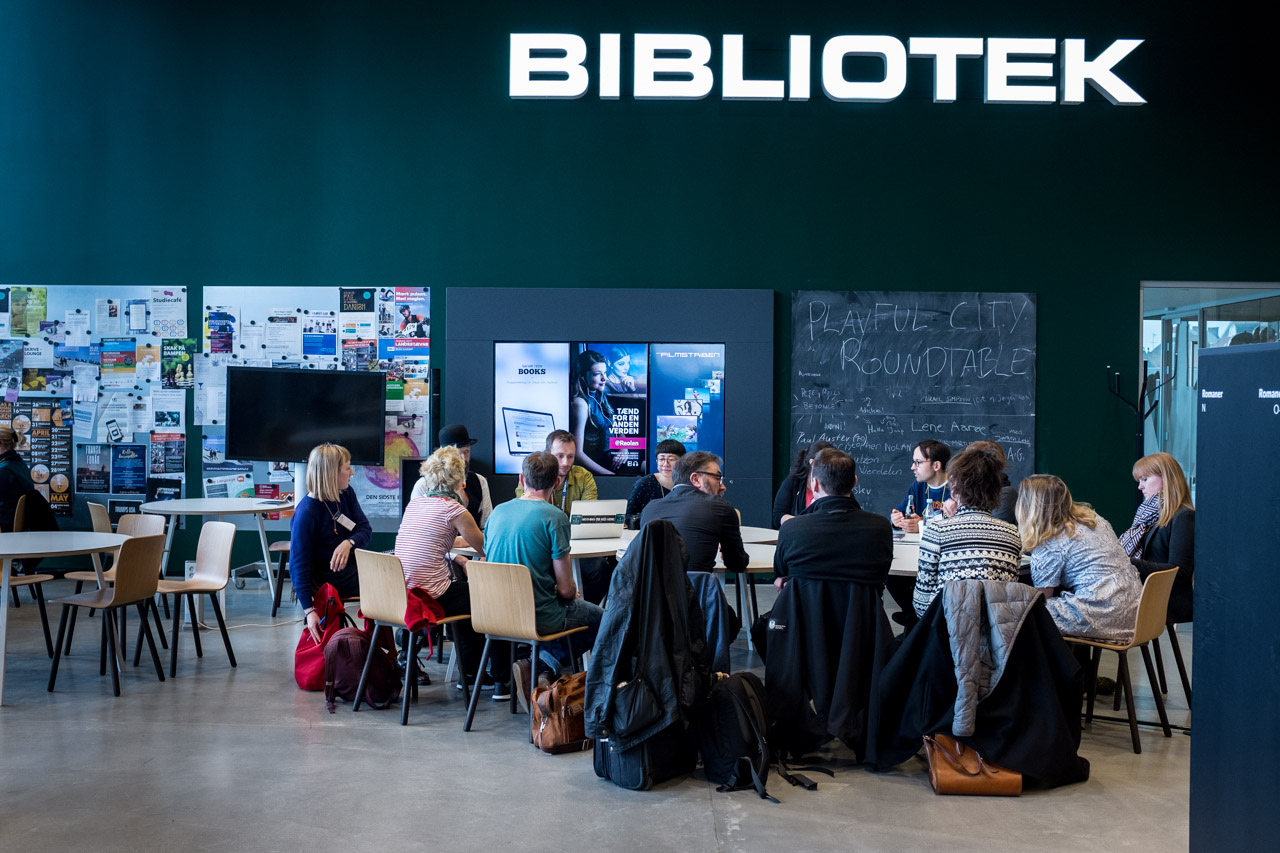
    The classic library is a conundrum in and of itself, a building dedicated to the imaginary worlds of fiction, of curious characters from the minds of authors and playwrights, and a space where you are asked not utter a word louder than your breath, and where more angry stares hit your eyes than at a busy train station.

    For us CounterPlayers the library is a valued venue, it is a space for us to explore our ideas, and moreover it’s a collaborator and friend that enables our annual festival to become a reality. My job as a volunteer was to make sure that the allocated rooms and spaces where ready for both participants and hosts, and required both a laptop in one arm and a friendly face when walking around asking students, library guests and the like to kindly leave the space open for our festival.

    Luckily for me, most students seemed to understand the relevance of a debate staged in the library, others, however, had their doubts as to what a festival of play was doing, first of all in the library, and second of all, why it involved adults.
    It was and still is curious to me how the users of such a vast mecca of literature and knowledge are unaware of their own need and desire to play. Are we not, as readers, part of an adventure that far exceeds ordinary life? I would even argue that the pages of non-fiction and newspaper as well as literature require us to step out of our immediate present and let words form the bridge between us and somewhere else. To learn and experience is to take a leap of faith.

    Exactly this dilemma was what brought the participants and listeners to the debate in the spring. What are the possibilities of the library, and how do we change the norms adherent to it? Kindergardens, schools and organizations as well as us at CounterPlay, wish for the library to evolve into a room and community that embraces imagination not just in the written word.

    Here on our blog I wish to take the question even further: how is it that the library, the home of books, adventures, fairy princesses, epic wars and deceptive murderers is a space of silence? Even the division of a children’s wing indicate a need to separate the immediate imagination and play (and noise?) of children from the seriousness of the adult reader. But I believe that just as much action is present within the mind of the adult reader, and thus the physical space of the library, the seriousness and silence seems to be in clear opposition to the realm of the inner experience.

    Perhaps the library should be a place for us to explore and to play, where children are free to move around and experience narrative in their own way? Perhaps a place where old prejudices can be challenged by who knows – a laughing kid, a bubble show, a reading or performance art? Even smaller libraries without the resources for separate rooms for play or immersion might open up the space for a little less quiet and a little more laugh.

    We all here at CounterPlay dare you to challenge the conventions of the home of the written word and accept, show and respect the inner need for play and imagination.

    [/et_pb_text][/et_pb_column][/et_pb_row][/et_pb_section]

  • Are the Robots coming?

    Are the Robots coming?

    [et_pb_section bb_built=”1″][et_pb_row][et_pb_column type=”4_4″][et_pb_text _builder_version=”3.0.89″ background_layout=”light”]

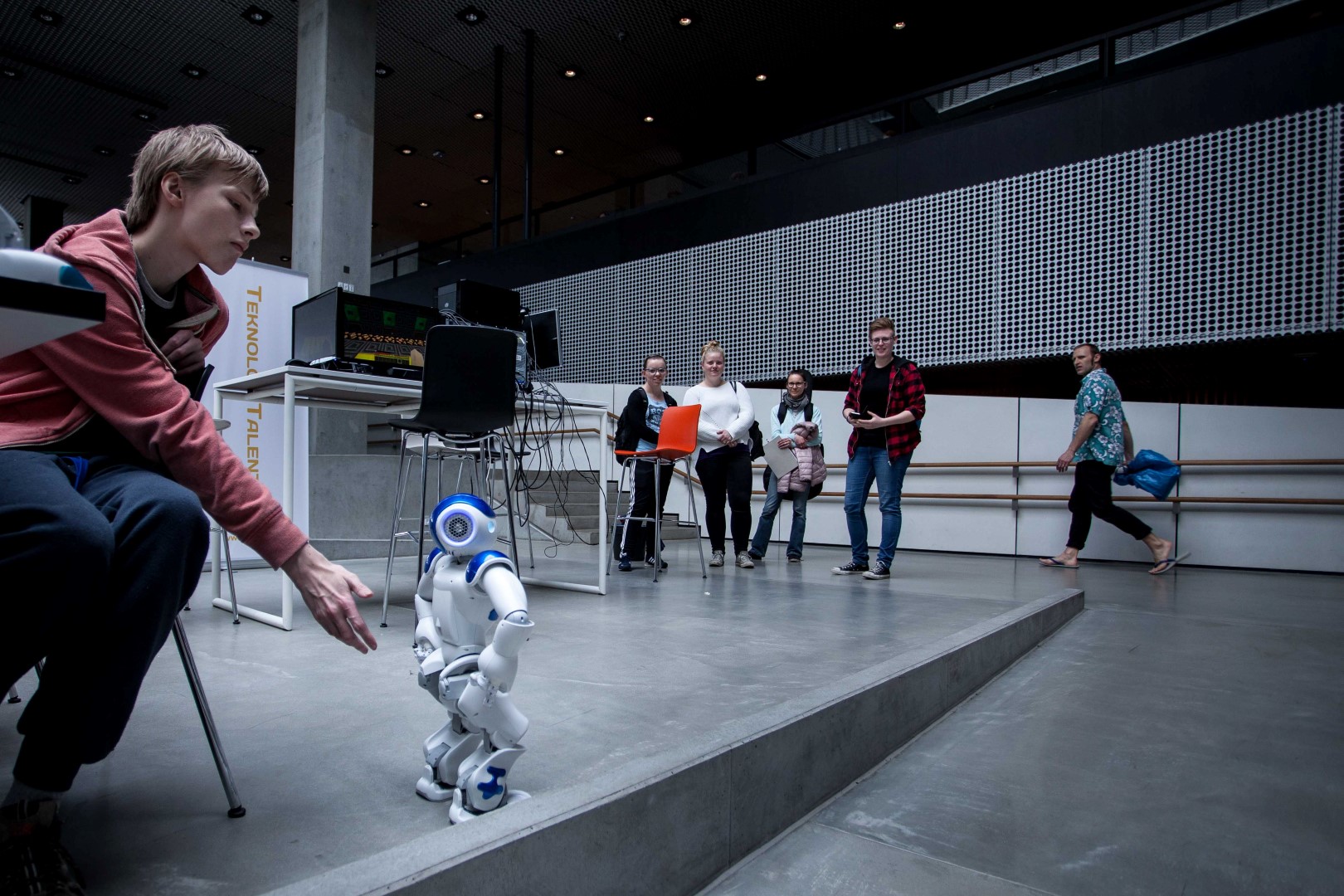
    At debate at this years CounterPlay festival I was confronted by a question I had never thought of asking before. Even though our modern times seem to demand it of us on a daily basis. On our phones, at factories, on labs and libraries, all over the world, the robot is no longer a word reserved for the far off worlds of Science Fiction, the future is now, and the robots? They have come to stay.

    So what do we do – us the human beings? Some of us may already have been replaced, while others might be staring down the barrel at the electronic intern. So let’s take a ride down worst-case scenario; if the robots are here not only to makes things easier, but actually end up taking over our jobs, what are our options?

    In a society that reflects a strong focus on the natural sciences and technology, it can be hard to spot what other possibilities the future beholds, but is play, creativity and the arts not the right place to go for answers? Is art not what sets us apart from each other, from the robot, from the cool, calm and collected science?

    True, this vision is not only dull, but might even seem like an unrealistic dystopia. But I believe the thought is worth exploring, for reflection and sheer curiosity if nothing else.

    [/et_pb_text][et_pb_image _builder_version=”3.0.89″ src=”http://www.counterplay.org/wp-content/uploads/2017/04/DSCF4363.jpg” show_in_lightbox=”off” url_new_window=”off” use_overlay=”off” always_center_on_mobile=”on” force_fullwidth=”off” show_bottom_space=”on” /][et_pb_text _builder_version=”3.0.89″ background_layout=”light”]

    To downplay the arts, to devote your-self to the endless roll of work schedules, payday and calculated free time, is that not the road to stress? Play however has become a term only applied to the past-time of children, and that is where we at CounterPlay propose to start. The language of play is not as well founded as the language of learning. Often play is set into and perceived through the context of learning. It has to occupy a profitable purpose, teach the children something, a tendency that quite frankly complicates the argument of play.

    But why should we even have to argue to play? Play is meant to set us free, free of everyday life, of the norms of civilized society, of the roles of parents, co-workers, mother, brother, sister, teacher and child. That all may sound well and good to you, but how do you do it?

    There is no doubt that to introduce play as play, and play for play’s sake in our modern society is a hard task to undertake, but nonetheless this cause is much too important for us and, I will argue, for YOU! We need to start emphasizing the arts, not dismiss them as unnecessary, silly and a waste of time. We need to recognize the way in which creativity expands our mind, thoughts, feelings and worldview, and thus expand and create our future.

    I can only end my thoughts on one end, to encourage you to challenge your ways, break the rules and expand your mind.

    [/et_pb_text][/et_pb_column][/et_pb_row][/et_pb_section]