“What are you working on? Is it any fun?” I hadn’t been working that long at my current work place, when the CIO (Chief Innovation Officer) asked me that.
And I replied: “I have fun working here, but I really don’t like the particular assignment I have now”.
This short dialogue raised a lot of questions in my head, because it did not seem strange that my CIO asked me that question and at the same time I took it for granted that I could answer the way I did. But would I get that question and would I be able to answer in that way everywhere? Is it supposed to be FUN to work? If I had FUN would I be doing my work seriously enough? Would I be concentrated while having FUN? Would I be ambitious enough if I said “YES, I am having FUN!”?
Being where I was, being who I am and knowing my CIO the way I did, I knew for sure that I could answer: “Yes, I am having fun!” and “I hate my current work assignment!”. We also both knew that I was stuck with the assignment and I had to solve it the best way possible. I was not after being pitied or being taken off the assignment. This was just a statement of status quo. And for my CIO it was important that I had fun on an overall level – not necessarily with the specific assignment.
Having fun at work is not the same thing as always having the fun assignments. In all workplaces there are boring, problematic, idiotic, difficult assignments and they have to be dealt with. But if the workplace signals that it is okay to have fun, to laugh, to connect with your colleagues it is actually more fun to do even the shitty assignments.
But back to the questions I just rose. No, it would not be possible to have this small dialogue in every workplace. Actually I will argue that it is far too rare to find workplaces where this dialogue could take place and I see it as a valuable goal to make this type of dialogue possible in more workplaces. There is a number of reasons why that should be a goal and as I see it the most important reason is that it creates trust and hence more work joy.
Trust is at the core of this small conversation, because my CIO trusts that I can do my work AND have fun at the same time. With his question he clearly states that having fun and working are not two opposites and by asking me my CIO makes sure to tell me that he is interested in my wellbeing and that it is important to have fun while working. He actually gives me a responsibility to make sure that I have fun in mind while being at work.
Another thing that I want to connect to this dialogue and the themes “fun” and “trust” is playfulness. Playfulness is a phenomenon with a lot of facets. E.g. it is about being able to play in the organisation and have a playful approach to the workplace, the assignments and continuous organisational changes can make it more FUN to work and can create more trust between people. Playfulness in organisations is about trying, daring and giving space for people, new ideas, weird inputs. It is about taking on new roles and having a primarily yes-instead-of-no approach.
Fun is one of the facets in playfulness and the ability to play. You simply have more fun if you are able to play and have a playful approach to your work and your life.
A playful organisation is also tightly connected to the issue of trust. Playing and having a playful organisation create trust in the organisation, because people connect in ways they would not normally do in a professional situation and because it in an organisation where experimentation is profound is okay to try, retry and fail. To be able to play employees and management however need to have a fundamental feeling of trust and a basic understanding that it is okay to play. This means that you can’t create a playful organisation without a basic feeling of trust to start with.
This means that becoming a playful organisation is not just to make some trendy “add on” to the organisation. In order to be and become a playfulness organisation playfulness needs to be taken seriously, it is a fundamental part of the organisation and has to do with atmosphere, relations and connections. Both management and employees need to be involved in creating a playful organisation – playing, trusting and having fun go both ways. The management needs to set the frame, give the space and trust the employees to perform, and the employees need to join in, take responsibility and open the mind for playing, having fun and trusting at work.
When was the last time you considered if you have fun when you work or if there is enough trust at your workplace to play and have fun?
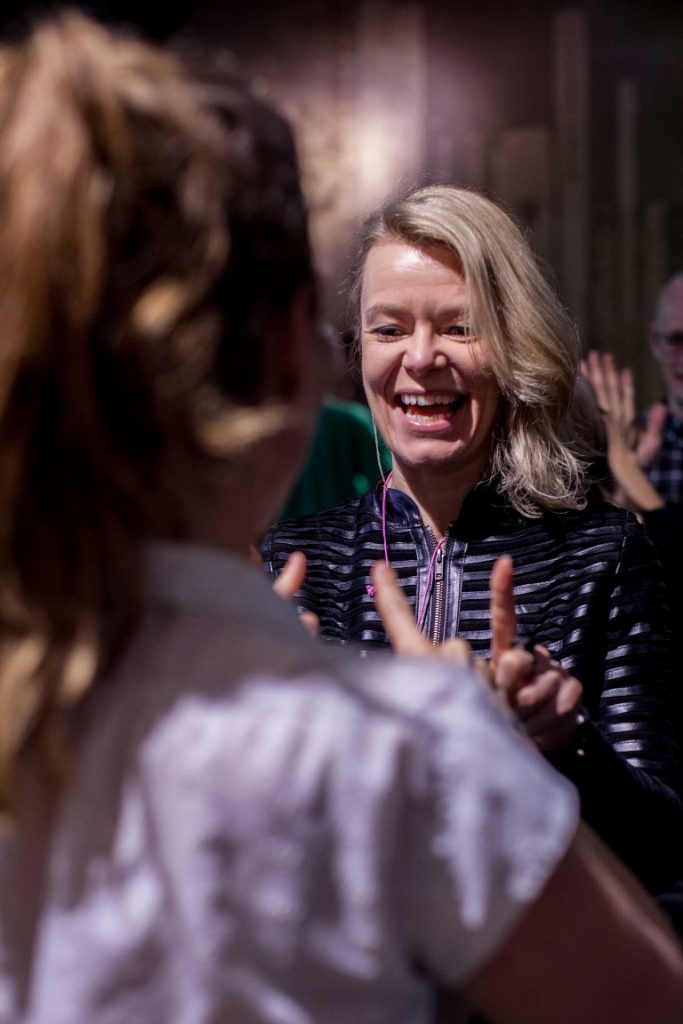
The beautiful pictures are taken by Benjamin Pomerleau at CounterPlay Festival 2016.
The idea about the playground is a wonderful thing.
It shows that we care so much about play that we design spaces to create the best possible conditions for play to thrive.
Playgrounds are, in principle, a love letter to play.
At the same time, many playgrounds are really not that interesting or playful. Even a playground made of the best materials by the best designers can be less than satisfying. You probably know the feeling: is this it?
A big part of the problem is quite often related to the lack of influence given to the player. In an earlier post, I argued that play requires a degree of (real) participation, and that this sort of participation is related to agency, decision making and power.
I think this understanding can be used to explain at least part of the problems with many playgrounds: Everything is decided by someone else, and the people playing can’t really shape the space, hence they are often not really participating, but only doing what the designers or city planners or other people in power desire.
Play scholar Miguel Sicart approaches this from a similar angle, when he, in the book Play Matters, argues that any playspace should be open for “appropriation” or what we might call a “playful takeover”:
The relationship between space and play is marked by the tension between appropriation and resistance: how a space offers itself to be appropriated by play, but how that space resists some forms of play, specifically those not allowed for political, legal, moral, or cultural reasons. Play relates to space through the ways of appropriation and the constant dance between resistance and surrender.
This is a central challenge in any kind of play, and one that clearly highlights again the relationship between play, participation, agency and power.
Who decides how we play?
Sicart continues:
The way spaces are articulated for play is dependent on more than design or playful considerations. Strong norms, rules, and laws govern the use of public and private spaces, and play design must be done in accordance with them. […] In many cases, the trivialization of playground design— the overabundance of plastic-based, repetitive architectures built for safety rather than for play— which seems to have increased in the past several decades, is a result of protective laws rather than of misguided design. And the interest today in implementing digital playgrounds or computer-enhanced environments for play also comes from the normative idea that play is more secure if it is more controlled.
When play is being controlled and regulated, part of it has to do with safety concerns. We don’t want kids (or anyone else playing) to get hurt, so reduce the risk and thus the number of ways to play and to appropriate spaces for play.
In any environment, both the degree of inventiveness and creativity, and the possibility of discovery, are directly proportional to the number and kind of variables in it
The variables are what he defines as “loose parts” and are understood as any element that can be manipulated by participants or players. In other words, loose parts shows a way to open up spaces for participation and appropriation. Conversely, the lack of loose parts, then, reduces these opportunities:
It does not require much imagination to realise that most environments that do not work (i.e. do not work in terms of human interaction and involvement in the sense described) such as schools, playgrounds, hospitals, day-care centres, international airports, art galleries and museums, do not do so because they do not meet the ‘loose parts’ requirement; instead, they are clean, static and impossible to play around with
When hunting for inspiration on how to make playgrounds more playful, the tradition of “adventure / junk playgrounds” is a great place to start:
Adventure play can take a variety of forms, ranging from natural spaces with treehouses and twine forts reminiscent of Huck Finn or Pippi Longstocking, to dump-like playgrounds filled with old tires and plastic junk, to temporary arts and crafts gatherings. (Playworkers, Ph.Ds, and the Growing Adventure Playground Movement)
Adventure playgrounds typically feature a lot of loose parts, hence a lot of opportunities to shape the playground yourself, even in some small way.
Adventure playgrounds help us understand how spaces can be designed for play through the use of props that help play take place within a bounded space while still remaining open to the creative, appropriative capacities of the activity. Good playgrounds open themselves up to play, and their props serve as instruments for playful occupation (Play Matters)
It is very encouraging to see that more and more people are aware of adventure playgrounds and that the movement seems to be building momentum (and I’ll get back to this in an upcoming post).
There are many reasons why most playgrounds are not more like adventure playgrounds, and these reasons reflect the many issues we have with play in a broader perspective. As a society, we are generally too preoccupied with reducing the unpredictable and eliminating risk. This is, however, known to have undesired and sometimes opposite effects:
“When adults take over all responsibility for safety by eliminating danger, numerous problems can arise. One issue is that there is no guarantee that the physical play becomes safer. In many cases, children refrain from engaging in physical play to comply with the adults‟ need for a safer environment. Over time, one consequence can be that, when the children face future physical challenges, they will be ill-informed and inexperienced regarding bodily know-how. Their physical incompetence can actually make their play activity even more dangerous” (Skovbjerg, Elbæk & Rytz)
It’s not just safety concerns driving this, however. There is also the more general tendency of eliminating that which we can’t control and that which will not lead to the desired outcome. The classic definition of play by Huizinga maintains that play is an “activity connected with no material interest, and no profit can be gained by it”. In the current paradigm, where we are so notoriously concerned with measurable outcomes, play is a clearly threat.
We are afraid of play, precisely because play is hard to control, and the same can be said about playgrounds with less regulation, more freedom, loose parts and room for appropriation.
I’m not saying that we should give up making playgrounds altogether, or that all playgrounds should be junk or adventure playgrounds, but simply that there are many complex dynamics in play, and that these can seldomly captured by any one space. The more confined and controlled the space is, the more you reduce the possible spectrum of play. If you tell people how to play, and you create spaces that only accomodate a very narrow definition of “play”, well, you undermine the chances that playful play will happen in that place.
This is also why some of the best spaces to play are not, and will probably never be, designated playgrounds, but spaces “appropriated” for play.
What would make playgrounds more meaningful to you?
It might seem trivial to say that in order to play, you have to participate in some way.
The apparent triviality of that statement changes as soon as you start looking a bit deeper at the meaning of participating, though. Participation, playful or not, is indeed a contested and complex phenomenon and ” we must thus keep in mind the multiple motivations for engaging in participatory processes, and this involves understanding cultural participation as a multidimensional concept” (Reestorff, Fabian, Fritsch, Stage, Stephensen).
A participatory culture is a culture with relatively low barriers to artistic expression and civic engagement, strong support for creating and sharing creations, and some type of informal mentorship whereby experienced participants pass along knowledge to novices. In a participatory culture, members also believe their contributions matter and feel some degree of social connection with one another (at the least, members care about others’ opinions of what they have created).
As I mentioned in “The Play Community“, this covers a lot of what we’re hoping to achieve with CounterPlay. When seen like this, participation requires more than just being a more or less active attendant at any kind of event or activity or play session. You have to express yourself, make contributions, become part of shaping a meaningful community and care about the contributions of others.
There is an underlying theme at play, namely that you must have agency to really participate. As argued by Nico Carpentier, “the key defining element of participation is power”:
The debates on participation in institutionalized politics and in all other societal fields, including media participation, have a lot in common in that they all focus on the distribution of power within society at both the macro- and micro-level
This is to say that if there is not a shift of power, if those expected to participate are not powerful (to a never precisely defined extent), “at some point participation simply stops being participation”. Participation, then, should not be used as a glossy term to hide the fact that often, there is no real power for the socalled participants. Exactly the same can be said about play and playfulness. Do you want to cultivate a playful culture in the workplace? Well, it can’t be sugarcoating (like ping-pong tables or other gimmicks), it needs to be embedded in the fabric, and it requires actual power and decision making to be put in the hands of those you expect to play along.
If we stay with Carpentier a little bit longer, he covers another shared trait between play and participation (without mentioning play, that is):
These kinds of reflections allow participation to be seen as invitational, which implies that the enforcement of participation is defined as contradictory to the logics of participation, and that the right not to participate should be respected.
Participation can’t be forced, but only invited. Most play scholars agree with Carpentier, and often points back to Huizinga’s “Homo Ludens” when doing so:
First and foremost, then, all play is a voluntary activity. Play to order is no longer play: it could at best be but a forcible imitation of it. By this quality of freedom alone, play marks itself off from the course of the natural process
All of this, the voluntary participation and the actual agency is also covered in Thomas S. Henrick’s most recent book, “Play and the Human Condition“, where he “celebrates the role of agency in human affairs”:
play events capitalize on people’s capacities for creativity, or externalization. Nothing exists— at least, nothing that is playful in character— until the participants decide to invest the moment with this quality. When they withdraw that energy and enthusiasm, the moment dies. Play makes people aware of their capacities for social agency.
To me, this is the essence of play: to be able to playfully participate, and not just in more or less arbitrary acts of play, but in society and life as a whole.
Jeg var for nylig på UC Syd i Kolding for at holde et oplæg om “gamification og playful design” i et forum for undervisere på en række professionsuddannelser inden for design og kommunikation. Da jeg først blev spurgt om jeg ville bidrage, var jeg faktisk lidt i tvivl. Jeg har holdt mig lidt væk fra fænomenet gamification, og jeg var og er skeptisk over for meget af den “pointsification“, der har præget feltet. Da det imidlertid lykkedes mig at få tilføjet “playful design” til overskriften kunne jeg dog bedre se mig selv i det, og det endte med at være en af de der helt perfekte dage, hvor mine tanker og interesser fik særdeles engageret og kvalificeret modspil af passionerede mennesker.
Mit oplæg var (selvfølgelig) lidt for massivt, for jeg ville jo både tale om motivation og gamification og playful design og…I ved hvad jeg mener. Alt for meget på alt for kort tid (det samme kan siges om dette blogindlæg, men det kan man jo bare parkere, og vende tilbage til senere, eller man kan springe i det med indholdsfortegnelsen til højre).
Mit udgangspunkt var spørgsmålet om vi klæder mennesker ordentligt på til at håndtere den kompleksitet og usikkerhed, der præger verden (bl.a. inspireret af denne og denne artikel):
Denne adfærdskultur vil formentlig gøre det sværere for mange elever at starte nye virksomheder eller udleve drømmen om at blive noget stort, når de bliver voksne, fordi de på forhånd frygter at fejle. Den vil sandsynligvis dræbe megen kreativitet, inden ideerne overhovedet ser dagens lys. Den vil, som jeg allerede ser det hver dag, gøre det kikset at lære. Og på den måde kvæle vores videnssamfund langsomt.
Det er en bekymring, der går igen i stort set alt mit arbejde, for hvad skal vi stille op med os selv, hvis vi ikke bliver klogere på, hvordan vi kan være til i en omskiftelig verden, og hvordan vi kan skabe meningsfulde liv for os selv og hinanden?
Spørgsmålet er, for mig, selvfølgelig hvilken rolle legen kan spille i at håndtere denne massive udfordring.
Der er sjældent nogen, der efterlyser spil, gamification (i særdeleshed) eller leg uden at koble det med et ønske om øget motivation.
Derfor skitserede jeg selvfølgelig den kendte skelnen mellem “extrinsic” motivation, der ofte kædes sammen med gamificationsystemers belønningsstrukturer, og “intrinsic” motivation.
Det ydrestyrede (extrinsic) har utvivlsomt en berettigelse, men det er ret grundigt belyst, at en for ensidig orientering mod eksterne belønninger risikerer at underminere den glæde og begejstring, der indledningsvist kan være knyttet til en given aktivitet (her nævnte jeg Alfie Kohns “Punished by Rewards” der bærer undertitlen “The Trouble with Gold Stars, Incentive Plans, A’s, Praise, and Other Bribes”).
Den indrestyrede kan – blandt andet – forstås i lyset af Deci og Ryans “self-determination theory“, der fokuserer på “the innate needs for competence, autonomy, and relatedness”.
Man kommer heller ikke uden om Mihaly Csikszentmihalyis “flow teori”:
The use of game design elements in non-game contexts
Jeg forsøgte, ganske kort at skitsere nogle af de elementer, der udgør et spil: regler, problemer der skal løses (missioner, quests osv), feedback, fortællinger & universer, samt selvfølgelig hele den sociale dimension i form af samarbejde, konkurrence og blot det at være sammen med andre, at høre til.
Som så mange andre, kritiserede jeg tilbøjeligheden til at fokusere for ensidigt på belønninger, points og badges, og argumenterede for, at man med fordel kan tænke gamification bredere og henviste bl.a. til “47 Gamification elements, mechanics and ideas“.
Jeg stillede spørgsmålstegn ved “sugar coating” og forestillingen om, at vi kan eller skal gøre en kedelig, måske endda meningsløs, aktivitet sjov ved at putte glasur på toppen. Målet må jo være, at vi får selve aktiviteten til at give mening, og det er netop det, gode spil er effektive til.
Hos Deterding fandt jeg denne definition på “playful design”:
Playful design or affording “paidic qualities”: designing to afford the experiential and behavioral qualities characteristic for playing.
Det handler altså, groft sagt, om at designe oplevelser, der minder om og deler karakteristika med leg. Det kan man gøre for at skabe en god oplevelse, for at øge motivationen, eller – og her er min primære pointe – fordi legen skaber et særligt rum og en særlig kultur, hvor andre ting kan lade sig gøre.
Som et eksempel på et meget simpelt, men effektivt playful design viste jeg denne:
Jeg fik ikke sagt tydeligt nok, at leg, for mig, især er noget, der foregår inde i vores hoveder, et særligt mindset og en måde at møde verden på:
The concept of play applies to thoughts as well as visible actions. Humans can think playfully as well as act playfully, generating novel patterns of thought in a protected context. A large part of human play goes on in the mind and may not manifest itself in overt behaviour (Play, Playfulness, Creativity and Innovation)
Som Miguel Sicart peger på, så er netop “playfulness” en attitude, vi kan bringe ind i sammenhænge, der ikke i sig selv har noget med leg at gøre:
What we want is the attitude of play without the activity of play. We need to take the same stance toward things, the world, and others that we take during play. But we should not play; rather, we should perform as expected in that (serious) context and with that (serious) object. We want play without play. We want playfulness— the capacity to use play outside the context of play (Play Matters)
I en af diskussionerne kom vi til at tale om sammenhængen mellem leg og dannelse, som jeg jo finder helt central. Dannelse handler basalt set om selve det at være til, og om at være i stand til at reflektere over sin egen eksistens og relation til både mennesker og den omgivende verden. At være dannet er at have en nysgerrighed på hvordan verden hænger sammen, hvordan man som menneske kan påvirke verden – og omvendt . Dannelse åbner for deltagelse i samfundet, personlig myndiggørelse og etisk reflekteret adfærd.
Det blik på dannelse giver nogle ret tydelige overlap med legen, der netop drives af en nysgerrighed på verden, og på at gå opdagelse, alene og sammen med andre:
How do we discover who we are? How do we determine the character of the world in which we live? And how do we decide what we can do in a world so configured? […] we learn about ourselves and the world— and about the intersection of these two realms— through acts of play. – Thomas S. Henricks
Kreativitet
En af fællesnævnerne ved alle de uddannelser, der var repræsenteret, er at det kreative står helt centralt i det daglige. De studerende forventes at udvikle kreative evner, og gennem kreative processer skabe kreative produkter. Derfor blev sammenhængen mellem leg og kreativitet selvfølgelig også et populært emne i diskussionen.
You never just imitate practice; there will always be a creative process involved in doing play practice (Play practices and play moods)
The core of our argument is that new forms of behaviour and new modes of thought frequently derive from play, and especially from playful play. Such activity is a driver of creativity and, less directly, of innovation, both in humans and in other species. Play generates novel ways of dealing with the environment, most of which lead nowhere but some of which turn out to be useful.
Der er også flere der peger på, at legen potentielt kan skabe en anden forbindelse mellem hjerne og krop, og “the body-mind’s capacity for breaking free from patterns”:
play is a feeling, an embodied state of mind in which we experience novel thoughts and sensations before they become entrapped within language (Ludic Ontology)
I forlængelse af kreativitet berørte vi også “det vilde”, og hvordan legen kan skabe et rum for at turde omfavne vildskaben og det ukontrollable:
“playful people are those who do not wait passively for the world to hand them their assignments, that is, their roles and challenges. Quite the opposite, such players routinely make their own fun or even make trouble by destabilizing ordinary affairs. Thus, play is sometimes an adventure in extremism, an adventure during which people allow themselves to get too loud, too silly, too rambunctious, even too tired. At least in some forms of play, participants seem to desire challenges they cannot handle. At such times, players do not seek mastery; they seek the excitement that comes from being out of control and the creative responses they can muster”(Orderly and Disorderly Play)
Legen giver os også mulighed for udfordre det bestående, og undersøge hvordan verden kan være anderledes:
Playfulness is the carnivalesque domain of the appropriation, the triumph of the subjective laughter, of the disruptive irony over rules and commands. Playfulness means taking over a world to see it through the lens of play, to make it shake and laugh and crack because we play with it(Play Matters)
I en af de mange spændende samtaler var der en der nævnte “de røde næser”, som er en lille gimmick, vi alle kender: man tager en rød næse på, og straks forventes legen at blomstre. Det sker selvfølgelig ikke nødvendigvis, og vi var vist nogenlunde enige om at se det som en oversimplificering af legen.
Jeg skylder at nævne, at jeg jo faktisk kender en rigtig klovn, der altid har en (blå) næse rundt om halsen, og som rejser rundt i verden for at skabe rum til leg, smil og glæde blandt udsatte børn og voksne, for tiden særligt flygtninge:
Det spørgsmål konfronterer jeg jo hele tiden mig selv med: hvad kan vi rent faktisk stille op, så vi giver legen mere plads? Her er nogle af de muligheder, vi drøftede, og som går igen i meget af mit arbejde:
Giv tilladelse
Hvis man vil noget med legen, så er første skridt typisk at tage den seriøst på en anden måde, end vi er vant til. Vi skal overvinde vores iboende trang til at grine af legen, og vi skal give os selv og andre tilladelse til at lege:
Probably the biggest roadblock to play for adults is the worry that they will look silly, undignified, or dumb if they allow themselves to truly play. Or they think that it is irresponsible, immature, and childish to give themselves regularly over to play. Nonsense and silliness come naturally to kids, but they get pounded out by norms that demean “frivolity.” – Stuart Brown
Hvordan kan vi skabe de rum, hvor legen ikke blot er tilladt, men tilskyndet? Hvordan kan vi bruge det fysiske rum og fysiske genstande til at understrege den tilladelse? Det kræver i hvert fald en bevidst beslutning, en efterfølgende indsats og formentlig en forankring i et bredere fællesskab.
There’s nothing hard about being playful. The hard thing is let your self out to play so that you have that choice, the hard thing is recognizing the opportunity, the brave thing is accepting the invitation – Bernie DeKoven
Gå forrest med små skridt
Jeg nævnte David Gauntlett, der har lavet mange spændende ting i krydsfeltet mellem makerkultur, kreativitet og leg (og rapporten “Cultures of Creativity” sammen med LEGO), og som netop berører dene udfordring i indlægget “Playful creative learning: adults first“:
“If you want to have a culture of playful learning and experimentation, you need adults to have embraced a culture of playful learning and experimentation before you can expect that we might try to make it happen in schools.”
I forlængelse af det taler han også om, at vi skal tage alle forandringer som en serie af små skridt (det uddybes i “On making, sustainability and the importance of small steps“). Det er helt afgørende, at vi finder de mindst mulige skridt, som skaber reelle, meningsfulde forandringer:
I think change happens, step-by-step, little step by little step, as people do things differently. That’s the only way it makes sense. People on the ground start to do things a bit differently, and start to expect things to happen a bit differently, and then this gets absorbed into the more macro-level context
På CounterPlay ’16 havde vi et gennemgående tema med fokus på “sprog om leg”, bl.a. med hjælp fra Stine Liv Johansen, AU, og Helle Marie Skovbjerg, AAU, netop fordi vi ser et stort behov for en øget sproglig bevidsthed omkring legen. Hvordan kan vi argumentere for legens vigtighed, hvis vi ikke har en fælles sproglig forståelse?
Det blev igen i går tydeligt for mig, at alene det at tale om leg dels gør folk glade, dels i sig selv øger forståelsen og refleksionen omkring leg. Vi skal altså simpelthen tale mere om leg, reflektere mere, og overveje hvilket sprog vi bruger til at formidle vores fælles forståelse.
Evaluering, måling & eksamen
Alle der beskæftiger sig med uddannelse ved, at den måde vi måler elevernes/de studerendes progression er stærkt determinerende for den måde vi underviser på. Hvis eksamen måler A, så er er ikke ret mange, der vil undervise ret meget i B, og det giver jo for så vidt god mening.
Udfordringen opstår selvfølgelig, når karakterer, tests, prøver og eksamen ikke afspejler det, vi mener er vigtigt for at kunne begå sig i samfundet. Eksempelvis har vores eksisterende bedømmelsesapparat vanskeligt ved at indfange legen og det legende (/playfulness). Uanset hvor væsentligt vi end synes det måtte være, så vil de fleste uvægerligt nedprioritere det til fordel for det mere målbare. Vores fælles opgave bliver derfor at undersøge, hvordan vi kan kvalificere legens betydning på andre måder, og hvordan vi dermed kan retfærddiggøre en øget opmærksomhed og prioritering af legen.
In the two previous posts I have written about “the diversity of play” and “the play community” as two factors to consider when aspiring to create a truly playful play festival.
An even less controllable and tangible part of making a playful festival is the atmosphere. After having organized thee CounterPlay festivals, the most important single thing I’ve learned, is that it’s not so much about the content of any single activity or session (not that these are not important), but about the overall playful atmosphere. It needs to be informal, relaxed, open, respectful and welcoming, so people feel safe enough to just be there without wearing masks (well, actual masks are ok, of course).
If the atmosphere is not right, chances are people won’t overcome all the social norms and conventions that get in the way of adults’ play:
Probably the biggest roadblock to play for adults is the worry that they will look silly, undignified, or dumb if they allow themselves to truly play. Or they think that it is irresponsible, immature, and childish to give themselves regularly over to play (Brown, 2009)
To change this, you need to put yourself “yourself in an environment that supports and promotes that play”. If the atmosphere is right, people act differently, and maybe, just maybe, they choose to engage in “playful play”:
“Playful play (as distinct from the broader biological category of play) is accompanied by a particular positive mood state in which the individual is more inclined to behave (and, in the case of humans, think) in a spontaneous and flexible way” (Play, Playfulness, Creativity and Innovation)
The idea about “mood” is explored in more depth by Helle Marie Skovbjerg, who, argues that “play moods is the particular concept of sense and feeling of being, which is what we are drawn to when we play:
Applied to our play mood perspective what is important here is that play mood comes before any meaning can be articulated as something specific. It is the state of being where you are distinctly open to new meaning production and where the possibilities exist for that to happen. It is not something that comes from within the players or from the outside, but instead it is happening through our engagement with the doings of play and in our relations towards the people we are with (Play practices and play moods)
The atmosphere and the mood is reinforced by what Stuart Brown calls “continuation desire”:
play provides a continuation desire. We desire to keep doing it, and the pleasure of the experience drives that desire. We find ways to keep it going. If something threatens to stop the fun, we improvise new rules or conditions so that the play doesn’t have to end. And when it is over, we want to do it again
I hope and think most people at the festival experienced this to some extent. When I saw people, strangers, engage in deep, meaningful conversations and all sorts of play, even the most silly and rambunctious kind, I felt like we had succeeded in some way. These wonderful people were showing remarkable levels of empathy and respect for each other. The atmosphere was friendly, and everybody seemed curious, eager to learn, and also to enter the unknown:
What inspired me most was the camaraderie, the ease of conversation and exchange as if we had all known each other for decades, the lack of pretension anywhere
Now, it’s one thing to make these things happen when like-minded, playful souls get together. It’s obviously a significantly greater challenge to bring about a similar atmosphere, when play is a rare exception. That is, however, the conversation we need to continue: how do we help each other and our peers embrace their playful selves?
[/et_pb_text][et_pb_post_nav admin_label=”Post Navigation” in_same_term=”off” hide_prev=”off” hide_next=”on” prev_text=”Read the previous post in this series: %title” use_border_color=”off” border_color=”#ffffff” border_style=”solid” /][/et_pb_column][/et_pb_row][/et_pb_section]
In the previous post, I reflected on “the diversity of play” as one strategy for “inviting playfulness” by allowing people to approach play in a way that feels meaningful to them.
While we can design for diversity in the way we represent play, and we can invite a diverse group of contributors, it’s impossible to control what makes up the core of the festival: the people, the community. We approach the notion of community as a space for mutual participation, or, in the words of Henry Jenkins (et al), a “particpatory culture”:
“A participatory culture is a culture with relatively low barriers to artistic expression and civic engagement, strong support for creating and sharing creations, and some type of informal mentorship whereby experienced participants pass along knowledge to novices. In a participatory culture, members also believe their contributions matter and feel some degree of social connection´with one another”
Cultivating a diverse play community where people are actively participating to explore play is probably our best bet to foster a strong movement towards a more playful world. When we know for certain that we are not alone, that other people feel the same urge to be playful, then we can easier muster the courage that is necessary to challenge the non-playful structures around us. In that light, it was immensely satisfying to experience how the diversity of play was mirrored in the diversity of the play community.
“But we are a play community, and playing the way we do, for fun, for everyone’s fun, in public – our fun little community becomes something else. To those who want to be seen as people who embrace life, embrace each other, embrace spontaneity, freedom, laughter; we are an alternative. An invitation. We play as if the game isn’t important. The rules aren’t important. As if the only really important thing is each other”
In this community, there was an ongoing negotiation of meaning & purpose, just like when we play in other contexts. We came together from many different backgrounds, disciplines and parts of the world, and we challenged each other on everything from the rules of a game to the way we are together as people:
“When people agree on the terms of their engagement with one another and collectively bring those little worlds into being, they effectively create models for living” (Henricks, 2016)
Putting this much emphasis on the community, it’s obviously crucial that people actually feel that they are welcome and that the community is values their participation and contributions. Judging by the feedback we have received so far, it seems we are getting some things right:
I was inspired by the variety of people – ages, nationalities, interests, approaches – for whom playfulness and play are so key. There was such a powerful sense of a global community and a growing movement. I brought back renewed energy and enthusiasm and lots of happy memories.
Counterplay is the place to be for playful people who are curious to new insights, new people and new adventures. It’s a journey, on both a personal level and on the level of the community. Counterplay = a way to transform the I into WE.
In the next and last post, I’ll take a look at how diversity and community can, in some cases, help cultivate a playful atmosphere.
[/et_pb_text][et_pb_image admin_label=”Image”] [/et_pb_image][et_pb_post_nav admin_label=”Post Navigation” in_same_term=”off” hide_prev=”off” hide_next=”off” prev_text=”Read the previous post in this series: %title” next_text=”Read the next post in this series: %title” use_border_color=”off” border_color=”#ffffff” border_style=”solid” /][/et_pb_column][/et_pb_row][/et_pb_section]
It’s been a while since the third CounterPlay festival ended, but we’re still extremely excited that so many wonderful people came from all around the world to play and we still feel the energy. We’ve been evaluating and reflecting on the event, including question of what actually makes a play festival like CounterPlay truly playful?
In three posts, I’ll look at three related components that influence the playful attitude of the festival (and any attempt to create a playful culture in general, I might add):
When you’re playful, you engage with the world as a possibility space, where anything can happen. There are no right or wrong answers and the roles, rules and very purpose can change while you engage with your ideas, thoughts, people and the world through play. You don’t necessarily need absolute freedom to play, but true play is unlikely to happen if you’re specifically told when, where, how and with whom to play. Hence, one way to invite playfulness is to abstain from giving simple answers or definitions of what play can be. The mistake we often make is providing pre-packaged play solutions (like games or toys designed for a very specific purpose) that leave little to no space to the imagination of the player. We know from Umberto Eco that “empty spaces” are part and parcel of a rich experience, as we are stimulated by “filling out the blanks”.
For play to really mean something and be potentially transformative, it needs to resonate with your sense of self.
For play to really mean something and be potentially transformative, it needs to resonate with your sense of self. It can definitely challenge you and your worldview, but not too much at once (think Vygotsky’s “zone of proximal development” and Csikszentmihalyi‘s “flow theory). To create a space where different people can experience this, it’s important to understand and respect the diversity of play:
“Play […] can manifest itself in many different ways in humans. It may be solitary, social, pretend, imaginary, symbolic, verbal, socio-dramatic, constructional, rough-and-tumble, manipulative, and so forth” (Play, Playfulness, Creativity and Innovation)
Play is “paradoxical because it displays one quality and the opposite of that quality at the same time” (Henricks, 2009) and a highly ambigous phenomenon:
“We all play occasionally, and we all know what playing feels like. But when it comes to making theoretical statements about what play is, we fall into silliness. There is little agreement among us, and much ambiguity” (Sutton-Smith, 1997)
This ambiguity is exactly why we are concerned with play in the broadest sense, as any one narrow focus will miss out on so much. To understand play and to allow people to find out how play makes sense to them, the ambiguity and diversity must be built directly into the foundation. Representing the full breadth of play is obviously impossible in the span of just a few short days, but I nonetheless feel like we improved a lot in this area and at least some participants seem to agree:
Counter play was an unusual and wonderfully playful mix of experiences. It is the only conference I’ve been to that involved Marimba dancing before the first talk of the day, a (genuine) clown giving a keynote, and a summary of the conference by a giant cardboard rabbit. Playful, inspirational and invigorating, Counterplay was an amazing event to be part of. By the way, tig, you’re on.
I think just the multidiciplinary diversity alone was amazing. I was blown away by how many people are working very methodically and seriously with what play can be.
To participate in CounterPlay Festival is like entering into a candy store where you have been giving permission to try all your favorite sweets – also the purple squared once you did not know that you liked 🙂
When you embrace diversity, and you create something more like a sandbox than a linear and strictly controlled experience, you also inevitably design for unpredictability. When you play, and you’re immersed, really feeling playful, it’s impossible to completely predict or control the outcomes. It’s a point we’re trying to make, of course, and I hope that this comes across: you can make something extremely valuable happen without knowing what it will be like.
In the next post, I’ll examine the community part of CounterPlay.
[/et_pb_text][et_pb_image admin_label=”Image” src=”http://www.counterplay.org/wp-content/uploads/2016/05/DSCF1617-Medium.jpg” show_in_lightbox=”off” url_new_window=”off” use_overlay=”off” animation=”left” sticky=”off” align=”left” force_fullwidth=”off” always_center_on_mobile=”on” use_border_color=”off” border_color=”#ffffff” border_style=”solid”] [/et_pb_image][et_pb_post_nav admin_label=”Post Navigation” in_same_term=”off” hide_prev=”on” hide_next=”off” next_text=”Read the next post in this series: %title” use_border_color=”off” border_color=”#ffffff” border_style=”solid”] [/et_pb_post_nav][/et_pb_column][/et_pb_row][/et_pb_section]
[su_box title=”Guest Post: Bernie DeKoven” box_color=”#023254″ title_color=”#ffffff” radius=”5″]This post is written by guest blogger Bernie DeKoven. For more of his work, see www.deepfun.com and www.aplayfulpath.com.
If you also want to write a post, get in touch![/su_box]
There are certain people, like you and me, who believe in fun. We believe in it so much and so hard and so completely that we have to share it. We just have to. We believe that the pursuit of fun is even more fun than the pursuit of happiness. We believe that fun is an inalienable right. Not that it should be. But that it really, really is. Like freedom. In fact, we believe that fun is freedom. Just like freedom is fun. For sure.
Play? Well of course. We believe in play because play is fun. Especially playful play. Because, like Patrick Bateson said (yes, him, not me), “playfulness is what makes play fun.”
We are a playful folk. Kind of like play circuses, don’t you know. Wandering hither and yon, finding people we can just hang with and get playful. We’re not quite famous, if you know what I mean, not really “mainstream.” But play, well, it’s what we do. Who we are. What we are meant for.
Games? Toys? Sure. Sometimes. When they’re fun. And what we like about them is that we can share them, play with people with them. We believe in Frisbees.
But for all our faith in fun, it’s not until our tribes can get together, like we do at CounterPlay, not until all these different groups of players get to play with each other that we feel the depth of it all, the profundity of the faith, of the fun, of the freedom we give each other by the sheer power and variety and faith in fun.
I think the whole world believes in fun. But only a few of us actually practice it. Faithfully. Which is why it is so powerful for us when we get to play together. All us play practitioners, playing freely, safely, fearlessly together.
Fearlessly.
It’s funny – a sad kind of funny – that we so often feel that we’re doing something wrong, something illegal, having fun like this, together, in the open. Which is probably why, when we get together, it’s so much more fun. Because we free each other. Because fun is threatening to those people who aren’t having it. Just like freedom.
And when we’re ready, or just feel like it, or find the right opportunity, maybe we can play like we do, in public. Not so much showing people how good we are at playing together. But more like inviting people to join in the fun.
And then, then we become a cause, if you know what I mean. Then we make our statement. Freeing each other to play, and maybe, who knows, the world.
[su_box title=”Guest Post: Heidi Hautopp” box_color=”#023254″ title_color=”#ffffff” radius=”5″]This post is written by guest blogger Heidi Hautopp, Aalborg University.
“To give each other permission to play” is one of the main points which have stuck with me after participating in CounterPlay Festival 2016. I think play and playfulness are complex terms which encompass multiple meanings, but for me the communities around play are crucial. The playful activity is more enjoyable when you have someone to share it with and it gets more fun when you have someone to laugh with. So I totally agree – we need to give each other permission to play in order to make space for these communities to grow!
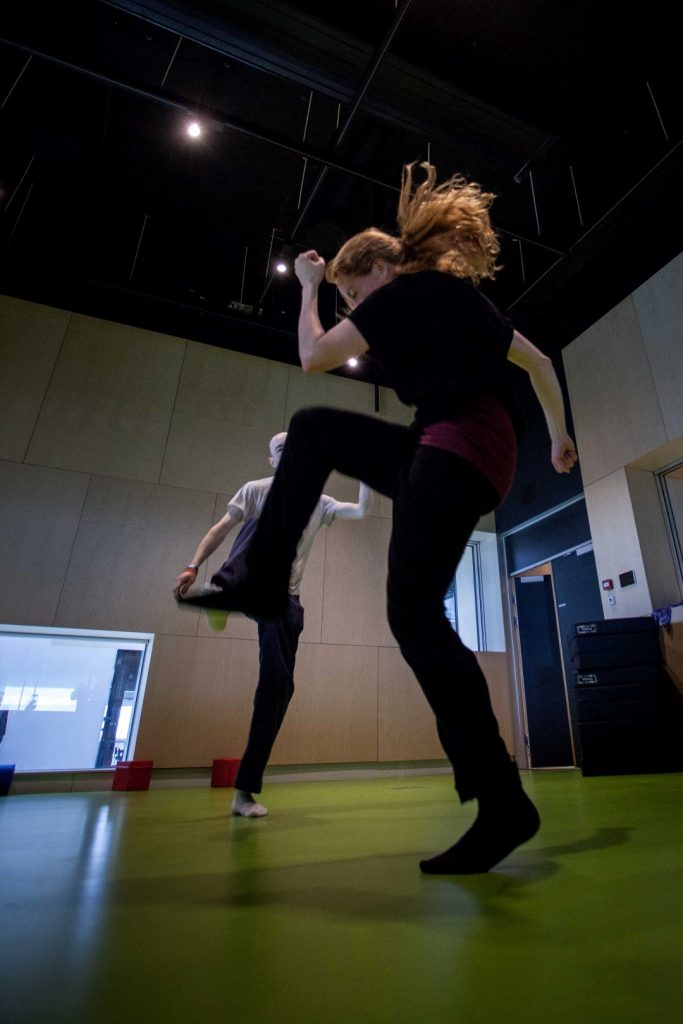
One of my favorite activities in life is to dance, and therefore I was very excited about the dancing workshop at CounterPlay. And it was just like coming home! After a friendly introduction by the facilitator, we did not speak much during the session, but still we communicated through our body movements. It reminded me; It is so fun – and very important – when someone makes space for experiences that does not focus primarily on the spoken and written words nor rational thinking. There is nothing wrong with words, but sometimes I think our excessive use of them, is drowning other diverse opportunities to express ourselves and connect with people around us.
Dance is clearly a bodily expression form, but I think playful activities in general provide chances to evoke all our senses in the experiences. Likewise, being playful is a way to show positive interest in other people and it is also an invitation to engage in an explorative process together. While play has no predefined answers and no fixed directions, you get the freedom to go with the flow in the present moment.
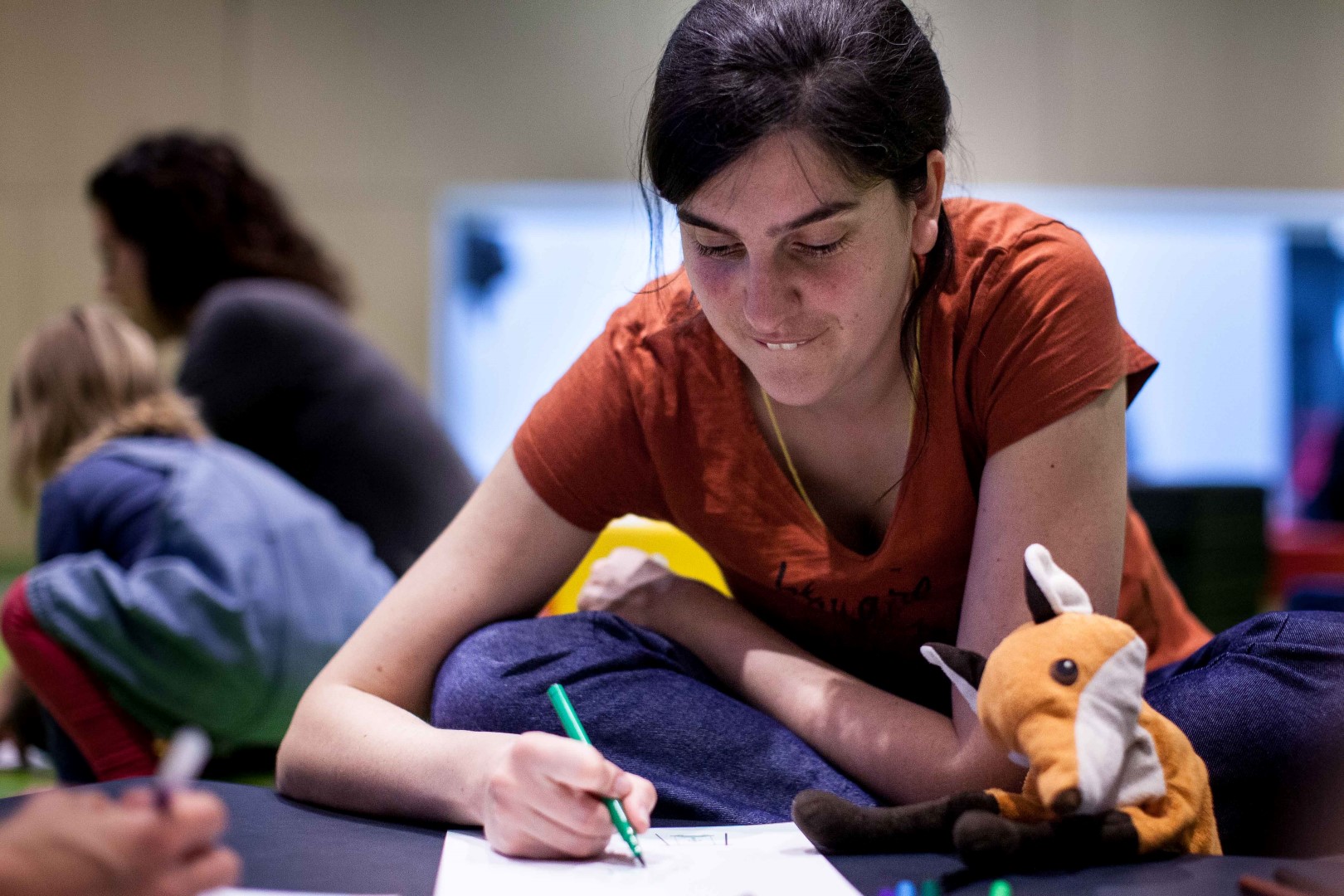
In my daily work life, I like to make space for experiences where rational thinking and the spoken/written words are not foregrounded at the expense of playfulness, craftsmanship, exploration and wonder. Thus, I teach university students how to use sketching as a tool when developing design ideas for their projects. Some students are skeptical in the beginning, asking me: “Are we really going to draw?” or simply state that “We cannot draw”. Then I emphasize that the purpose of sketching is not to draw neat artistic drawings. It is an opportunity to let the hand think on paper and a way to engage in this explorative process together. After a while, my experience is that many of the students come to appreciate sketching as another way to express and discover new ideas together.
I think a crucial point is that everybody can draw as well as play, because we have done these activities since our childhood. As adults we might forget this occasionally, because our job or education requires that we use a lot of spoken and written words in well-organized ways 😉 Therefore it is great that we can participate in CounterPlay Festival and be reminded of our ability to play and our options to make it a part of our daily (work) life. I am well aware that many universities – my own work place inclusive – are experimenting with different creative ways for students to work with curricular, but I think sketching and visual expression techniques are playful approaches that should flourish even more at universities.
Inspired by CounterPlay Festival, I think I will start my next sketching course with: Congratulation, you now get permission to draw at the University – it can be a playful space and you might enjoy it 🙂
Thank you for reading along, I very much appreciate it. Feel free to comment and/or ask questions!
Vi er som samfund så optaget af kontrol og forudsigelige, målbare resultater i alle aspekter af livet, at vi marginaliserer legen. Det udgør en væsentlig trussel mod vores livskvalitet, og paradoksalt nok også mod de resultater vi er så opsat på at måle, herunder ønsket om at forandre verden til det bedre.
Der er en ikke ubetydelig tilfredsstillelse forbundet med at putte ting i kasser. Det skaber orden, overskuelighed og en illusion om entydighed i en ellers temmelig kaotisk verden. Men med leg er det svært at finde den helt rette kasse. Det skyldes det faktum, at leg er et levende og mangfoldigt fænomen, der er under konstant forandring og udvikling. Det ligger dybt i legens natur at modsætte sig simple kategoriseringer, og det bliver derfor frugtesløst at lede efter én definition, der kan favne alle legens forskelligartede forekomster. Legens betydning varierer efter den konkrete sammenhæng, og det er netop et kendetegn i den gode leg, at den tilpasses og dens mening forhandles mellem de legende. Det er også netop denne umådelige diversitet, der gør, at det giver mening at hævde at legen kan være værdifuld og meningsfuld for alle mennesker, overalt i samfundet. Det vender vi tilbage til.
Det ligger dybt i legens natur at modsætte sig simple kategoriseringer, og det bliver derfor frugtesløst at lede efter én definition, der kan favne alle legens forskelligartede forekomster
Leg er en aktivitet, der kan udfolde sig hvor som helst, når som helst, og som ikke kræver penge, avanceret legetøj eller andre ressourcer end blot tid og fantasi. Én eller flere “legere” skaber et særligt univers, man kan træde ind i og gå på opdagelse i. Her gælder andre regler og logikker, som kan ændre sig undervejs gennem løbende forhandling. Samtidig er man stadig forbundet til og åben for verden, der i mange tilfælde spiller en vigtig rolle, men som man betragter med et andet blik. Legen er næppe nogensinde “fri” i absolut forstand, da den netop altid forhandles, står i en relation til samfundet, og der foregår en løbende vekselvirkning, hvor omgivelserne indvirker på legen og omvendt. Legen kan udmønte sig i fysisk aktivitet, men det er vigtigt ikke at overse den leg, der helt eller delvist foregår som en mental opdagelsesrejse ind i fantasien. Man kan sagtens lege alene, men leg lever ofte i sociale fællesskaber, og her bliver udforskningen af roller og relationer en stærk katalysator.
Leg opfattes ofte som en aktivitet, men kan også være en sindstilstand, en attitude, en måde at gå til verden og være menneske på
Leg opfattes ofte som en aktivitet, men kan også være en sindstilstand, en attitude, en måde at gå til verden og være menneske på. Det “legende” definerer, udvider og omkonfigurerer en persons repertoire af handlemuligheder. Det betyder, at leg som sindstilstand – “det legende” – uden videre kan indgå i, forme og udfordre alle vores gøremål, fra de mest simple til de mest komplekse. Vi kan være legende, når vi løser trivielle opgaver i hjemmet, når vi er under uddannelse, når vi dyrker vores hobby, når vi er sammen med venner og familie, når vi er på arbejde og når vi står over for særligt udfordrende situationer i livet.
[/et_pb_text][/et_pb_column][/et_pb_row][et_pb_row admin_label=”Row”][et_pb_column type=”4_4″][et_pb_image admin_label=”Image” src=”http://www.counterplay.org/wp-content/uploads/2016/03/Blog_2.jpg” show_in_lightbox=”off” url_new_window=”off” use_overlay=”off” animation=”left” sticky=”off” align=”left” force_fullwidth=”off” always_center_on_mobile=”on” use_border_color=”off” border_color=”#ffffff” border_style=”solid”] [/et_pb_image][et_pb_text admin_label=”Hvorfor er leg så vigtigt” background_layout=”light” text_orientation=”left” use_border_color=”off” border_color=”#ffffff” border_style=”solid”]
Hvorfor er leg så vigtigt?
Legen er udtryk for en deltagelseskultur, hvor de legende indgår i en løbende forhandling om formål, mål og regler. Hvorfor leger vi? Hvordan skal legen foregå? Hvem indtager hvilke roller? Dermed er legen afhængig af, at de legende forstår hinanden og sammen kan få legen til at fungere. Det forudsætter en veludviklet empatisk sans, som kan styrkes yderligere gennem leg med andre. I den henseende giver legen os mulighed for at afprøve nye roller og nye måder at være sammen, og dermed også hvordan vi kan finde sammen, altså hvordan samfundet kan indrettes. Hermed føjes en etisk dimension til legen, hvor vi undersøger hvad vi opfatter som “rigtige” og “forkerte”, “gode” og “dårlige” måder at indgå i små og store fællesskaber. Når vi forstår legen som deltagelseskultur, hvor vi i fællesskab forhandler samfundets normer og indretning, bliver det mere tydeligt, at legen kan have betydning gennem hele vores liv.
I den henseende giver legen os mulighed for at afprøve nye roller og nye måder at være sammen, og dermed også hvordan vi kan finde sammen, altså hvordan samfundet kan indrettes
Det står i kontrast til den udbredte opfattelse, at leg udelukkende er relevant for børn og de voksne, der har med børn at gøre, enten privat eller professionelt. Leg er naturligvis vigtigt for børn, fordi leg er den måde, de bedst undersøger livet. Legen er central i børns dannelse og identitetsskabelse, når de forhandler relationer, roller og deres plads i verden. Det er vigtigt at lære at lege for at lære at høre til, men også for at tilegne sig en række centrale færdigheder og kompetencer, der vanskeligt kan sættes på formel. Derfor er det uhyre problematisk, grænsende til det katastrofale, når børn tilbringer en stadig større del af deres liv i institutioner, hvor legen udgrænses til fordel for det altoverskyggende fokus på “læringsmaksimering”, måling og styring. Hvis man finder plads til legen i skolen i dag, så er det ofte fordi man tror, det kan gøre det nemmere at få børn til at nå mere eller mindre arbitrære læringsmål, de på et senere tidspunkt kan testes i. Dermed reduceres legen til endnu et simpelt styringsredskab, der ikke levner megen plads til børnenes egen nysgerrighed. Legen er ganske vist tæt forbundet med læring, men ikke i den snævre forstand, som skiftende undervisningsministre typisk taler om det. Det er derimod den form for læring, der ifølge Knud Illeris er “grundlæggende […] lystbetonet på linje med andre livsopretholdende funktioner”. Vi lærer altid når vi leger, men det vi lærer er ikke nødvendigvis umiddelbart målbart eller kompatibelt med formelle læreplaner. Det er læring drevet af nysgerrighed og lyst, hvor vi udvikler vores handlemuligheder og relationer til andre mennesker. Dermed er legens læring også en læring, der handler om at udforske det ukendte uden at vide hvor man ender eller hvordan man forandrer sig selv og omgivelserne på rejsen.
Først og fremmest har legen fundamental betydning for vores livskvalitet og livsglæde, hvilket bør være en helt legitim grund til at lege og tale om leg
Legen og det at være et legende menneske er altså ikke bare vigtigt for børns udvikling. Legen er relevant og vigtigt for alle, børn såvel som voksne. Først og fremmest har legen fundamental betydning for vores livskvalitet og livsglæde, hvilket bør være en helt legitim grund til at lege og tale om leg. Legestemningen er efterstræbelsesværdig og nydelsesfuld på dens egne præmisser og giver plads til smil, grin og livsbekræftende oplevelser, også når livet er hårdt. Mens legen helt indiskutabelt er en legitim aktivitet og tilstand i sig selv, så er den samtidig uløseligt forbundet til et udvidet mentalt repertoire, der giver os flere muligheder for at agere i verden. I legen er vi ikke styret af eksternt definerede mål, og der er ingen manual eller facitliste, men derimod plads til at forfølge det, der vækker vores undren og nysgerrighed. Legen forbinder os til en mere fantasifuld tilstand, hvor vi ikke er begrænset af vaner, traditioner og konventioner og derfor har nemmere ved at bruge vores kreativitet til at forestille os, hvordan verden også kunne se ud. Legen styrker dermed vores evne til at træde ud af eksisterende mentale mønstre for at afprøve det ukendte.
Legen rummer derfor enorme potentialer ikke alene som grundlæggende livsopretholdende funktion, men også for vores evne til at fungere på et arbejdsmarked og i en verden i konstant forandring. Legen er netop en forandringsproces, hvor vi aktivt forholder os til og interagerer med verden. Selvom “leg” måske ikke umiddelbart rimer på “konkurrenceevne”, så skaber leg bedre vilkår for de mere usædvanlige og nytænkende idéer gennem en mindre fejlfokuseret kultur med større plads til eksperimenter, også de mere kuriøse af slagsen.
[/et_pb_text][/et_pb_column][/et_pb_row][et_pb_row admin_label=”Row”][et_pb_column type=”4_4″][et_pb_image admin_label=”Image” src=”http://www.counterplay.org/wp-content/uploads/2016/03/Blog_7.jpg” show_in_lightbox=”off” url_new_window=”off” use_overlay=”off” animation=”left” sticky=”off” align=”left” force_fullwidth=”off” always_center_on_mobile=”on” use_border_color=”off” border_color=”#ffffff” border_style=”solid”] [/et_pb_image][et_pb_text admin_label=”Leg når det er svært” background_layout=”light” text_orientation=”left” use_border_color=”off” border_color=”#ffffff” border_style=”solid”]
Leg når det er svært
For tiden marginaliseres legen til fordel for alt det, der kan styres, forudsiges og måles, og legen har det svært de fleste steder i samfundet. Derfor fokuserer vi på årets CounterPlay festival på DOKK1 i Aarhus netop på “leg når det er svært”. Det er nemlig ofte i de øjeblikke, hvor både mennesker og leg presses, at legen viser sig særligt værdifuld. Vi ønsker derfor at undersøge, hvordan vi kan overvinde de mange forhindringer, der kommer i vejen for legen. Det kan være i vanskelige eller farlige situationer som flygtningelejre, fængsler og hospitaler, men det drejer sig i lige så høj grad om de mange mentale, fysiske, kulturelle og strukturelle barrierer, som vi alle især støder på hver eneste dag.
Den del af legens grundlæggende væsen, der ikke tjener noget formål andet legen selv står i tydelig kontrast til det fremherskende samfundsparadigme, der måske bedst er indfanget med idéen om “konkurrencestaten”. Her har mange politikere, offentlige institutioner og private virksomheder et stærkt interessefællesskab, idet de alle synes at have gavn af stadig større ensretning og forudsigelighed for at øge arbejdsomheden, produktiviteten, forbruget og væksten. Man kan få det indtryk, at disse aktører drømmer om konformitet og om at fastfryse samfundet i én permanent og strømlinet form i effektivitetens navn. Dette massive fokus på konformitet og målbarhed risikerer imidlertid at spænde ben for den innovation og forandringsparathed, som vi helt afgjort behøver. Legen spiller en anden melodi, for den stræber ikke efter perfektionen og det formfuldendte, men spirer og blomstrer i sprækkerne og det uperfekte, hvor der er plads til fantasien. Legen er drevet af indre modsætningsforhold, og i stedet for at søge en permanent ligevægt udspiller den sig bedst i konstant bevægelse. Det betyder også, at legen er betydeligt tættere koblet til demokrati og aktivt medborgerskab, end man måske lige skulle tro. Et levende demokrati er jo netop, præcis som legen, afhængig af uenigheden, striden og forhandlingen, og af viljen til at udforske og forholde sig til alt det, man endnu ikke kender eller forstår. Det kan derfor undre at de fleste politikere sjældent udviser nogen forståelse af leg, der rækker ud over den rendyrkede instrumentalisme. I det lys er det næppe videre kontroversielt at hævde, at legen i sin natur er mere demokratisk sindet end de fleste af de folkevalgte.
Legen står i opposition til alle former for påstået “nødvendighed”, herunder “nødvendighedens politik”. Legen siger nemlig altid at verden kan se anderledes ud, og tilbyder tilmed et rum til udforskningen af denne “anderledeshed”
Legen står i opposition til alle former for påstået “nødvendighed”, herunder “nødvendighedens politik”. Legen siger nemlig altid at verden kan se anderledes ud, og tilbyder tilmed et rum til udforskningen af denne “anderledeshed”. Hermed befinder legen sig også i et åndeligt fællesskab med kunsten, og legen er i sig selv er en kunstart. Legende mennesker kan være udfordrende, besværlige og irriterende, fordi de ikke tager det bestående for givet, og de er ikke uden videre kompatible med ønsket om effektivitet og konformitet. Netop derfor er det muligt for disse mennesker gennem legen at udvikle udvidede handlemuligheder og pege på hvordan verden ellers kunne være. I kraft af legens dynamiske og dialektiske relation til det omgivende samfund, åbner den op for nye måder at se og forstå verden. Legen kan altså ses som en særlig mentalitet, der også kan være antiautoritær og have revolutionære tendenser, idet der stilles spørgsmål og peges fingre. Med legen som katalysator kan vi bevæge os ud på kanten, hvor det bliver vildt og farligt, og hvor vi sætter både os selv og vores verdensopfattelse på spil. Det er blandt andet derfor skak med jævne mellemrum undertrykkes eller forbydes i totalitære stater: spillet skaber et mulighedsrum, hvor man kan lege med forestillingen om at kongen kan væltes – og så endda potentielt af proletariatet.
Med legen som katalysator kan vi bevæge os ud på kanten, hvor det bliver vildt og farligt, og hvor vi sætter både os selv og vores verdensopfattelse på spil
At kæmpe for legen er altså også en politisk kamp, der udfordrer nogle af de præmisser, vores samfund indrettes på baggrund af. Hvis vi opdyrker en legende kultur i samfundet generelt, såvel som på vores uddannelser og arbejdspladser, så siger vi ikke blot at demokratiet mere eller mindre modvilligt skal acceptere mangfoldighed, modsætninger og uenighed, men at det tværtimod er her, vi finder hele livskraften.
Legen er så dybt forankret i vores natur og kultur, at den næppe nogensinde forsvinder helt. Selv i de mest undertrykkende og brutale regimer findes legen, og her kan den være med til at udstille og lave sprækker i magten. Folk med magt (fra diktatorer til direktører til mellemledere til…) kan bruge legen til at kontrollere og manipulere, men legen vil under disse vilkår, hvor der ikke insisteres på legens eget formål, hurtigt miste sin vitalitet. Det er et vidnesbyrd om legens styrke og uomgængelighed, men man kan dog ikke desto mindre sagtens forestille sig et samfund, hvor legen marginaliseres endnu mere, og hvor vores liv i endnu højere grad indrettes efter det, der kan styres, måles og forudsiges. Det er bare ikke det samfund, vi drømmer om, og derfor foreslår vi et andet samfundsparadigme, der bygger på leg og alle de værdier, der knytter sig til legen. Det kan forekomme utopisk i den nuværende situation, hvor fokus på målbarhed og styring er stigende, men enhver forandring må starte et sted. Første skridt må være, at vi i fællesskaber giver legen en hjælpende hånd, hvis vi skal forhindre en stadig mere markant udgrænsning.
Selv i de mest undertrykkende og brutale regimer findes legen, og her kan den være med til at udstille og lave sprækker i magten
Som med de fleste holdbare forandringer, så giver det mening at starte i det små i stedet for at tro, vi kan lave alt om med et trylleslag. Tænk legen med i din hverdag, men uden at skulle gennemføre radikale omvæltninger. Skab rum til leg i din fritid og på dit arbejde, også selvom der ikke er børn tilstede. Der er meget inspiration at hente, hvis vi blot skærper vores blik og opmærksomhed. Der findes allerede en masse leg rundt omkring i samfundet, men vi ser den sjældent, fordi den gængse opfattelse af leg er ganske snæver.
Vi trænger til et langt mere nuanceret og stærkt forankret fælles sprog om leg. Det kan vi skabe sammen i en vekselvirkning mellem at vi leger, holder øje med legen, reflekterer over legen og taler om legen. Hvis vi for alvor skal forstå legens væsen og skabe bedre vilkår for leg på mere meningsfulde måder, så skal vi i højere grad være i stand til at sætte ord på legen, for uden et veludviklet sprog er det umuligt at argumentere for legens legitime plads. Det kræver øvelse og omtanke at blive god til det, men det er til gengæld nemt at komme i gang. Idet legen skaber friktion med verden omkring os, rejser den også altid en masse spørgsmål, og netop spørgsmål om leg er et godt sted at starte:
Hvad tænker du på, når vi siger leg? Hvilke følelser vækker det? Hvornår har du sidst leget? Hvilken rolle spiller legen i dit liv? Hvornår har du sidst talt med dine kolleger om leg? Er der plads til leg på din arbejdsplads?
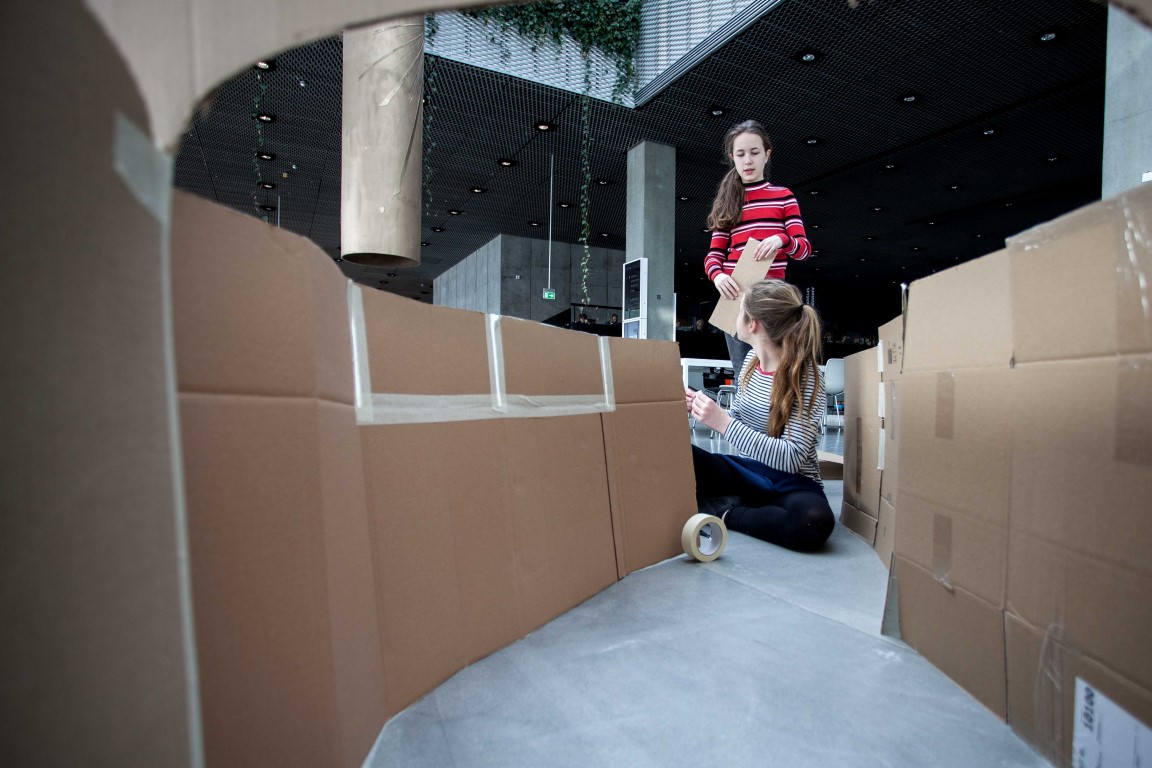
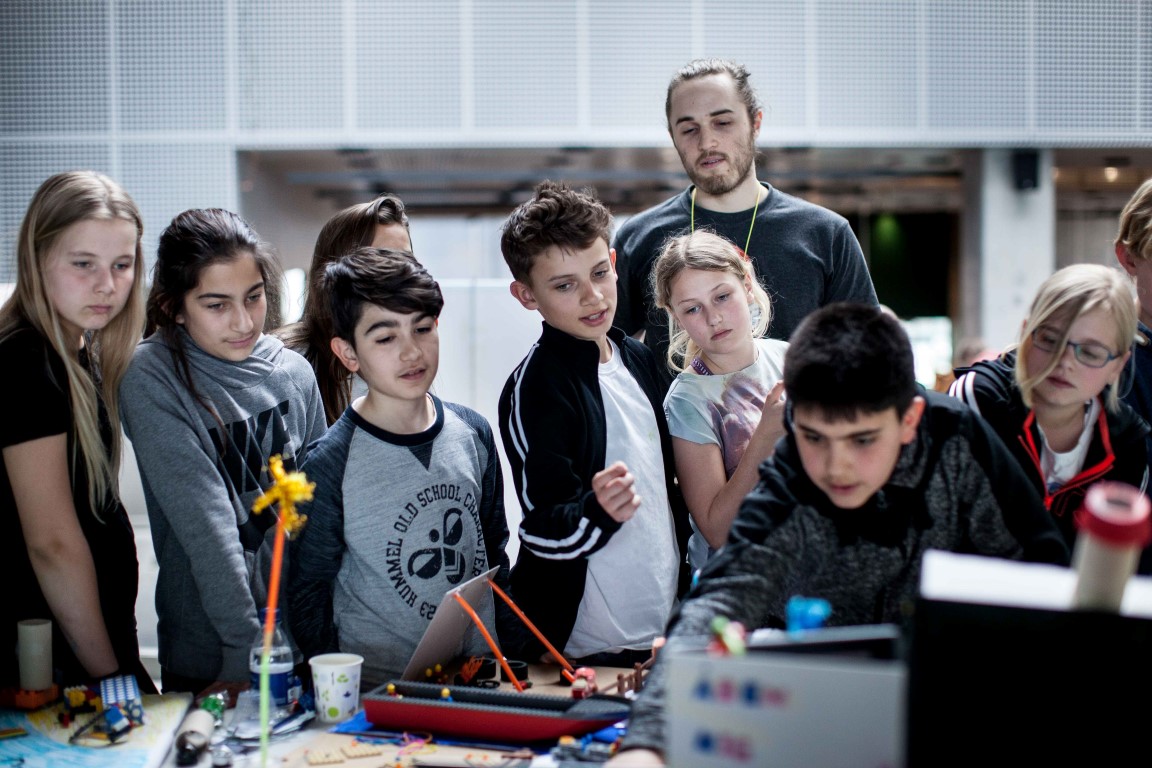
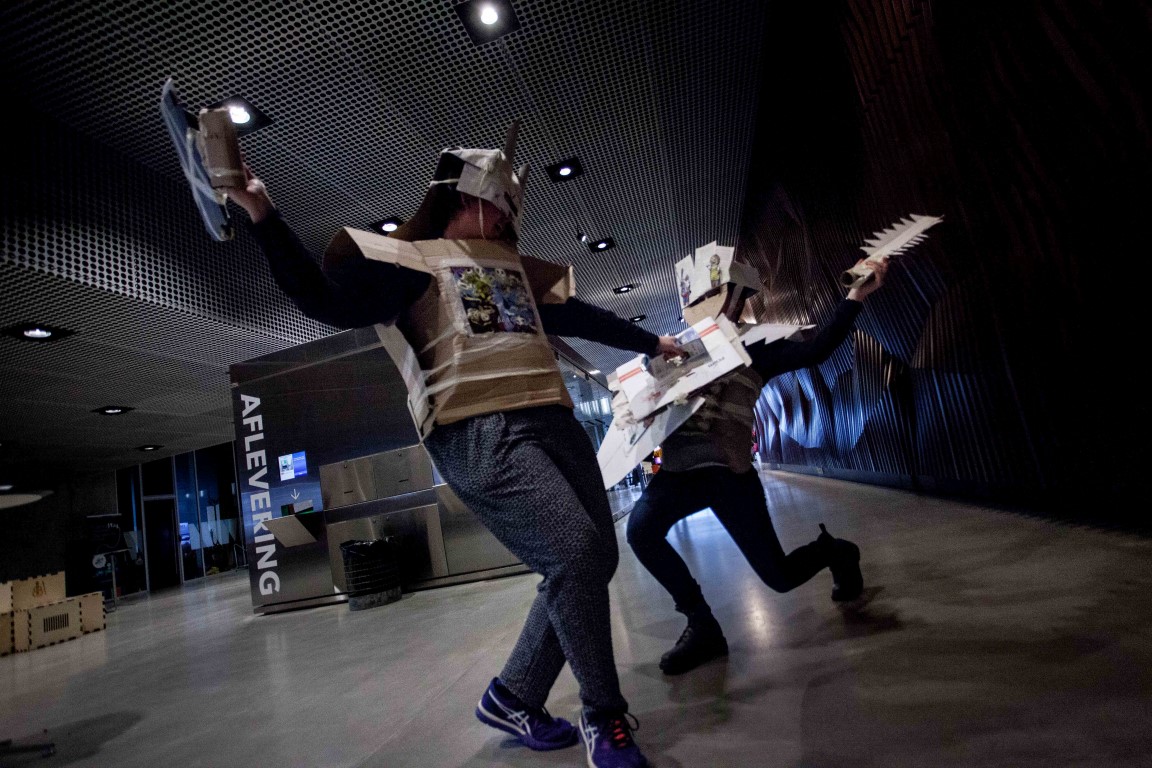
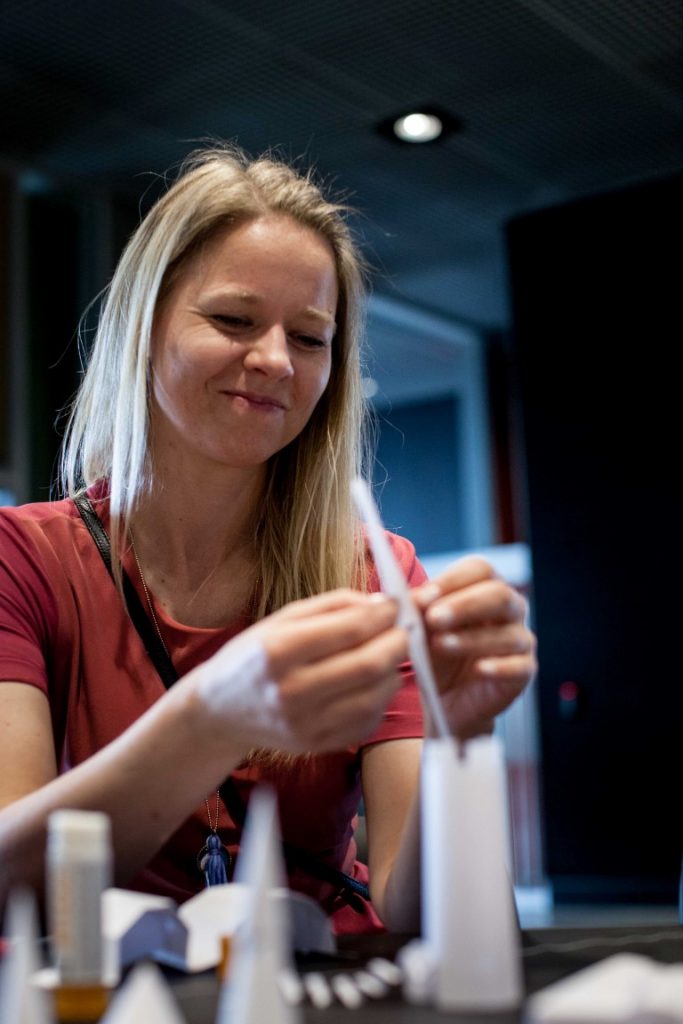
[/et_pb_text][et_pb_text admin_label=”Text” background_layout=”light” text_orientation=”left” use_border_color=”off” border_color=”#ffffff” border_style=”solid”] [Alle billeder er taget af Benjamin Pomerleau på Dokk1 til Mini Maker Faire] [/et_pb_text][/et_pb_column][/et_pb_row][/et_pb_section]
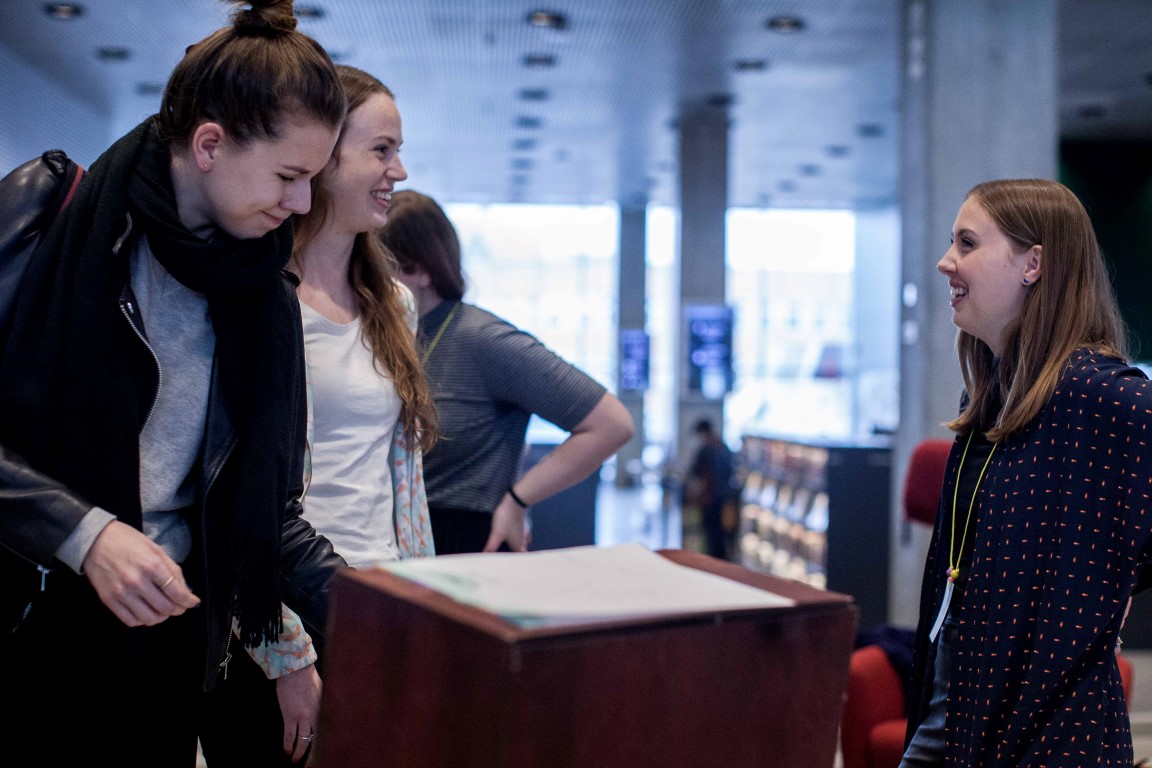
 Derfor skitserede jeg selvfølgelig den kendte skelnen mellem “extrinsic” motivation, der ofte kædes sammen med gamificationsystemers belønningsstrukturer, og “intrinsic” motivation.
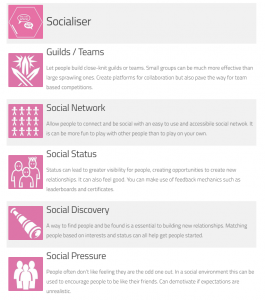 Jeg forsøgte, ganske kort at skitsere nogle af de elementer, der udgør et spil: regler, problemer der skal løses (missioner, quests osv), feedback, fortællinger & universer, samt selvfølgelig hele den sociale dimension i form af samarbejde, konkurrence og blot det at være sammen med andre, at høre til.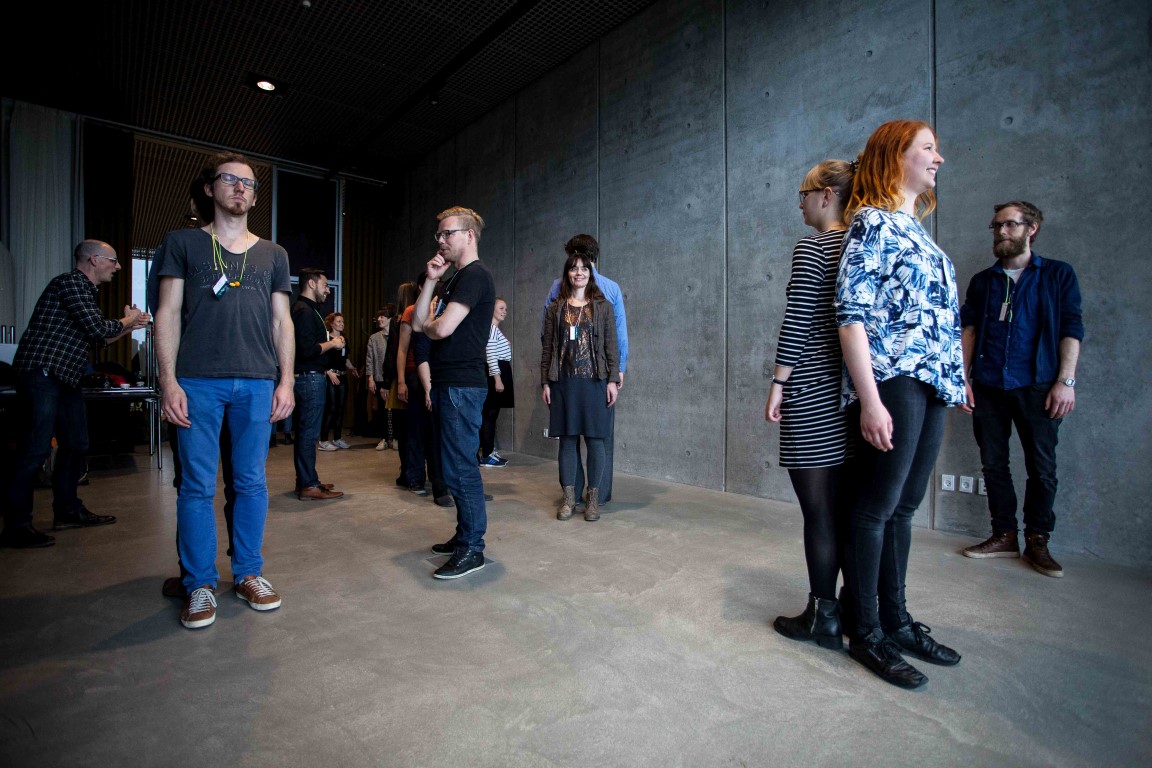
 An even less controllable and tangible part of making a playful festival is the atmosphere. After having organized thee CounterPlay festivals, the most important single thing I’ve learned, is that it’s not so much about the content of any single activity or session (not that these are not important), but about the overall playful atmosphere. It needs to be informal, relaxed, open, respectful and welcoming, so people feel safe enough to just be there without wearing masks (well, actual masks are ok, of course).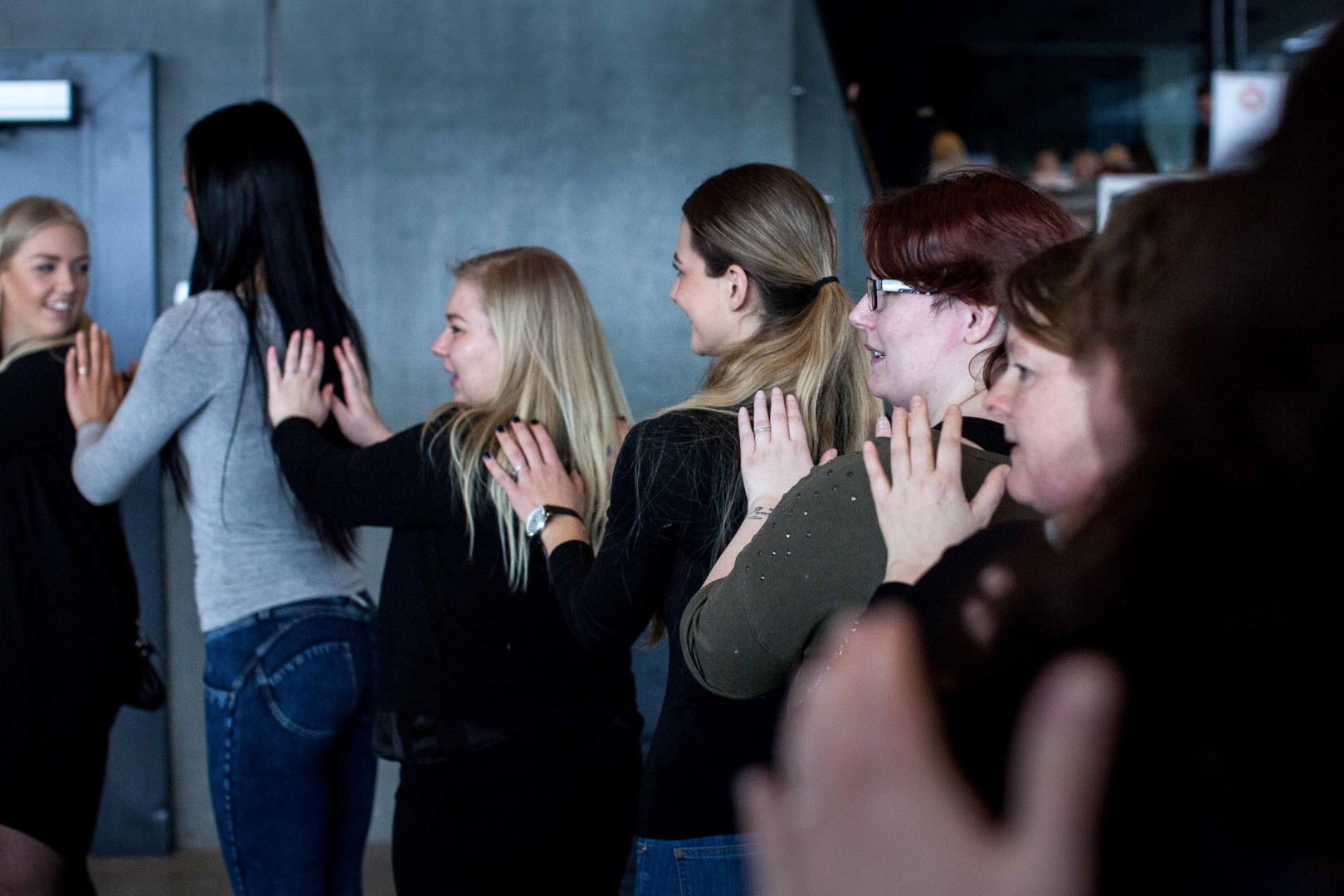
 For play to really mean something and be potentially transformative, it needs to resonate with your sense of self. It can definitely challenge you and your worldview, but not too much at once (think Vygotsky’s “zone of proximal development” and Csikszentmihalyi‘s “flow theory). To create a space where different people can experience this, it’s important to understand and respect the diversity of play: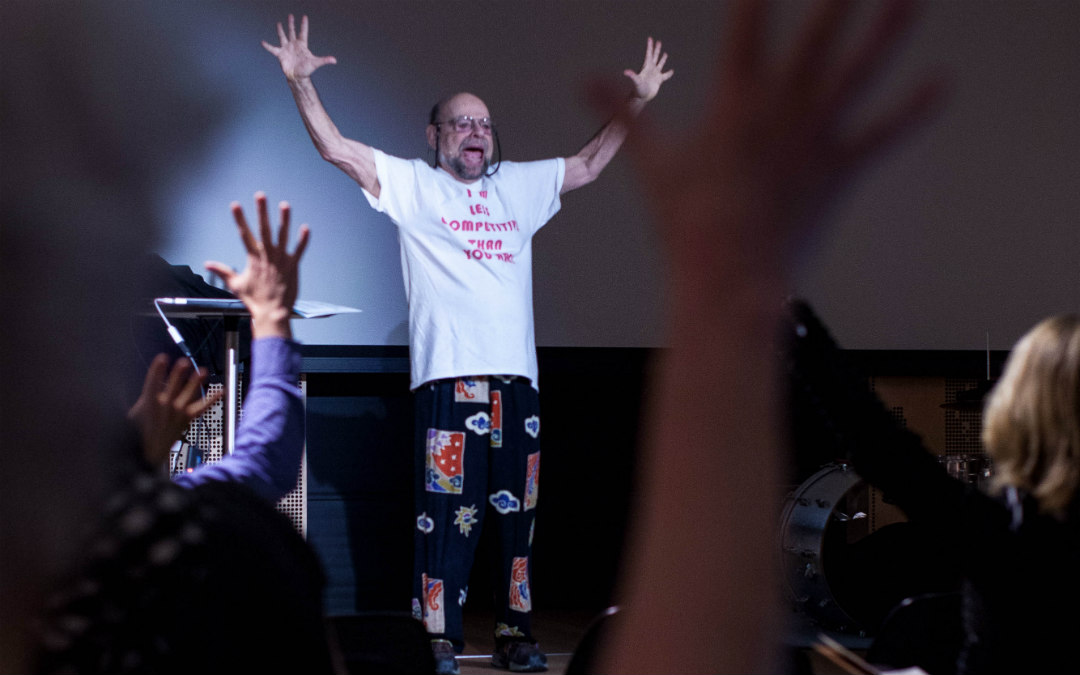
 Play? Well of course. We believe in play because play is fun. Especially playful play. Because, like Patrick Bateson said (yes, him, not me), “playfulness is what makes play fun.”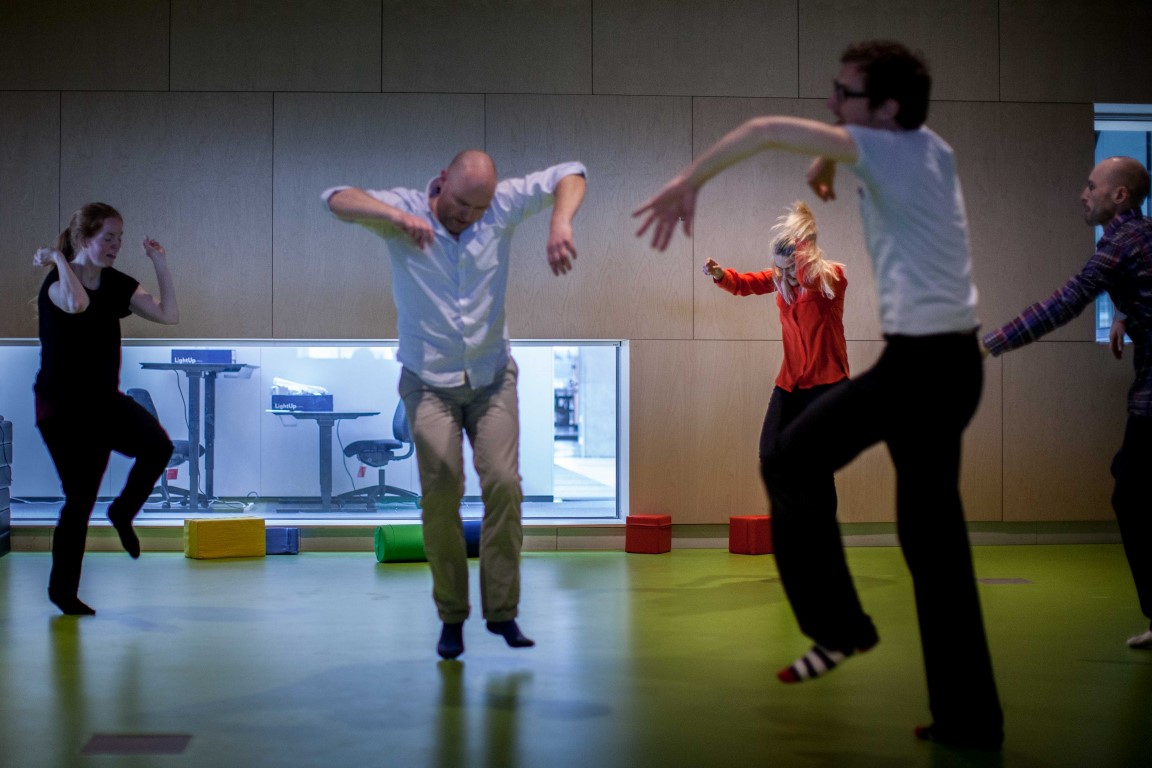
 One of my favorite activities in life is to dance, and therefore I was very excited about the dancing workshop at CounterPlay. And it was just like coming home! After a friendly introduction by the facilitator, we did not speak much during the session, but still we communicated through our body movements. It reminded me; It is so fun – and very important – when someone makes space for experiences that does not focus primarily on the spoken and written words nor rational thinking. There is nothing wrong with words, but sometimes I think our excessive use of them, is drowning other diverse opportunities to express ourselves and connect with people around us.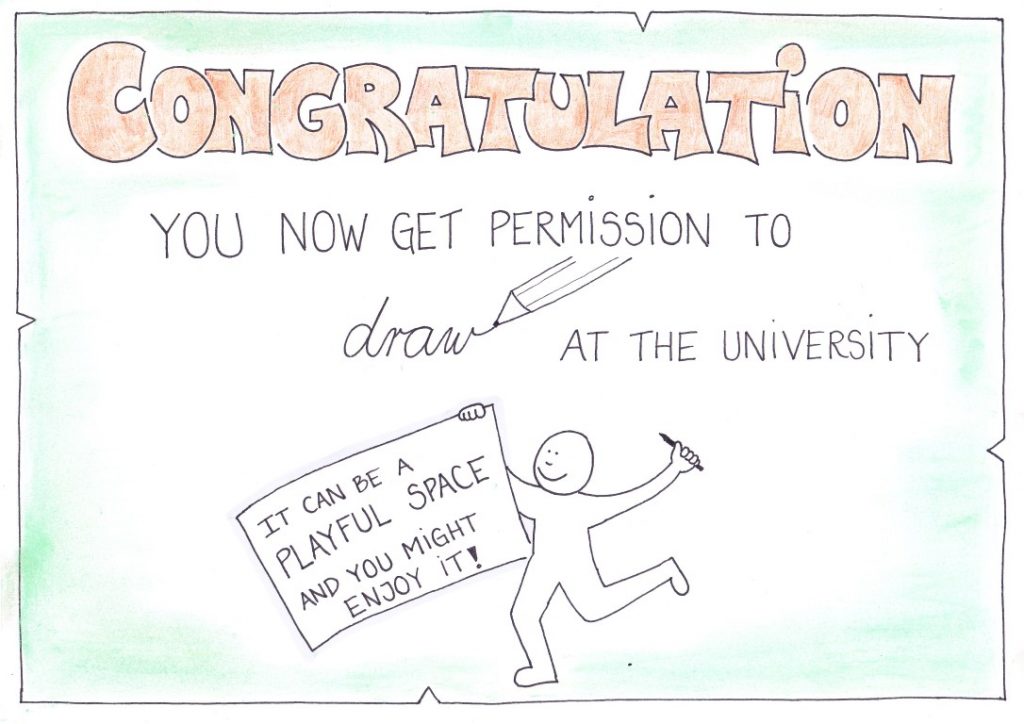
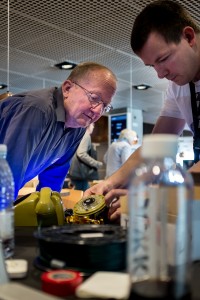 Det ligger dybt i legens natur at modsætte sig simple kategoriseringer, og det bliver derfor frugtesløst at lede efter én definition, der kan favne alle legens forskelligartede forekomster
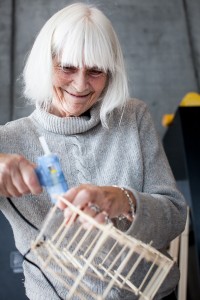 Det står i kontrast til den udbredte opfattelse, at leg udelukkende er relevant for børn og de voksne, der har med børn at gøre, enten privat eller professionelt. Leg er naturligvis vigtigt for børn, fordi leg er den måde, de bedst undersøger livet. Legen er central i børns dannelse og identitetsskabelse, når de forhandler relationer, roller og deres plads i verden. Det er vigtigt at lære at lege for at lære at høre til, men også for at tilegne sig en række centrale færdigheder og kompetencer, der vanskeligt kan sættes på formel. Derfor er det uhyre problematisk, grænsende til det katastrofale, når børn tilbringer en stadig større del af deres liv i institutioner, hvor legen udgrænses til fordel for det altoverskyggende fokus på “læringsmaksimering”, måling og styring. Hvis man finder plads til legen i skolen i dag, så er det ofte fordi man tror, det kan gøre det nemmere at få børn til at nå mere eller mindre arbitrære læringsmål, de på et senere tidspunkt kan testes i. Dermed reduceres legen til endnu et simpelt styringsredskab, der ikke levner megen plads til børnenes egen nysgerrighed. Legen er ganske vist tæt forbundet med læring, men ikke i den snævre forstand, som skiftende undervisningsministre typisk taler om det. Det er derimod den form for læring, der ifølge Knud Illeris er “grundlæggende […] lystbetonet på linje med andre livsopretholdende funktioner”. Vi lærer altid når vi leger, men det vi lærer er ikke nødvendigvis umiddelbart målbart eller kompatibelt med formelle læreplaner. Det er læring drevet af nysgerrighed og lyst, hvor vi udvikler vores handlemuligheder og relationer til andre mennesker. Dermed er legens læring også en læring, der handler om at udforske det ukendte uden at vide hvor man ender eller hvordan man forandrer sig selv og omgivelserne på rejsen.
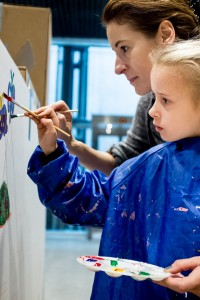 Den del af legens grundlæggende væsen, der ikke tjener noget formål andet legen selv står i tydelig kontrast til det fremherskende samfundsparadigme, der måske bedst er indfanget med idéen om “konkurrencestaten”. Her har mange politikere, offentlige institutioner og private virksomheder et stærkt interessefællesskab, idet de alle synes at have gavn af stadig større ensretning og forudsigelighed for at øge arbejdsomheden, produktiviteten, forbruget og væksten. Man kan få det indtryk, at disse aktører drømmer om konformitet og om at fastfryse samfundet i én permanent og strømlinet form i effektivitetens navn. Dette massive fokus på konformitet og målbarhed risikerer imidlertid at spænde ben for den innovation og forandringsparathed, som vi helt afgjort behøver. Legen spiller en anden melodi, for den stræber ikke efter perfektionen og det formfuldendte, men spirer og blomstrer i sprækkerne og det uperfekte, hvor der er plads til fantasien. Legen er drevet af indre modsætningsforhold, og i stedet for at søge en permanent ligevægt udspiller den sig bedst i konstant bevægelse. Det betyder også, at legen er betydeligt tættere koblet til demokrati og aktivt medborgerskab, end man måske lige skulle tro. Et levende demokrati er jo netop, præcis som legen, afhængig af uenigheden, striden og forhandlingen, og af viljen til at udforske og forholde sig til alt det, man endnu ikke kender eller forstår. Det kan derfor undre at de fleste politikere sjældent udviser nogen forståelse af leg, der rækker ud over den rendyrkede instrumentalisme. I det lys er det næppe videre kontroversielt at hævde, at legen i sin natur er mere demokratisk sindet end de fleste af de folkevalgte.
 Som med de fleste holdbare forandringer, så giver det mening at starte i det små i stedet for at tro, vi kan lave alt om med et trylleslag. Tænk legen med i din hverdag, men uden at skulle gennemføre radikale omvæltninger. Skab rum til leg i din fritid og på dit arbejde, også selvom der ikke er børn tilstede. Der er meget inspiration at hente, hvis vi blot skærper vores blik og opmærksomhed. Der findes allerede en masse leg rundt omkring i samfundet, men vi ser den sjældent, fordi den gængse opfattelse af leg er ganske snæver.