Tag: CounterPlay International

  • Pro Juventute Play Festival 2018

    Pro Juventute Play Festival 2018

    [et_pb_section bb_built=”1″][et_pb_row][et_pb_column type=”4_4″][et_pb_text _builder_version=”3.0.89″ background_layout=”light”]

    There may not be a “regular” CounterPlay festival again before 2019, but that certainly doesn’t mean we’re not having fun experimenting with new formats and friends!

    After our wonderful experience with CounterPlay Leeds, we’re incredibly excited to announce that we’re now working together with the Swiss youth organization “Pro Juventute” to organise a play festival in Switzerland on May 25th & 26th next year!

    The festival will focus on “Playable Cities” and “Pop up Play Action”, so we’ll most certainly get out and play in public, but we’ll also insist on thinking and talking about the implications of this! We’ll make sure to carry with us the playful atmosphere from CounterPlay, of course, and it will be a phenomenal experience!

    There is currently an open call for proposals running, so if you’re as interested in this as we are, do consider submitting something:

    How can public urban areas be organised to improve play for children and adults? Can play be used in the public domain as a catalyst for urban development? How can play instigate participative processes of appropriation? How can playgrounds become spaces for the live culture of play and encounter? Can playgrounds also be challenging and playable for adults?

    Play is rarely actively promoted in urban areas and is even more rarely integrated into the actual urban planning process. Yet play offers a wide range of resources, methods, processes of appropriation and atmospheric potential for change so as to radically improve cities. The Pro Juventute Play Festival 2018 should support the development of cities of play and further develop discussion of the role of play in urban development processes. The Play Festival 2018 is composed of a conference on the topic of «Playable Cities» and a Play Event for World Play Day 2018 whereby the right to play is celebrated at an international level.

    Read the full call below:

    [/et_pb_text][/et_pb_column][/et_pb_row][et_pb_row][et_pb_column type=”1_2″][et_pb_button admin_label=”Button – English” _builder_version=”3.0.89″ button_text=”Call for proposals (English)” url_new_window=”on” background_layout=”light” custom_button=”off” button_icon_placement=”right” button_url=”http://counterplay.org/files/Spielfestival_ENG.pdf” /][et_pb_button _builder_version=”3.0.89″ button_text=”Call for proposals (German)” url_new_window=”on” background_layout=”light” custom_button=”off” button_icon_placement=”right” button_url=”http://www.counterplay.org/files/Spielfestival_DT.pdf” /][et_pb_button _builder_version=”3.0.89″ button_text=”Call for proposals (French)” url_new_window=”on” background_layout=”light” custom_button=”off” button_icon_placement=”right” button_url=”http://www.counterplay.org/files/Spielfestival_FR.pdf” /][/et_pb_column][et_pb_column type=”1_2″][et_pb_text _builder_version=”3.0.89″ background_layout=”light” background_color=”#ffd204″ border_radii=”on|5px|5px|5px|5px” custom_margin=”0px|0px|0px|0px” custom_padding=”10px|10px|10px|10px”]

    Call for proposals

    Anyone interested in giving a talk or workshop should send an abstract of max. 1 A4 to spielraumprojekte@projuventute.ch.
    Conference documentation is envisaged.

    Deadline for submissions: 31 January 2018.

    Contact:

    Petra Stocker,
    Project Coordinator Playscapes and Play Culture
    Pro Juventute,
    Thurgauerstrasse 39, Postfach, 8050 Zürich
    Mobile +41 78 501 24 23
    petra.stocker@projuventute.ch

    [/et_pb_text][/et_pb_column][/et_pb_row][/et_pb_section]
  • CounterPlay Leeds #3 – Action!

    CounterPlay Leeds #3 – Action!

    [et_pb_section bb_built=”1″][et_pb_row][et_pb_column type=”4_4″][et_pb_text _builder_version=”3.0.86″ background_layout=”light”]

    [toc]

    In previous blog posts, I’ve talked about the context and themes of CounterPlay Leeds and now it’s time for action!

    When hosting or participating in play events, I always aim to 1) play, 2) think about play and 3) talk about play. As part of the latter, I find it important to have a conversation about the future: where do we go from here? How do we create better conditions for play and the playful society?

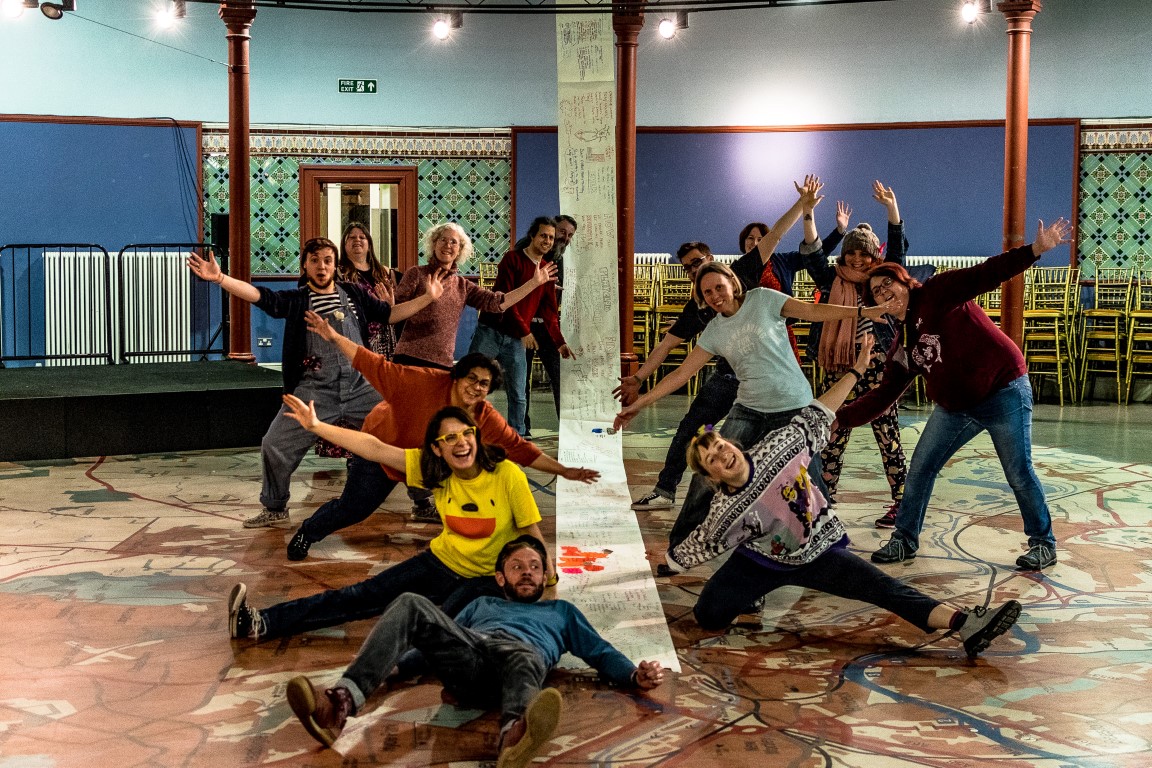
    So many of the wonderful people in Leeds seemed really eager to explore these questions, and many good suggestions grew out of it. Actually, an entire scroll of ideas that (almost) crossed the entire room grew out of it!

    Let’s look at some of them:

    More CounterPlay events!

    This was the first ever CounterPlay event outside Denmark, and I’m eager to support as many people as possible to build on our work and experiences from the first four festivals. There are currently something in the works in the Netherlands, Switzerland and again in the UK. This is very, very exciting, to say the least, and we’re preparing a guide to be used as inspiration, and if you’re interested in this, let us know.

    Guardians of Play

    This was an idea suggested by Portia Tung from School of Play: let’s be the playful, joyful, silly but earnest and dedicated Guardians of Play (like, you know, those other Guardians). It’s a nice way of framing our collective effort in a appropriately lighthearted manner, while reminding each other of the bigger picture:

    We guard play to set it free and help it thrive.

    [/et_pb_text][et_pb_image _builder_version=”3.0.86″ src=”http://www.counterplay.org/wp-content/uploads/2017/11/CounterPlayLeeds-1866-Medium.jpg” show_in_lightbox=”off” url_new_window=”off” use_overlay=”off” always_center_on_mobile=”on” force_fullwidth=”off” show_bottom_space=”on” /][et_pb_text _builder_version=”3.0.86″ background_layout=”light”]

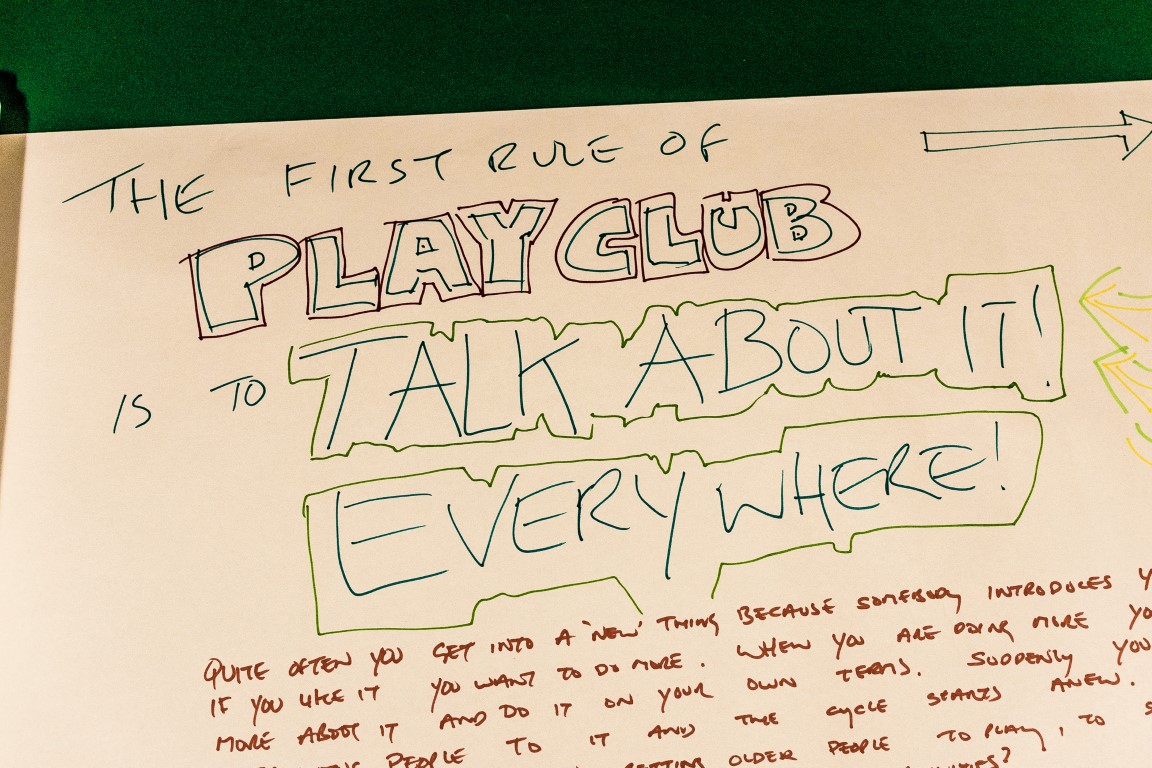
    First rule of Play Club

    With a thinly veiled reference to another, more insidious club, one of my new playful friends, Jim Thompson, suggested this wonderful rule for our play community: talk about it everywhere, to anyone, as much as possible.

    Talk is cheap” some say, but I say we need more of it. We need to tell stories about play and to develop a stronger, more nuanced language that more properly can capture the elusiveness of play. If we truly want to invite more people into our play community and to make society as a whole more playful, we need these stories and we need increased visibility.

    Let’s meetup and talk more frequently; let’s write blog posts, articles and books; let’s host online conversations, seminars and courses; let’s make YouTube channels and videos; let’s get out into the streets and play.

    In short, let’s make sure everyone knows play is a fully legitimate thing to engage in.

    A hub for conversations

    While many of us manage to stay in touch across borders using social media, we still need better ways of maintaining our connections and conversations. I actually think we may need something as old-school as an online forum. Yes, we have Twitter and Facebook and all that, but maybe we should have a thing that is our own? Where we can talk about everything and where conversations can unfold over time?

    We’re currently looking into the forum service “Discourse” with the tagline “Civilized Discussion”. We could certainly use more of that, right? Any such forum will be open and free for anyone to use, but should also be properly moderated to ensure it remains friendly and welcoming.

    If you have any experience with building forums, we’d love to hear from you. None of us are experts here.

    [/et_pb_text][et_pb_image _builder_version=”3.0.86″ src=”http://www.counterplay.org/wp-content/uploads/2017/11/CounterPlayLeeds-1655-Medium.jpg” show_in_lightbox=”off” url_new_window=”off” use_overlay=”off” always_center_on_mobile=”on” force_fullwidth=”off” show_bottom_space=”on” /][et_pb_text _builder_version=”3.0.86″ background_layout=”light”]

    The Chalk Brigade

    I *love* chalk!

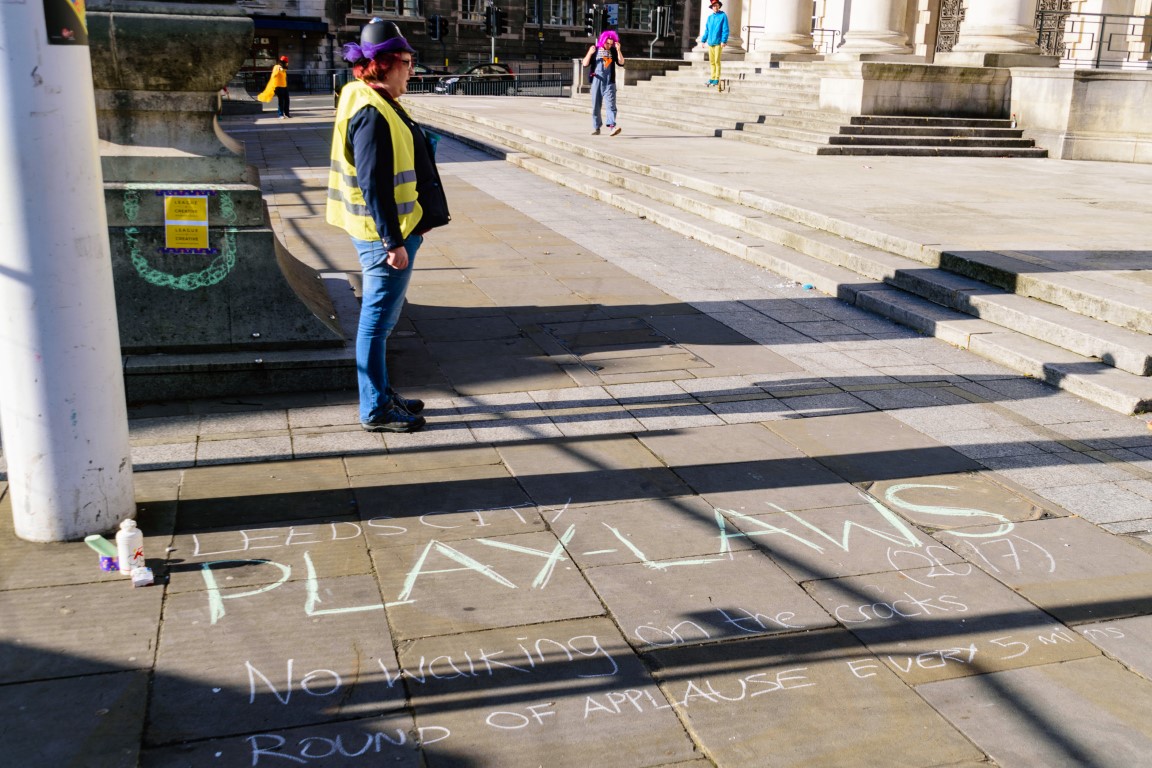
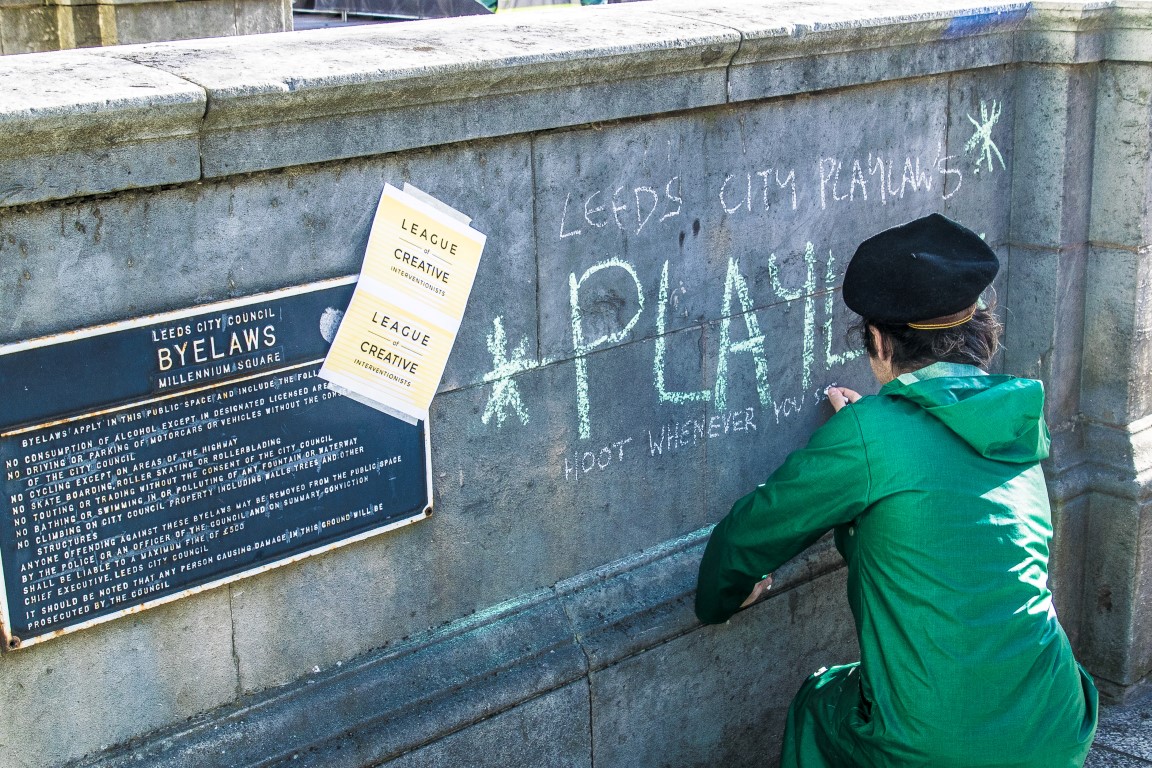
    Making the “play-laws” in Leeds (read about it here) again reminded me how powerful this cheap, simple tool actually is. With a single piece of chalk you can become a rebel, challenging the ownership of public space and inviting play on the streets.

    We talked about making “mission cards” for a playful “chalk brigade”, print the cards, stick a piece of chalk to each card and distribute them as far and wide as we can.

    A Play Toolkit

    In the conversation ensuing CounterPlay Leeds, Lynn Parker came upon the idea of a shared “Play Toolkit” and started unpacking the idea here. We think of it as an open-source project that can hopefully lead to both a set of instructions/principles and an actual, physical box. Stay tuned!

    #OnePlayThing

    Finally, we invented the hashtag #OnePlayThing to remind each other and everyone else how it’s often the small things, the small acts of play, that make a difference. If you wish to join, just share a photo, video or description of “one play thing”, one way of playing, on social media and tag it #OnePlayThing.

    https://twitter.com/muftigames/status/929684958318399490

    If you were among the participants, help me out: what am I forgetting? If you were not, which actions do you think we should take to make society more playful?

    [/et_pb_text][/et_pb_column][/et_pb_row][/et_pb_section]
  • CounterPlay Leeds #2 – Themes

    CounterPlay Leeds #2 – Themes

    [et_pb_section bb_built=”1″][et_pb_row][et_pb_column type=”4_4″][et_pb_text admin_label=”Diversity” _builder_version=”3.0.76″ background_layout=”light” border_style=”solid”]

    [toc]

    In my last post, I got into the background and context of the recent CounterPlay Leeds event. Now it’s time to explore the central themes as they emerged through play.

    Diversity of play

    Play reminds us that diversity and ambiguity are not something to be avoided, but rather to be embraced and encouraged. Play can be meaningful and important for all of us because it can take on so many forms and only those playing can determine whether or not this or that form of play is meaningful. If we can learn to accept and understand this, well, maybe we can carry that knowledge and respect with us into all aspects of life.

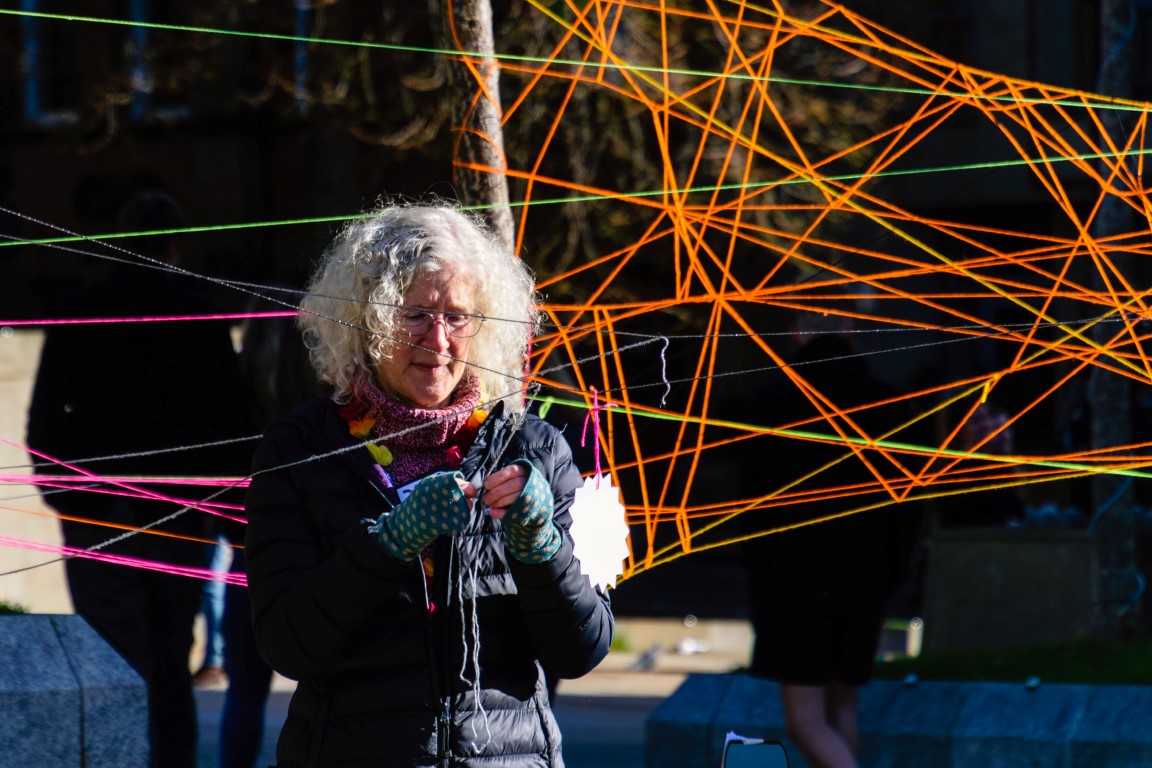
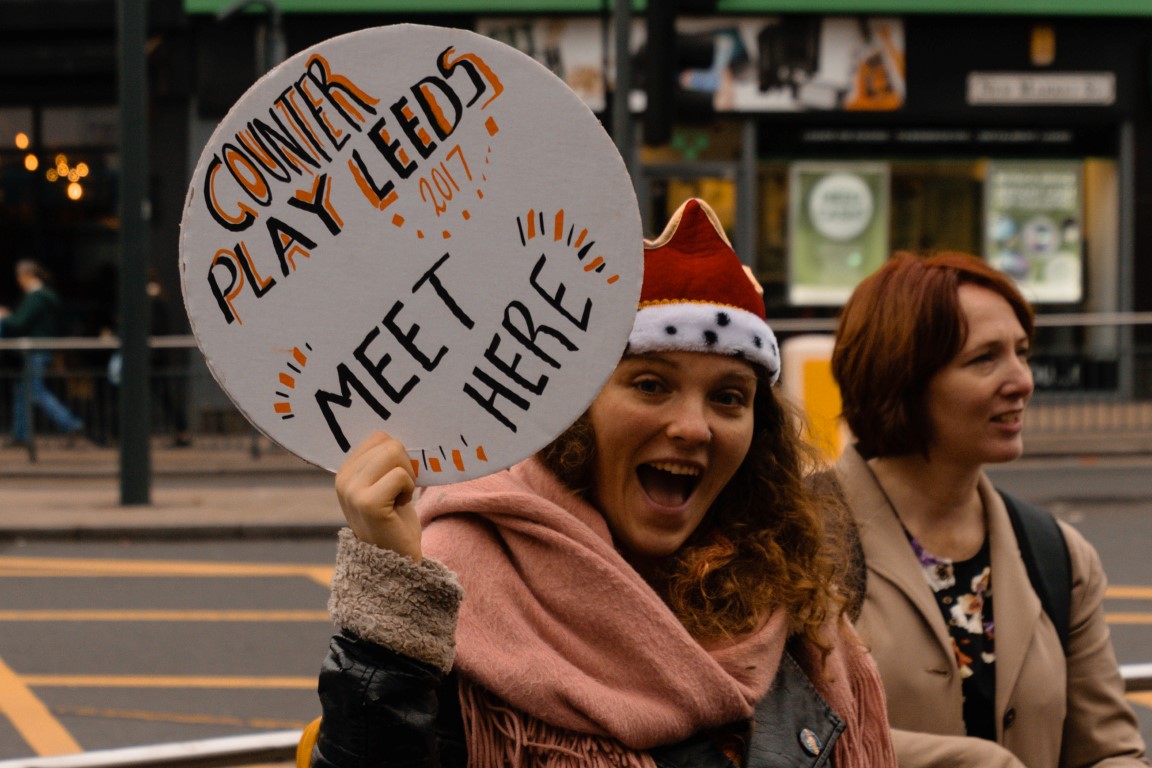
    During CounterPlay in Leeds, I saw this flourish. Nobody wanted to tell anyone that this or that was the right way to play, but lots of wildly different invitations presented themselves. We greeted each other playfully. We spend a long time decorating nametags that were pretty or silly or both. We transported colorful feathers by blowing them from hand to hand. We made so many funny noises and gestures. We played with recorded sound loops. We made the slimiest slime. We made beautiful woolen spider webs between trees. We “flocked” and jumped around. We made new “play-laws” for Leeds to encourage play in public. We dressed up in cardboard. We had a fierce “tug of war” outside.

    All of this amounts to a wonderful demonstration of the diversity of play.

    [/et_pb_text][et_pb_image _builder_version=”3.0.76″ src=”http://www.counterplay.org/wp-content/uploads/2017/11/CounterPlayLeeds-1670-Medium.jpg” show_in_lightbox=”off” url_new_window=”off” use_overlay=”off” always_center_on_mobile=”on” border_style=”solid” force_fullwidth=”off” show_bottom_space=”on” /][et_pb_text admin_label=”Imagination1″ _builder_version=”3.0.76″ background_layout=”light” border_style=”solid”]

    Imagination

    Play is a catalyst of imagination, because imagination is required to keep play evolving and moving in new, surprising directions. Imagination keeps play alive and vice versa.

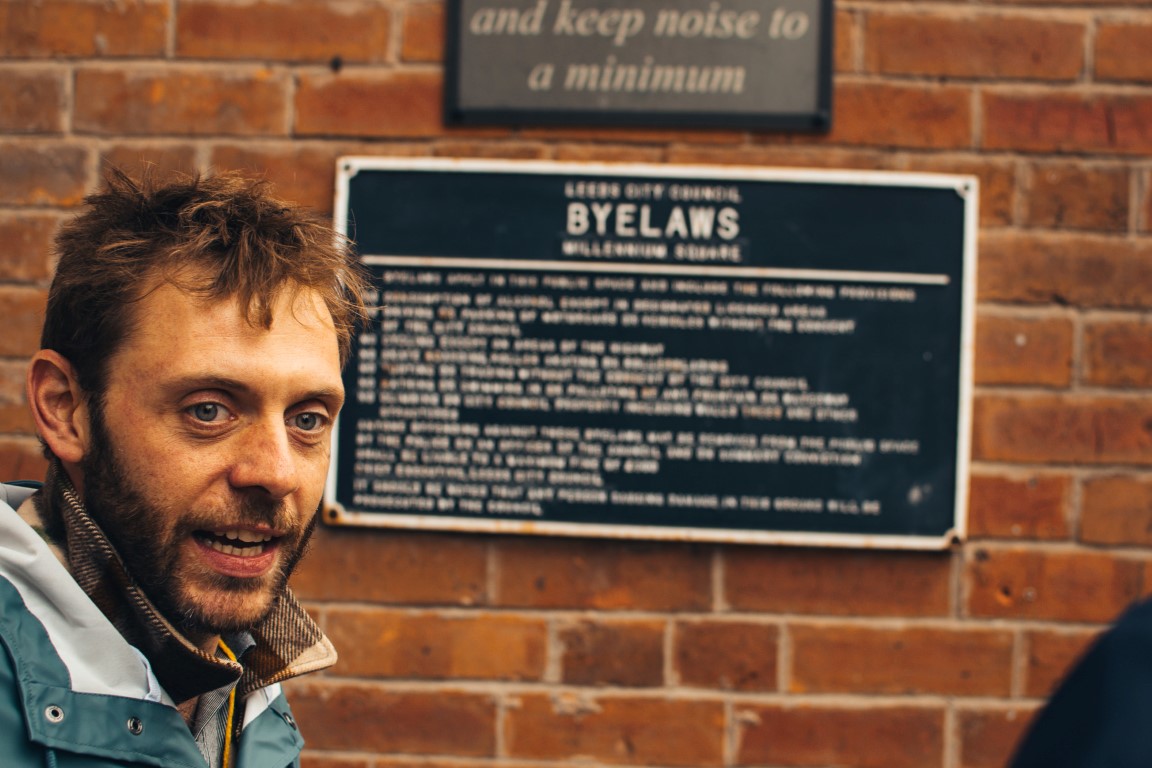
    Guided by Malcolm Hamilton of Mufti Games, we went out and explored the urban space around the museum, where we found some pretty sad by-laws telling us all the things we couldn’t do:

    [/et_pb_text][/et_pb_column][/et_pb_row][et_pb_row][et_pb_column type=”1_2″][et_pb_image _builder_version=”3.0.76″ src=”http://www.counterplay.org/wp-content/uploads/2017/11/CounterPlayLeeds-1586-Medium.jpg” show_in_lightbox=”off” url_new_window=”off” use_overlay=”off” always_center_on_mobile=”on” border_style=”solid” force_fullwidth=”off” show_bottom_space=”on” /][/et_pb_column][et_pb_column type=”1_2″][et_pb_image _builder_version=”3.0.76″ src=”http://www.counterplay.org/wp-content/uploads/2017/11/CounterPlayLeeds-1587-Medium.jpg” show_in_lightbox=”off” url_new_window=”off” use_overlay=”off” always_center_on_mobile=”on” border_style=”solid” force_fullwidth=”off” show_bottom_space=”on” /][/et_pb_column][/et_pb_row][et_pb_row][et_pb_column type=”4_4″][et_pb_text admin_label=”Imagination2″ _builder_version=”3.0.76″ background_layout=”light” border_style=”solid”]

    Enthused by play, we quickly we imagined a different world where by-laws became playlaws, and instead of telling you what you’re not allowed to do, we started listing stuff you had to do:

    “Don’t walk on the cracks. Walk like a bird. Avoid the lava. Point to an owl. Shake hands with someone. Don’t slip on the banana skin. Walk backwards. Jump! Spin!”

    When someone walked by, we invited them to play and cheered them on when they chose to participate. Many people did, often with a combination of surprise and joy. “What is this? Am I allowed to play here?”

    Even this somewhat serious-looking guy, who turned out to get more involved than anyone else. Apparently, it was his birthday and our little silly intervention made his day.

    [/et_pb_text][et_pb_image _builder_version=”3.0.76″ src=”http://www.counterplay.org/wp-content/uploads/2017/11/CounterPlayLeeds-1664-Medium.jpg” show_in_lightbox=”off” url_new_window=”off” use_overlay=”off” always_center_on_mobile=”on” border_style=”solid” force_fullwidth=”off” show_bottom_space=”on” /][et_pb_text admin_label=”Inclusiveness” _builder_version=”3.0.76″ background_layout=”light” border_style=”solid”]

    Inclusiveness

    I always insist that play shouldn’t be restricted to any one group in society (like, say, children), but should rather be expanded to include all of us. It doesn’t matter if we’re young or old, if we’re male of female or something else, if we’re physically strong or less so. None of that is of any consequence, because none of us should be forced to live a playless life.

    I don’t know the age of any of the participants, and it didn’t matter one bit. There were a bunch of families with small kids, some of whom stayed for a very long time, so immersed in play that they apparently couldn’t leave. Sometimes we were playing alongside each other, sometimes everyone came together across generations in joyous silliness like this round of human bowling:

    [/et_pb_text][et_pb_text admin_label=”Generosity” _builder_version=”3.0.76″ background_layout=”light” border_style=”solid”]

    Generosity

    Playing with other people, we develop a shared interest in keeping the play alive and we have a shared responsibility for this. This brings to the fore a certain kind of generosity, where we care less about our personal needs and more about contributing to the shared experience. We stretch a little bit more, take a few additional steps towards the other, trying to do and be a little bit better for the greater good.

    Drawing on Anthea Moys’ brilliant performance at CounterPlay ‘17, Ben Ross had us “flocking” all over the place and it was a beautiful:

    It’s a simple “game”, inspired by flocking birds, where everyone follows the leader of the flock. Whenever the leader turns , the entire flock turns and whoever is in front becomes the new leader.

    What’s remarkable about flocking is how quickly you start to feel like an (somewhat) cohesive organism, and you take it upon you to extend the experience. Generosity in action.

    [/et_pb_text][et_pb_image _builder_version=”3.0.76″ src=”http://www.counterplay.org/wp-content/uploads/2017/11/CounterPlayLeeds-1701-Medium.jpg” show_in_lightbox=”off” url_new_window=”off” use_overlay=”off” always_center_on_mobile=”on” border_style=”solid” force_fullwidth=”off” show_bottom_space=”on” /][et_pb_text admin_label=”Permission” _builder_version=”3.0.76″ background_layout=”light” border_style=”solid”]

    Permission

    During the weekend, we kept coming back to the question of “permission”. How do we know if we have permission to play? Who can grant that permission? Is it ours for the taking? Maybe we can collectively, as a community, bestow the permission on each other?

    While it might seem a trivial matter – playing is generally not prohibited – it actually appears to be holding us back more often than you’d think. We have grown accustomed to not playing and we need someone to renew our invitation.

    This issue becomes even more evident when we don’t always know who owns . Due to what has been labelled “the insidious creep of pseudo-public space”, public space is longer always public, further blurring the actual ownership and the permissions we citizens might have. When some of the organisers started making woolen spider webs, a woman and her son joined them. It was only afterwards she learned that no official permission had been given, which made her quite surprised that we’d dare do it all.

    We need to renegotiate the rules of engagement, reclaiming our permission to play in public!

    In the next post, I’ll explore some of the actionable ideas that emerged during the weekend, so we can keep the playful spirit spreading.

    [/et_pb_text][et_pb_image _builder_version=”3.0.76″ src=”http://www.counterplay.org/wp-content/uploads/2017/11/CounterPlayLeeds-1684-Medium.jpg” show_in_lightbox=”off” url_new_window=”off” use_overlay=”off” always_center_on_mobile=”on” border_style=”solid” force_fullwidth=”off” show_bottom_space=”on” /][/et_pb_column][/et_pb_row][/et_pb_section]
  • CounterPlay Leeds #1 – Context

    CounterPlay Leeds #1 – Context

    [et_pb_section bb_built=”1″][et_pb_row][et_pb_column type=”4_4″][et_pb_text _builder_version=”3.0.76″ background_layout=”light” border_style=”solid”]

    As I’m making my way home from my first ever visit to Leeds, I’m in this weird state of excitement and exhaustion that you often experience after a weekend well played. Yeah, I’m tired, but that is far overshadowed by an even stronger sense of hope, belonging, confidence and joy.

    My reason for going to Leeds was a truly joyous, if slightly humbling, one: I was invited over to participate in the first ever CounterPlay “satellite” festival – CounterPlay Leeds.

    HOW COOL IS THAT?

    When I started working on the CounterPlay festival a handful of years ago, I always wanted it to be more than just a play festival in Aarhus, Denmark. I wanted the underlying ideas to spread, to bring play into new contexts and, in turn, to create a more playful society. More than anything, I hoped we could cultivate a community that would thrive and grow, transcending borders and boundaries, inviting an increasing number of people to play along. There’s a certain vulnerability in expecting this much from strangers, because what if it falls flat? Luckily, we’ve had so many incredible contributions coming from the play community, and the enthusiasm and dedication has far surpassed our wildest expectations. It seems like we have set something in motion that is not about to stop moving anytime soon and I’m beyond thrilled.

    Thus, when my long-time Twitter friend Emma Bearman, who’s behind the wonderful “Playful Anywhere” in Leeds, suggested running a CounterPlay event in Leeds, I jumped with joy. YES! While the stars haven’t yet been aligned for bringing Emma over to CounterPlay, we’ve had many, many wonderful conversations on Twitter and just having the opportunity to carry on outside of social media was enough for me to head over to Leeds. Emma had teamed up with an amazing local group (including Robbie Foulston, Sophie Howell, Becky Sumerling, Jessica Penrose and Mel Taylor), and organised a wonderful event that oozed of playfulness. A special thank also goes to Leeds 2023 for supporting my visit and Leeds City Museum for hosting the event – what a lovely place!

    It was supposed to be an informal “open space” for kids and adults alike, where we would be playing, talking and reimagining the playful city along the way. We had some conversations and I described the core values of CounterPlay, but other than that, they just ran with it. When I left for Leeds, I basically didn’t know what was going to happen, which was a new and quite exhilarating. I’m sure I could get used to that!

    [/et_pb_text][et_pb_image _builder_version=”3.0.76″ src=”http://www.counterplay.org/wp-content/uploads/2017/11/CounterPlayLeeds-1505-Medium.jpg” show_in_lightbox=”on” url_new_window=”off” use_overlay=”off” always_center_on_mobile=”on” border_style=”solid” force_fullwidth=”off” show_bottom_space=”on” /][et_pb_text _builder_version=”3.0.76″ background_layout=”light” border_style=”solid”]

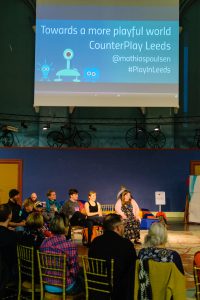
    I wanted to open the event with a talk about my experiences and reflections on starting and running CounterPlay. I intended to build a bridge back to the festival, framing the current event and hopefully inspiring people to not just play, but also to think and talk about play. While it had too many words in it, at least some of those words seem really, really important to me.

    [/et_pb_text][et_pb_text admin_label=”Prezi” _builder_version=”3.0.76″ background_layout=”light” border_style=”solid”] [/et_pb_text][et_pb_text _builder_version=”3.0.76″ background_layout=”light” border_style=”solid”]

    I tried to convey the most important thing about CounterPlay, namely the playful atmosphere that makes it a safe space, where adults dare to be silly; where people open up and strangers connect; where the realm of the possible is expanded; where we engage in deep conversations that truly matters; where we are all less afraid; where we see play as a celebration of freedom and where participants perform a playful takeover because they feel real ownership.

    I also hoped to describe how we insist that play is equally important for all of us, no matter our age or place in society, and that play is both an activity, an attitude and a paradigm.

    Play is JOY / FREEDOM / LOVE.

    All my words really boils down to one thing: the mere existence of play in our lives will make our lives better. Happiness are closely tied to the courage and capacity to play. Sever that tie and your odds of living happily ever after are reduced drastically. While I fully acknowledge that play has many, many extremely valuable side-effects, they are always less important than play itself. Furthermore, they are entirely dependant on allowing play the freedom to flourish. I find myself repeating these things, but just like when we’re playing, the repetions are part of the sense-making, part of the fun.

    I paid a little extra attention to one particular side-effect, namely our imagination. When we play, our imagination is running on rocket fuel, and it becomes an essential catalyst of play, exploring as it is all the possible directions, ideas and actions.

    Not only that, when we’re playing, we also develop our capacity to imagine how our cities, our societies, our relationships to other people and our lives could be different. There’s a beautiful quote by philosopher Martha Nussbaum in her book “Not For Profit” that encapsulates the human connection of play:

    “When we meet in society, if we have not learned to see both self and other in that way, imagining in one another [] thought and emotion, democracy is bound to fail, because democracy is built upon respect and concern, and these in turn are built upon the ability to see other people as human beings, not simply as objects”

    This is at the heart of play: seeing each other as human beings. Oh, how the weekend captured and demonstrated these things beautifully, so beautifully.

    More about that in the next post!

    [/et_pb_text][et_pb_image _builder_version=”3.0.76″ src=”http://www.counterplay.org/wp-content/uploads/2017/11/CounterPlayLeeds-1525-Medium.jpg” show_in_lightbox=”off” url_new_window=”off” use_overlay=”off” always_center_on_mobile=”on” border_style=”solid” force_fullwidth=”off” show_bottom_space=”on” /][/et_pb_column][/et_pb_row][/et_pb_section]