Category: News & Events

  • Playing the Archive

    Playing the Archive

    [et_pb_section bb_built=”1″][et_pb_row][et_pb_column type=”4_4″][et_pb_text _builder_version=”3.15″]

    [toc]

    I was recently in London for a conference in the brilliant and ambitious research project “Playing the Archive” (see programme). I had been asked to join their advisory group, and what an honor and privilege it was to spend a day with such a passionate group of brilliant, dedicated people so passionate about play.

    Playing the Archive will promote empathy across generations by allowing children to play games that their forebears described to the Opies in the 1950s and 60s, while simultaneously allowing members of that generation to play today’s games, in an intergenerational exchange of cultural memory and play.

    The project is built on the immense legacy of “The Opies”, Iona and Peter Opie, who dedicated their lives to documenting children’s culture, folklore, games etc. On a personal level, the whole story about The Opies resonates deeply, as when someone described them as “two people with no funding doing that on an epic and impressive scale”.

    One speaker talked about “the collaborative research model of the Opies” as simply making friends with people as part of their research process. I *love* when this is possible, and have been fortunate enough to experience it many times in my own work. Let’s just say that maintaining a professional distance is not really my thing.

    Another person remembered Iona as “life-enhancing”.

    Think about that. “Life-enhancing”. Now, there’s truly something to aspire to.

    Now for some of the interesting themes that surfaced through the day.

    Respecting play:

    I’ll start with a bit of a detour, but one that took me to the question that matters the most to me: how do we respect play?

    Wendy Russell made an important comment early on:

    “I fear adults taking play seriously means adults colonizing play”.

    She was talking about that particular kind of “adult seriousness”, of course, where play is expected to demonstrate some measurable “instrumental value”; “do they learn anything useful?“.

    I have that fear too. Oh, yes, very much so, and not just when it comes to children, but in general. Colonization, instrumentalization, exploitation, playwashing.

    Problematic as these things are, it’s not, however, something that happens because we take play seriously. On the contrary, it happens exactly when we *fail* to take play seriously.

    As my dear friend and play scholar, Helle Marie Skovbjerg, writes (in Danish, this is my translation):

    “taking play seriously exactly means that we see the value in the meaning-making of the participants & understand it as something which is central to the life they lead”. “Here they tell us, who they are & suggest what it means to be human. Taking play seriously is to take everything that’s human seriously”

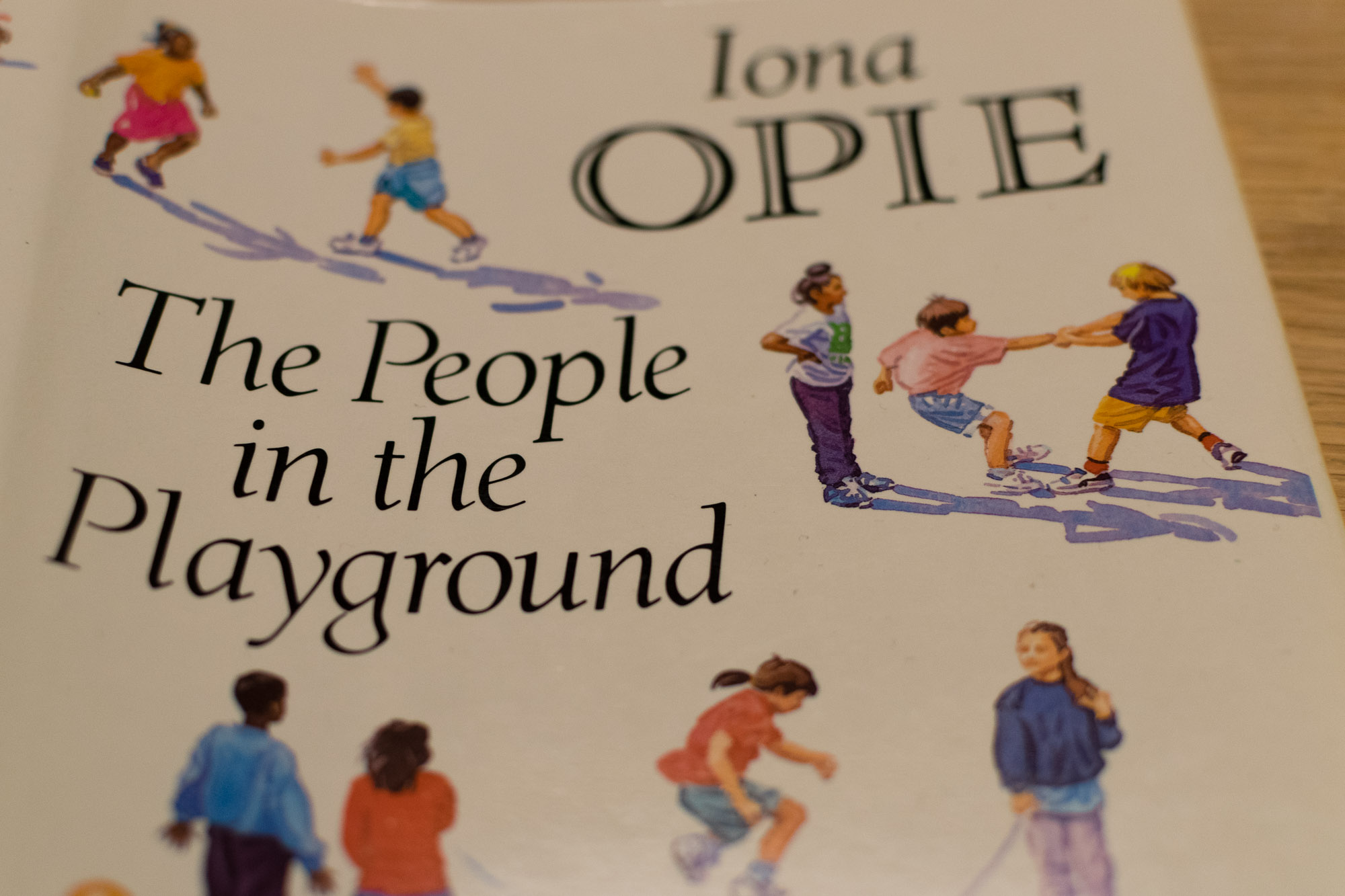
    It seems to me that “taking play seriously” is exactly what The Opies did in order to understand the culture and lives of children; “the people on the playground”. Iona expressed that dedication quite succinctly in her book bearing that particular title (which I just started reading, and it’s wonderful):

    “I wanted, above all, to call up the sensation of being surrounded by the kaleidoscopic vitality of the eager, laughing, shouting, devil-may-care people in the playground”

    Kaleidoscopic vitality. My new favorite phrase.

    Seth Giddings, writing about the Opies in “‘What is the state of play? The work of Iona and Peter Opie
    in the age of postdigital play”, reaches a similar conclusion, worth repeating:

    If we learn nothing else from the Opies, let us emulate their respect for, and belief in, children and play – their cultures and behaviours, language and nonsense – in the face of both disapproving and benign adult intervention.

    Taking the Opies seriously, the entire “Playing the Archive” project seems to also take play seriously.

    That’s a perfect start.

    The Language of Play

    In the very beginning, Andrew Burn asked: “How can we think about performance in historical terms when the archive cannot store the live event?””

    As we know, play is “as an embodied, affective experience that cannot be fully conveyed using conventional language” (Shields, 2015). This creates an obvious challenge when building archives, but it also relates to the broader difficulty of capturing play in words. That happens to be one of my favorite challenges that can’t ever be solved. Words are simply inadequate. While this should imbue in us a sense of humility, it should never make us stop trying.

    This theme was also mirrored in Steve Roud’s talk about “indexing the Opies”, and the inherent challenge of developing appropriate classification systems for digital archives. Developing an index that allows people to find, say, a rhyme or a game in the huge collection requires incredible attention to the language and the words you use. Maybe this attention to language can inspire our wider attempts to capture the sensation of play in words?

    Play-lines & continuity:

    The entire endeavor revolves around the connections between past, present and future, and in a very dynamic sense. The Opies’ work was itself building on earlier work, creating multiple links to the past, and now Playing the Archive continues that tradition. Jackie Marsh used the notion of the “palimpsest”, as a metaphor for the process of building on what came before, maintaining a sense of continuity in the history of children’s folklore and play.

    She also quoted Tim Ingold, saying that “to lead a life is to lay down a line” & then argued that such a line can be understood as a “play-line”. I quite like that. To lead a life is to lay down a “play-line”. This reminded me of Richard Schechner’s work and maybe especially this particular quote:

    “It’s wrong to think of playing as the interruption of ordinary life. Consider instead playing as the underlying, always-there continuum of experience”

    When we’re able to see contemporary lens through the lens of history, when we understand that media and intertextuality as sources of inspiration for play is nothing new, the fear of the new is drastically reduced, because it is not so new after all.

    As John Potter noted:

    “The way people are talking on the radio about how imagination is dying, doom and gloom. We’re happy to report that it’s alive and well”

    This bigger picture is a very important dimension in raising awareness of contemporary play through the connection to play as a fundamental human phenomenon. Or as my dear departed friend, Bernie DeKoven wrote in “A Playful Path” and demonstrated through a life of play:

    “When we are playing together, despite our differences, we celebrate a transcendent sameness, a unity that underlines the illusion of our separateness. You could call this an act of love – an enacted love that lets us keep the game going. Many acts of love, in fact, many acts of compassion, caring, trust, assurance.”

    Inspiring new forms of play:

    Kate Cowan and John Potter presented their “Dynamic Multimodal Methods for Researching Remediated Play”: using a variety of methods and technologies to follow in the footsteps of the Opies, striving to capture a more comprehensive picture of the complexity of play. Getting new cameras, like GoPros and 360 degree cameras, out onto the playground and into the hands of children will eventually allow us to see aspects of play that we wouldn’t otherwise be aware of. Not only that, developing new methods to study play will also in itself inspire new forms of play. I thought of the “Hawthorne effect”, where those being studied alter their behavior because they are being studied. Sometimes, this is considered a thing to avoid, as it may distort the findings, but here it can also add new opportunities and layers to the play experience.

    We hope to expand the idea of what play can look like” – Kate said, and this is key. It may well be that this is where we’ll eventually see the most important impact of “Playing the Archive”, not in keeping old forms of play alive, not in remembering and celebrating The Opies (however much they deserve it!) but in allowing old and current forms of play to meet and merge, taking on entirely new shapes and leading to fresh experiences for new generations.

    I, for one, am certainly looking forward to following this project in the future!

    [/et_pb_text][/et_pb_column][/et_pb_row][/et_pb_section]
  • Loving the Play Community

    Loving the Play Community

    [et_pb_section bb_built=”1″][et_pb_row][et_pb_column type=”4_4″][et_pb_text _builder_version=”3.15″]

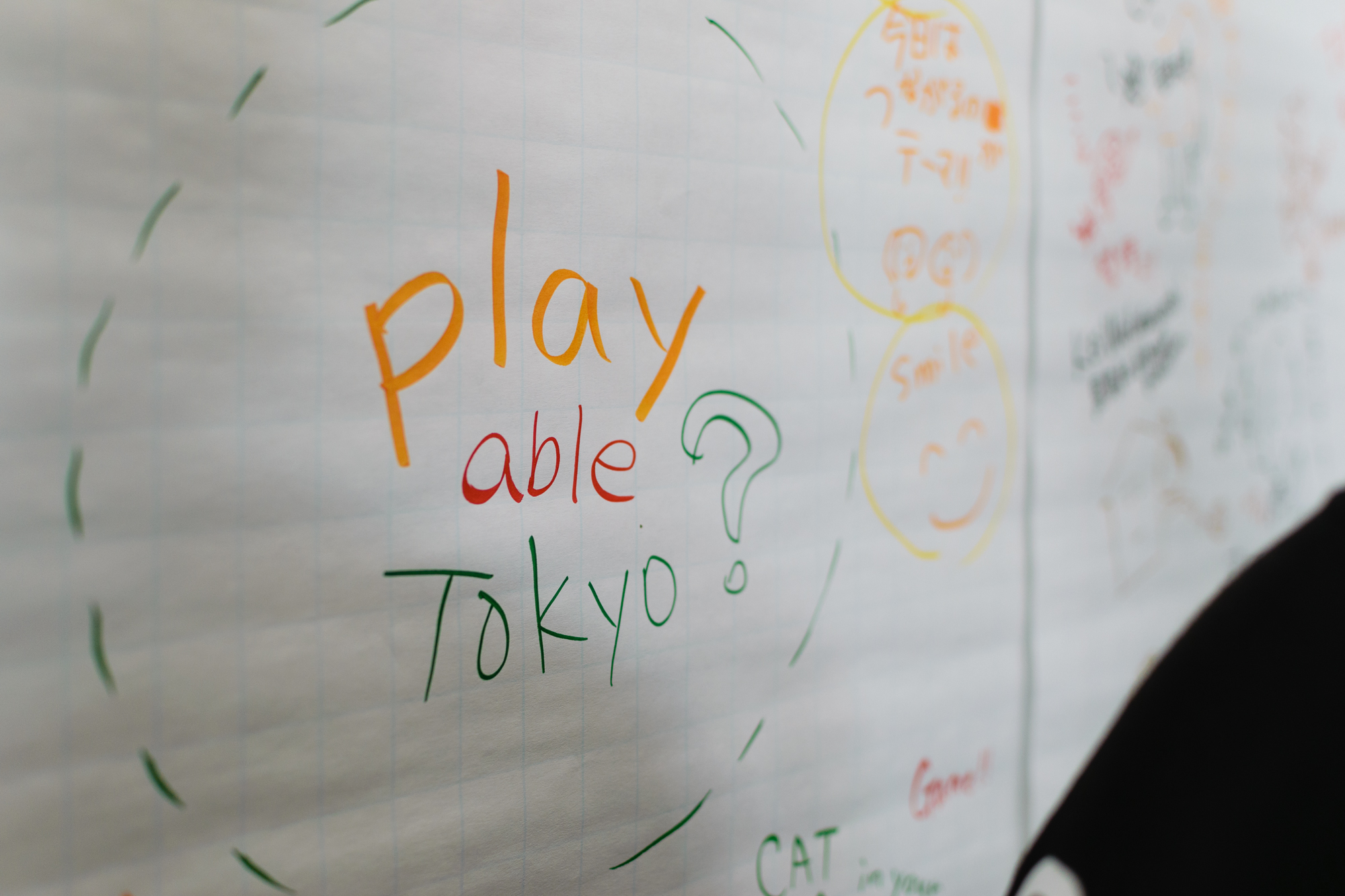
    I try to embrace every possible adventure I stumble upon. Immer ein Abenteuer. When the nice, brilliant people at Playable City invited me to speak at their conference in Tokyo, I jumped with joy.

    “Would you come over and talk about your work with play communities?” 

    Since that just happens to be my favorite topic, the answer was a resounding YES, of course.

    It’s a few weeks ago now, and all the many, many impressions from the conference (and Tokyo in general) have had time to settle in.

    There were a good blend of inspiring talks by Kei Wakabayashi, Motoko Tanaka, Tine Bech and Jo Verrent from Unlimited, as well as workshops organised by members of the “Creative Producers International” programme (see the full timetable here).

    It was deeply fascinating to explore some of the cultural differences between Japan and Western Europe (like the way use public parks!), but also to be reaffirmed in our shared desire to play. I maintain that play reminds us of everything we have common as humans, all the similarities that we often tend to overlook. When we play together, the differences fall away, and we’re able to just be in and extend that moment together.

    I would have appreciated more to talk and play, since it was all over so fast. Maybe more than one day the next time? It’s hard to get really deep into the more substantial questions and conversations in such a fairly short time, but other than that, it was a blast.

    [/et_pb_text][et_pb_image _builder_version=”3.15″ src=”http://www.counterplay.org/wp-content/uploads/2018/10/PlayableCityTokyo-2464-Large.jpg” /][et_pb_text admin_label=”Play community talk 1″ _builder_version=”3.15″]

    My own talk was basically an attempt to convey my deep love for the play community (you can download a pdf of my presentation)

    The assumptions underpinning all my work are the ideas that we all have a desire to play, and that playful people are better equipped to live in this complex, weird and chaotic world.

    We can all become more playful, and the best way to practice is to simply play. If play serves any greater purpose, it is helping us reconnect with our inherent playfulness (I wrote a little bit more about that in “Play to Live“).

    It’s almost impossible to make play thrive unless it is embedded in a friendly play community. As I wrote in our book, “The Power of Play” on “The Global Play Community“:

    “Cultivating a diverse play community where people are actively participating to explore and spread play is probably our best bet to foster a strong movement towards a more playful world. When we know for certain that we are not alone that other people feel the same urge to be playful, then we can easier muster the courage that is necessary to challenge the non-playful structures around us.”

    Now, I can’t talk about play communities without acknowleding how much I’m drawing on Bernie DeKoven’s work (which is a lot). He’s gone now, sadly, but throughout his life he explored the true meaning of play and the communities where play flourishes:

    “But we are a play community, and playing the way we do, for fun, for everyone’s fun, in public – our fun little community becomes something else. To those who want to be seen as people who embrace life, embrace each other, embrace spontaneity, freedom, laughter; we are an alternative. An invitation. We play as if the game isn’t important. The rules aren’t important. As if the only really important thing is each other”

    This resonates with Lynne Segal’s writing in “Radical Happiness: Moments of Collective Joy“:

    ”As the world becomes an ever lonelier place, it is sustaining relationships, in whatever form they take, which must become ever more important. An act of defiance, even”

    What can be more helpful in “sustaining relationships” than playing together? Especially if every single act of play takes us deeper into the play community, while also extending the invitation for people on the outside to join.

    If you’re still with me, let’s say we agree that yes, play and play communities are indeed important, but how do we cultivate them?

    I don’t have a simple recipe, but rather a handful of somewhat intangible, demanding pieces of advice. There’s no reason to pretend that it’s easy, because, well, it’s not. It’s a lot like love in that regard. It’s complicated, it takes a lot of effort, and there are no guarantees or predictable outcomes, but we probably can’t live without it.

    [/et_pb_text][et_pb_image _builder_version=”3.15″ src=”http://www.counterplay.org/wp-content/uploads/2018/10/PlayableCityTokyo-2390-Large.jpg” /][et_pb_text admin_label=”Play community talk 2″ _builder_version=”3.15″]

    My most important message was to dare to be guided by play. To me, play is my one guiding principle. My compass. When I doubt what I’m doing, when I fear I’m moving in the wrong direction, I ask myself: ”what would play have done?”. ”Am I respecting the values of play?”. I have images of play in my head, the feeling of play in my body. I found myself talking as play as this imaginary friend, who I would always consult and ask for advice. “Am I doing this right?” Our manifesto is an attempt to describe how we see play, and I frequently revisit it, keeping me on the right track.

    From here, you have to lead by example. Someone has to muster the courage to stand up and make a statement, demonstrating how play is not only permitted, but actively encouraged. You can do that, you can change the direction, the atmosphere, the culture, the rules. This is exactly what Clare Reddington and her partner in crime, Seiichi Saito, did when they were running around like this all day:


    [/et_pb_text][et_pb_image _builder_version=”3.15″ src=”http://www.counterplay.org/wp-content/uploads/2018/10/PlayableCityTokyo-2399-Large.jpg” /][et_pb_text admin_label=”Play community talk 3″ _builder_version=”3.15″]

    What does it mean to lead a community while being guided by play?

    To name a few principles that are important to me, you have to embrace the diversity of play. There are as many ways to play as there are people on earth. Just like we should embrace diversity among people, we should encourage it in play. There is no right way to play, but there are many ways we haven’t seen yet. Play is uncertain and you shouldn’t try to eliminate that uncertainty. It’s not knowing what will happen in a moment that keeps play alive and vibrant, because anything might happen. Play is sincere and playing together, our mental barriers and facades fall away. We stop hiding and show who we really are. I’m pretty sure that if you’re not being sincere, if you don’t really mean it, the play community will wither and die. Finally, play is hugely generous. Play is not primarily about competing or winning, but about being in that moment together, keeping the play alive and everyone playing takes upon them part of the responsibility. This nurtures a generosity, where we care less about our personal needs and more about contributing to the shared experience. We have to be as generous to our play communities, also without always expecting anything in return.

    Throughout all this, your efforts only ever really matter when you dare to trust the play community. If you do, they will perform magic. If you don’t, well, they won’t do much of anything. Trust is risky, intimidating, even. What if your trust is misguided? If those you trust will let you down? …but I honestly believe there is no other way to make play thrive (or to cultivate healthy societies, for that matter).

    I ended with a few simple recommendations that might be helpful for anyone aspiring to cultivate local play communities:

    • Create spaces for play to thrive – in our cities and our minds
    • Start small – let play grow organically
    • Be courageous – dare to experiment, embrace uncertainty
    • Trust the play community

    I will keep working for greater diversity in the play communities I’m part of, creating stronger ties across the globe, bridging gaps and bringing more people together. As for next year’s CounterPlay festival, there’s a call for proposals out now, and we’re working to get the play community much more involved in the process than ever:

    [/et_pb_text][/et_pb_column][/et_pb_row][/et_pb_section]
  • Playful Arts Festival 2018

    Playful Arts Festival 2018

    [et_pb_section bb_built=”1″][et_pb_row][et_pb_column type=”4_4″][et_pb_text _builder_version=”3.1.1″]

    When I was recently driving back from Playful Arts Festival in Den Bosch, the Netherlands, even the dreadful traffic on the Autobahn was not nearly enough to kill my enthusiasm for this great event!

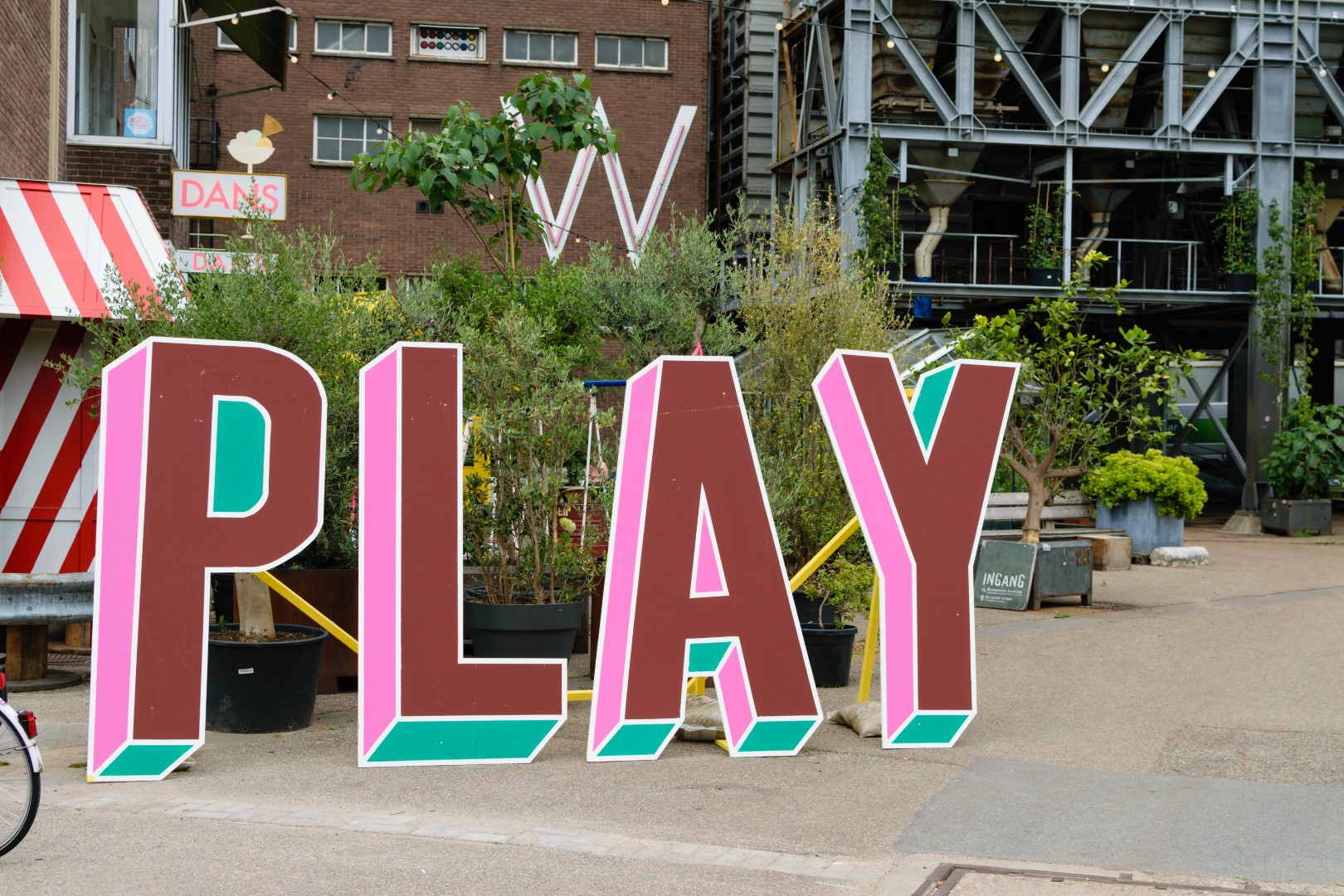
    While I haven’t been at Playful Arts before (big mistake!), I’ve been friends with one of the organizers, Zuraida Buter, for several years and we’ve talked a lot about our shared curse and blessing of running play events. I don’t think it’s unfair to say that we’re both somewhat stubborn (maybe “perseverant” is a nicer word? Anyway, you know what I mean) in our efforts to explore the role of playfulness in games, art and our lives. We share the fundamental belief that it’s important to have these events in the world, and that there should be (more, always more!) regular opportunities for the play community to congregate. Otherwise, why keep doing this work? It’s mighty challenging, frustrating (to the point of screaming into the void) at times, and it certainly doesn’t make us rich (but oh, it’s so immensely rewarding in so many other ways and I wouldn’t ever want to live without it).

    It goes without saying, then, that I was curious to join their community, learn more about their approach to play and not least their position right on the intersection of play and art. This is a connection I’m deeply intrigued by, but also one I feel a desire to explore in much more depth.

    [/et_pb_text][et_pb_image _builder_version=”3.1.1″ src=”http://www.counterplay.org/wp-content/uploads/2018/06/PlayfulArts2018-8254-Large.jpg” /][et_pb_text _builder_version=”3.1.1″]

    More than anything, Playful Arts Festival was an important reminder that, for all of us interested in understanding play better, art should be one of the first places we look. Art and play share the fundamental trait that they must both be allowed to exist for no other reason than the experience, with no expectation of any specific outcome (and they both suffer from the contemporary desire to focus solely on results and measurable outcomes – what I have called “ROI Society”). It seems to me that becoming an artist is often also a matter of embracing your playfulness, carving out a space for it to thrive in your work and life. Deep down, I believe we all have this urge to stay playful, and art might be a strategy for maintaining the link to that dimension. Most artists, like other playful people, are always curious, asking questions, exploring the world, turning it upside down, insisting that everything could be different. Or as the (Dutch, as it happens) artist M. C. Escher, famous for his impossibly endless stairs, phrased it:

    ‘I can’t keep from fooling around with our irrefutable certainties. It is, for example, a pleasure knowingly to mix up two- and three-dimensionalities, flat and spatial, and to make fun of gravity.’

    While I’m certainly no artist, I also “can’t keep from fooling around with our irrefutable certainties”. In fact, few things cause more frustration than “the politics of necessity” and the widespread beliefs that there’s an almost destiny-like reason for things being the way they are. Play – and art – reminds us that it’s a big, fat lie, but only if we dare to embrace it, and for that, we need each other. We need our play communities, which often emerges around events like Playful Arts.

    So what was this festival all about?

    [/et_pb_text][et_pb_text admin_label=”JakobLaCour” _builder_version=”3.1.1″]

    On the first day of the festival, arriving on my own, feeling a little overwhelmed, I was eager to get into the proper playful mood. Now, I’m the weird kind of person who absolutely loves play, will go to great lengths to improve the understanding of and conditions for play, yet I’m often intimidated by certain ways of playing. I’m a somewhat picky player, you might say. I’m a little shy by nature, and when play feels more like a performance, I’m usually struggling. It’s a good thing, I guess, since it frequently reminds me that not all forms of play are appealing to all people and diversity and inclusiveness must always be a priority.

    I’m still practicing my play skills, and I always try to seek out experiences that are out of my comfort zone. My friend Jakob La Cour, a Danish artist, is usually guaranteed to deliver somewhat intimidating experiences, so I jumped on his contribution – “Random Magic”. He took us on a journey into a mystical dimension, drawing on “the power of the mask”, hiding our faces and trusting the strength of the group. Dressed up, we ventured out into town, communicating only by sounds, running and jumping around before lying on the ground in the middle of a public square. It was a very strange and demanding journey indeed, but one I cherish nonetheless. Jakob manges to truly demonstrate how playing in public can effectively subvert established expectations about the “normal” behavior. Like one participant said:

    “I felt sad for all those people looking at us, making such an effort to uphold their serious facades, pretending to be “normal””.

    [/et_pb_text][et_pb_text admin_label=”Anthea” _builder_version=”3.1.1″]

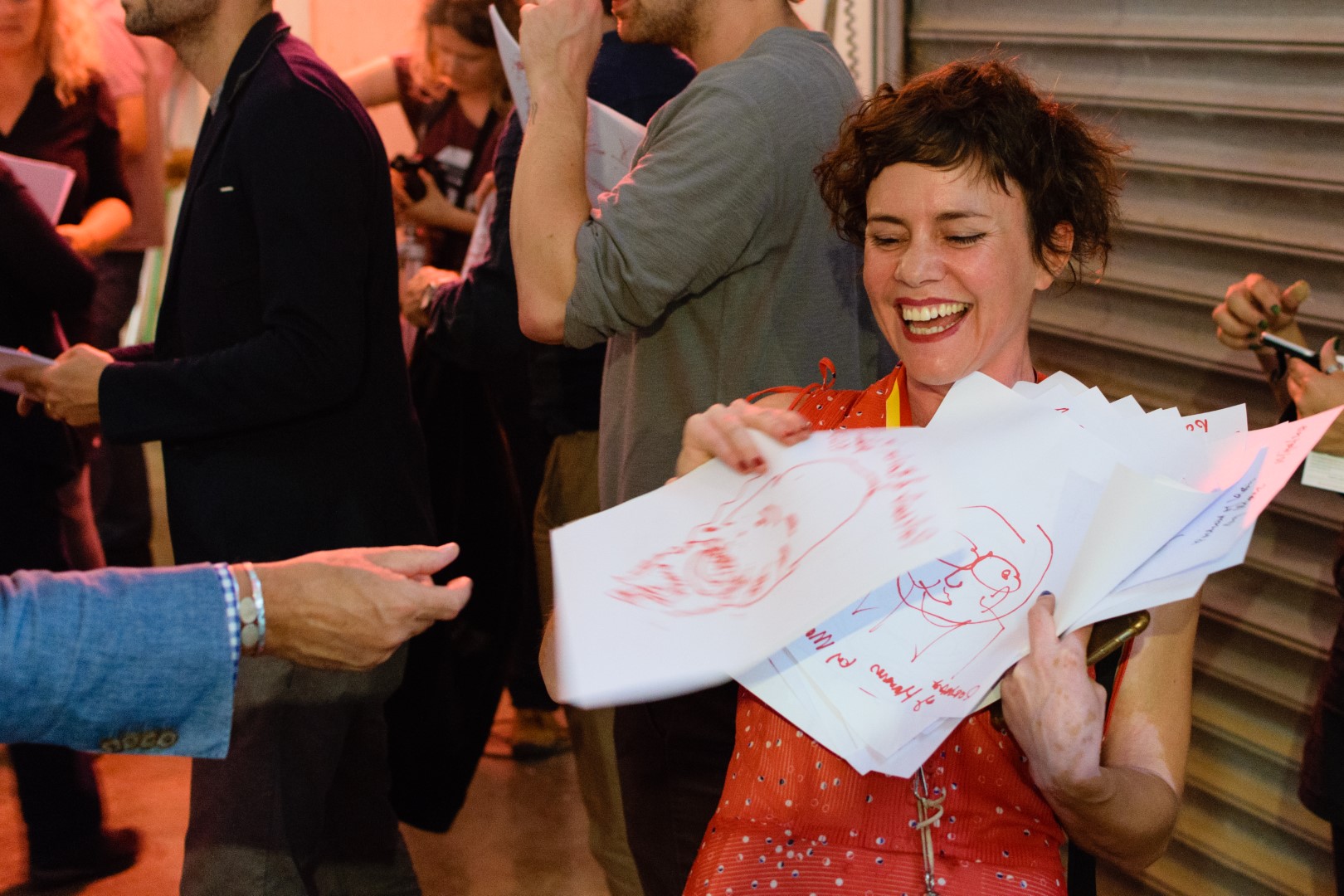
    It took some time to gather my thoughts and recalibrate my energy levels after this, but it was followed by the official opening with a lovely speech by Zuraida and then another friend, the artist Anthea Moys from Johannesburg, introduced people to her always amazing “Portrait Exchange”. Two and two, people draw portraits of each other – without looking at the paper. Nobody can do this particularly well, so it’s essentially a space for strangers to look intensely at each other, to see each other, and to laugh together. It’s a hilarious activity, but also one that profoundly demonstrates how even the most simple forms of play can bring us a little bit closer together.

    [/et_pb_text][et_pb_image _builder_version=”3.1.1″ src=”http://www.counterplay.org/wp-content/uploads/2018/06/PlayfulArts2018-8339-Large.jpg” /][et_pb_text admin_label=”Maaike” _builder_version=”3.1.1″]

    The festival was also an occasion for me to meet Maaike de Jong, a philosopher who, among other things, wrote a PhD with the intriguing title “The Paradox of Playfulness” (of which I’ve only read bits and pieces, I’m afraid). At Playful Arts, she attended as “the driving philosopher”, offering “a moment to catch up on impressions, grab ‘a bite to think’ and explore thoughts and ideas in the intersecting fields of playfulness and philosophy”. While I’ve been connected online with Maaike for a while, this was the first time we met in old-fashioned person. I enjoyed our many conversations, and not least her tribute to our mutual friend, the late Bernie DeKoven, titled “Bernie’s Delight”, a short meditation on his idea of the “inner playground”.

    [/et_pb_text][et_pb_image admin_label=”Maaike” _builder_version=”3.1.1″ src=”http://www.counterplay.org/wp-content/uploads/2018/06/PlayfulArts2018-8387-Large.jpg” /][et_pb_text admin_label=”Chair_Jump_Chute” _builder_version=”3.1.1″]

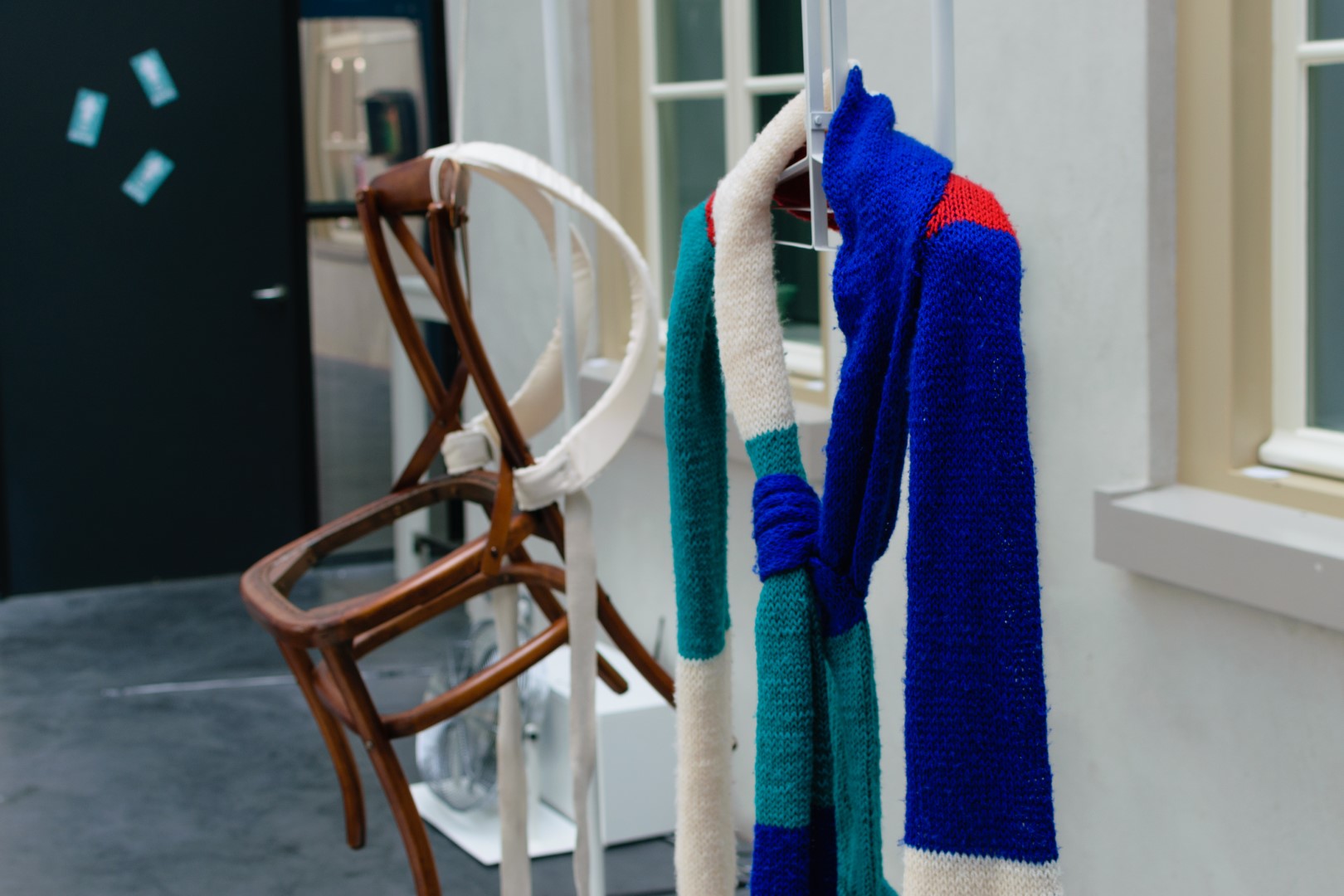
    Right after this beautiful, touching experience, something rare and surprising happened, as the artwork “Chair_Jump_Chute” by Marloeke van der Vlugt had me dancing around in a public space with people sitting around and I completely forgot about them. I think this was the most pure play experience I had during the festival, as nothing mattered but being inside and prolonging this particular moment. You wear either a kind of scarf or a chair (yes!), and when you move around, you remix music and sounds while interacting with three  big installations in the ceilings, shaped like parachutes and dresses. It was magical.

    [/et_pb_text][et_pb_image _builder_version=”3.1.1″ src=”http://www.counterplay.org/wp-content/uploads/2018/06/PlayfulArts2018-8389-Large.jpg” /][et_pb_text admin_label=”Bodies in urban space” _builder_version=”3.1.1″]

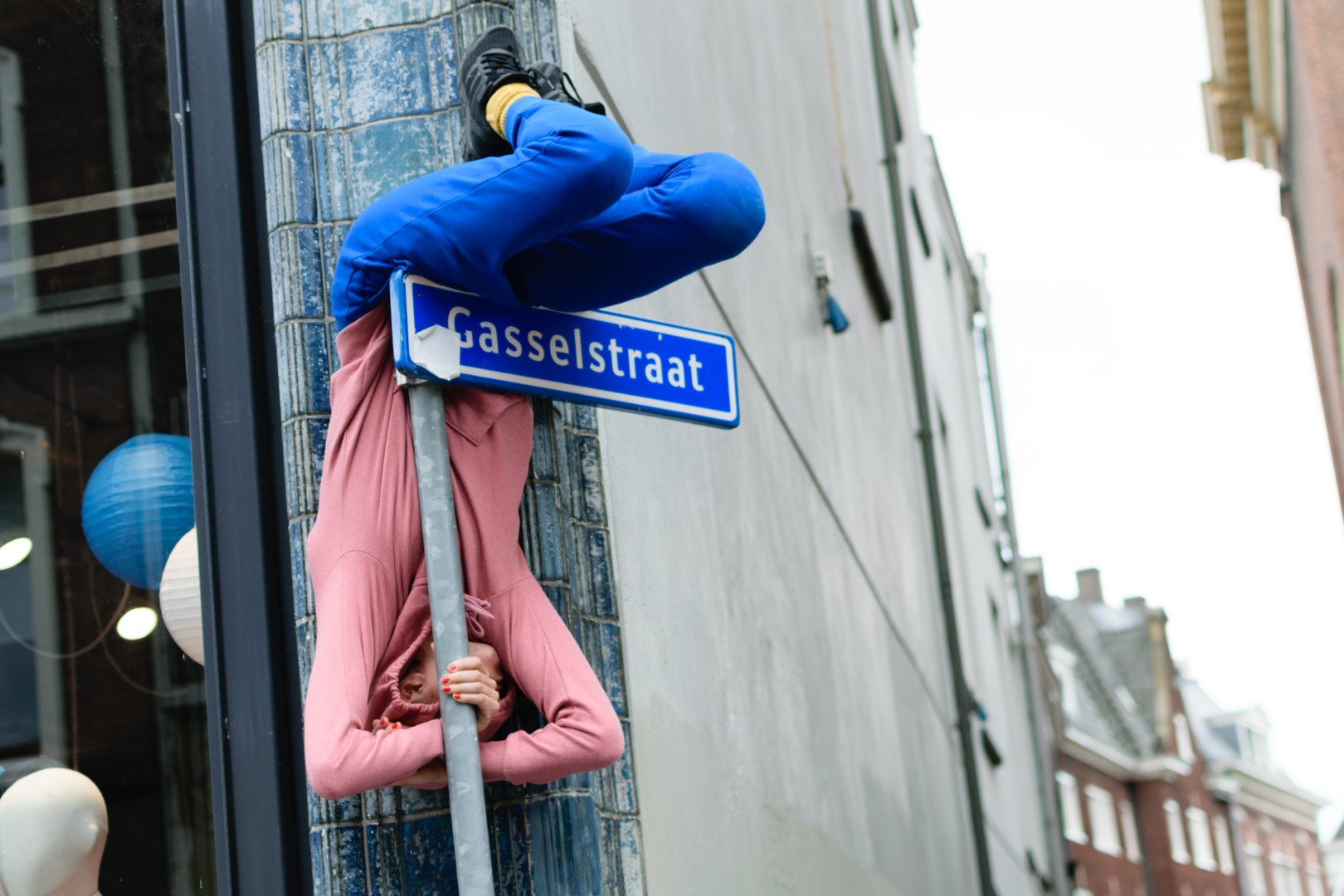
    Next up was the performance “Bodies in Urban Spaces” by Willi Dorner. The team had been picked from applicants coming from Den Bosch, the Netherlands and abroad They only came together for this one performance and had been practicing intensely for a week. It was a kind of parkour, bodies stacked on top of each other in surprising places. I particularly liked that moment when the performers got up from the ground and ran to their next location. The sudden shift, jumping from static posture to a quick dash, produced a compelling energy. The whole thing was just incredible, demonstrating how the playful eye allows you to see the world and a town like Den Bosch from entirely new perspectives.

    [/et_pb_text][et_pb_image _builder_version=”3.1.1″ src=”http://www.counterplay.org/wp-content/uploads/2018/06/PlayfulArts2018-8443-Large.jpg” /][et_pb_text admin_label=”Unfolding routines” _builder_version=”3.1.1″]

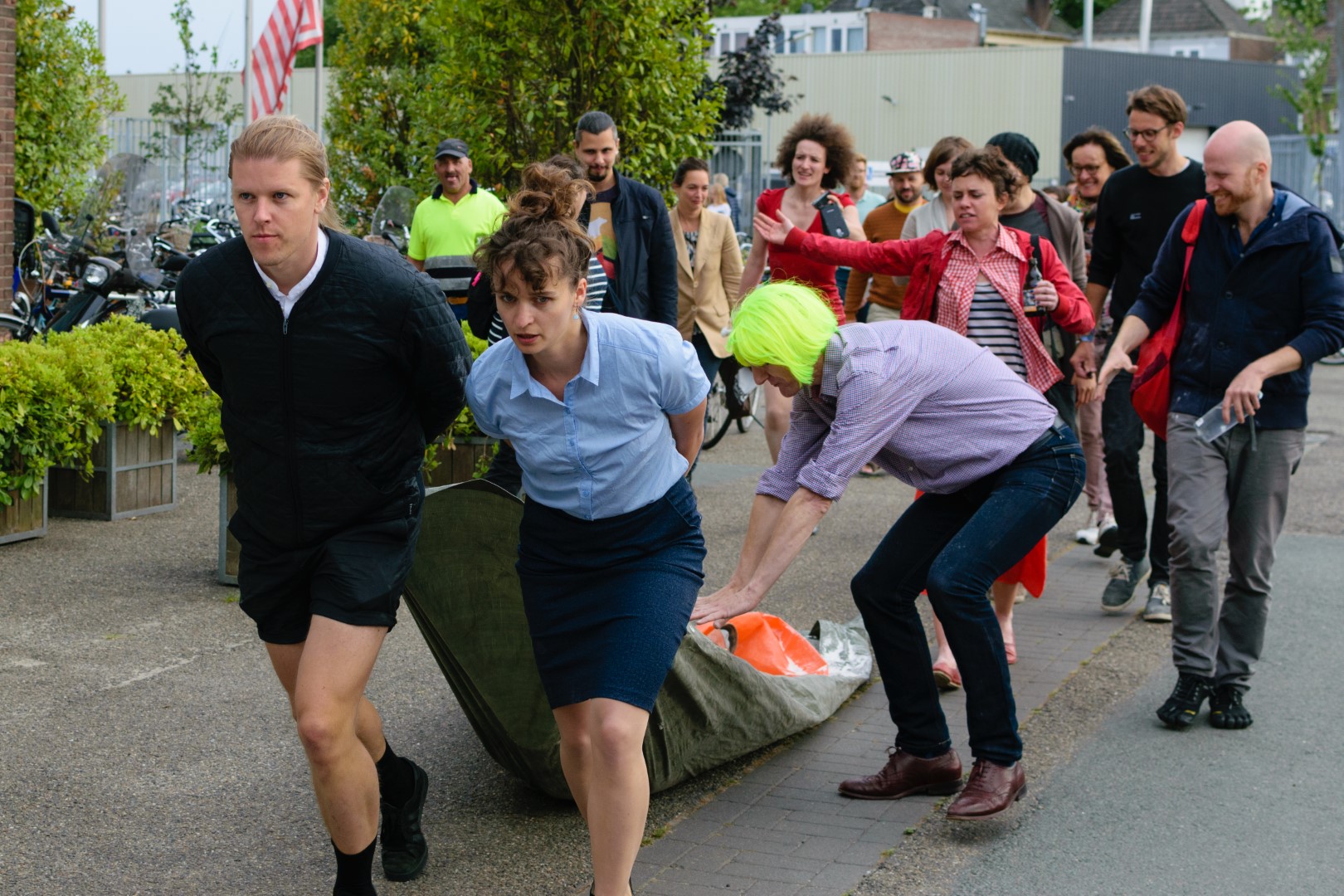
    The last thing I’ll mention is “Unfolding Routines” by “Moha Project”, which ran for a day during the festival, inviting participants on a special tour of a local hotel. Sadly, I missed it, but I attended their somewhat alternative “press conference” the next day. Right from the outset, you knew that something was off with all of this and it culminated when they suddenly presented “the Hungarian corpse”, one of the performers played dead and was dragged around the festival site as a very strange “lit de parade” (even among completely innocent non-festival visitors having dinner). It was weird in a David Lynch kinda way. Brilliant.

    [/et_pb_text][et_pb_image _builder_version=”3.1.1″ src=”http://www.counterplay.org/wp-content/uploads/2018/06/PlayfulArts2018-8563-Large.jpg” /][et_pb_image _builder_version=”3.1.1″ src=”http://www.counterplay.org/wp-content/uploads/2018/06/PlayfulArts2018-8564-Large.jpg” /][et_pb_text _builder_version=”3.1.1″]

    While the keen eye will immediately spot many obvious similarities between art and play, it nonetheless takes a concentrated effort to demonstrate these links. Too often when hosting play events, I fail to give art and artists the space they deserve, and I think I’m far from alone. Maybe we think we have to reinvent the field of play, building something from scratch, forgetting the long tradition of play in art? This is why a unique initiative like the Playful Arts Festival is so important, since it is one of the only recurring events (that I know of) to insist on seeing art through the lens of play and play through the lens of art – at the same time and with equal respect for both.

    During the festival, Zuraida had invited some of us to a meeting (a meeting, yes, but it was very playful indeed), asking how we can create closer ties between the many different play events happening around Europe (and the rest of the world). Part of it is
    a matter of helping each other out, reducing the barriers of running events, securing better funding and making logistics less of a hassle. Much more important, however, is our shared capacity to invite more people in, broadening and strengthening the play community across events and borders.

    This, as I’ve said many times before, is how we can really have an impact, making our lives and societies more playful and, hence, better suited for actual, playful human beings.

    I have no doubt that Playful Arts remains a core pillar of this community, and I look forward to going back!

    [/et_pb_text][/et_pb_column][/et_pb_row][/et_pb_section]
  • Materials and Junk-yard Play

    Materials and Junk-yard Play

    [et_pb_section bb_built=”1″][et_pb_row][et_pb_column type=”4_4″][et_pb_text _builder_version=”3.1.1″]

    Together with our friends Helle Marie Skovbjerg, play professor at Design School Kolding, and Ann Charlotte Thorsted, associate professor at Play Lab, Aalborg University, we have formed a small play club. It’s rather informal, and our collaboration simply emerged out of a common wish to play more together, to help each other understand play better and invite more people into the play community.

    This quote from Bernie DeKoven’s phenomenal “The Well Played Game” quite accurately captures our intentions with the club:

    “By empowering each other to create new conventions, by establishing guidelines, we assure each other of a common intention and mutual respect for the willingness to play, for the need for safety and trust”

    That last bit is essential, and quite hard, but more than worth the effort. When we feel safe and trust each other, so much more becomes possible.

    We recently had our second event in the “club”, when we had invited people to join us for an exploration of materials and a celebration of junk-yard play at the Design School – “When junk isn’t junk: materiality, loose parts and junkyard play spaces”.

    It was our intention to explore how different kinds of materials inspire different ways of playing, and how the process of designing and building might lead to surprising results. At the same time, we wanted to pay a small homage to the amazing tradition of junk-yard and adventure playgrounds.

    Pia Schytz, who’s a Design Consultant at Lab for Play and Design at the Design School, gave a talk about the role of materials in her work. It was truly fascinating to learn about her approach, where, as she said, “everything begins with materials”. That’s quite different than my own approach, but I’m pretty sure I should pick up a thing or two (also literally, yes). As a designer, she seems to see the contours of narratives in the materials, ready to unfold in surprising ways when they meet our ideas and intentions.

    I then gave a short introduction to the junk-yard design challenge, where I very, very quickly mentioned the proud tradition of junk-yard playgrounds, lamenting their widespread disappearance due to, among other things, fear of risk, fear of mess, fear of a lack of predictable outcomes (and lack of funding, of course) (see my presentation here).

    Luckily, there’s quite a lot happening in the this field, the entire tradition is being revitalised. Take a look here, here and here. Oh, and here’s a film I mentioned about “The Land”, an adventure playground in Wales – playing with fire:

    https://www.youtube.com/watch?v=4t9vq9bu3II


    [/et_pb_text][et_pb_text admin_label=”Monster” _builder_version=”3.1.1″]

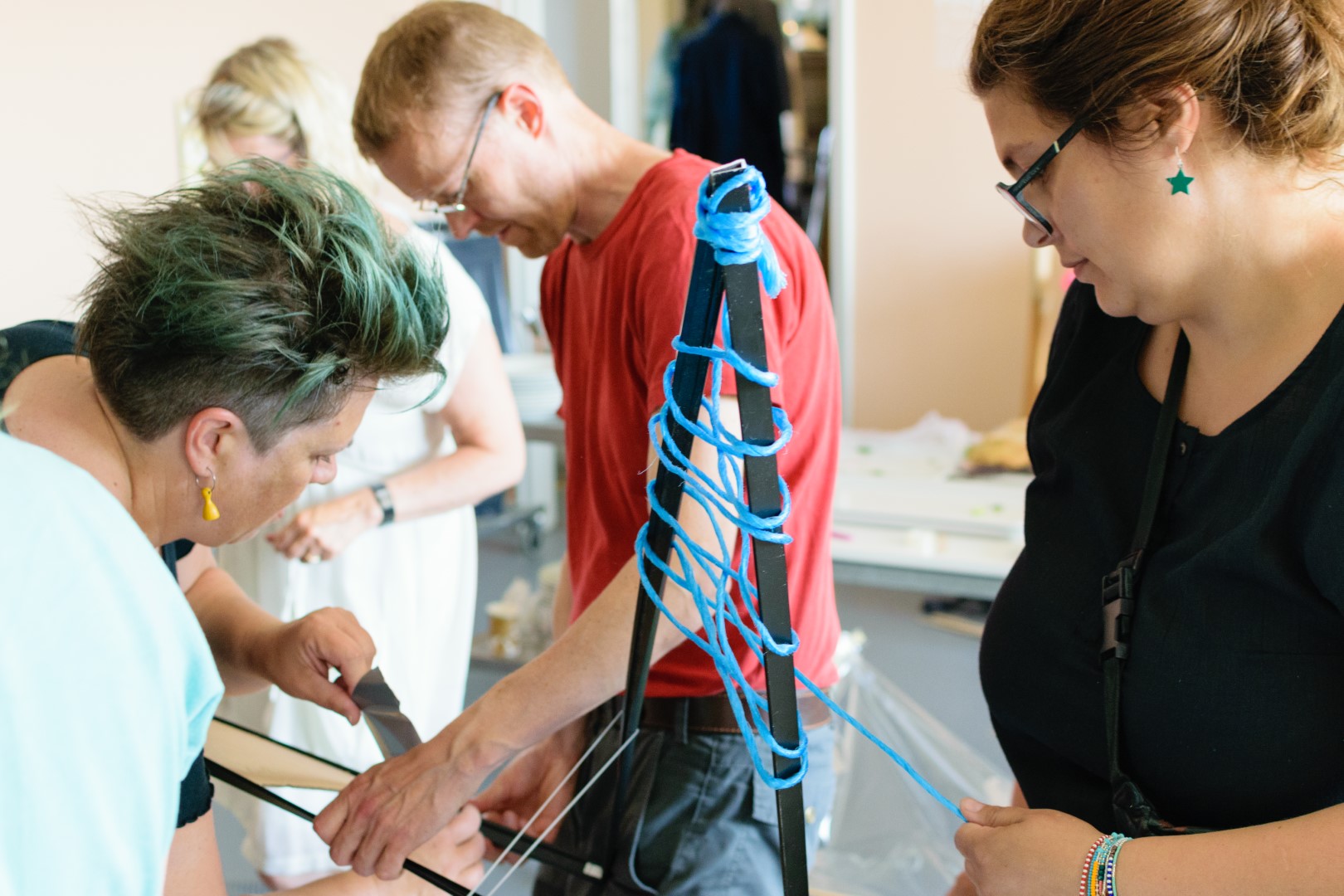
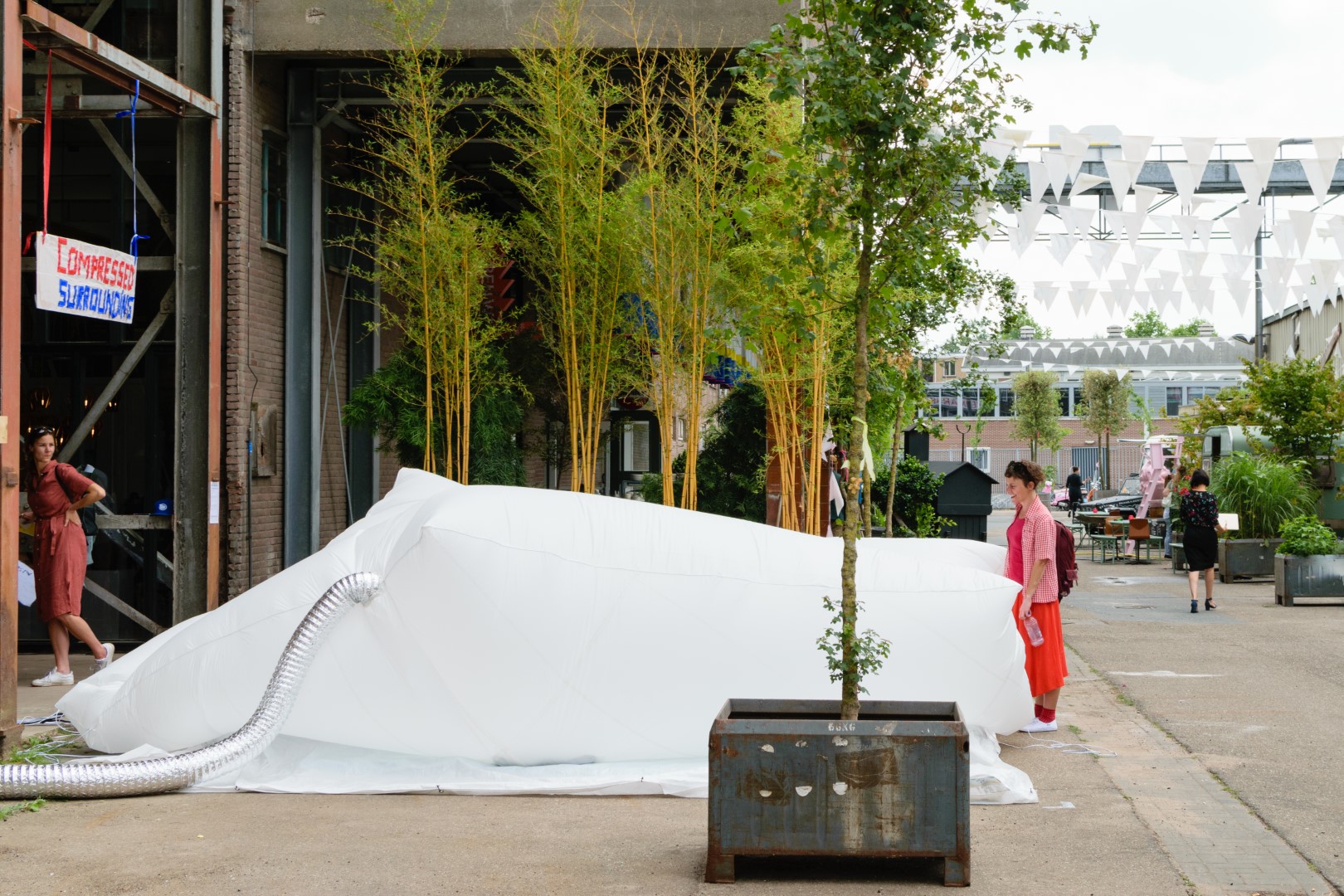
    As soon as I stopped talking, everyone  started building, and it was almost immediately a beautiful, chaotic mess. Some groups formed (and mutated along the way), some went at it alone (me included), but we were certainly in it together.

    It was fun and interesting to observe the many different approaches. This was clearly more about process than the end result, about exploration, experimenting, tinkering, messing around without knowing where we might end up.

    Nonetheless, some of the things created were just brilliant. To mention a few favorites:

    The monster, which was quite frightening when it came alive, chased us all and insisted on eating either a few humans or monster food:

    [/et_pb_text][et_pb_image _builder_version=”3.1.1″ src=”http://www.counterplay.org/wp-content/uploads/2018/06/Junk-yard-play-8081-Large.jpg” /][et_pb_text admin_label=”Mad Max” _builder_version=”3.1.1″]

    This Mad Max themed wearable house / armour for a scavenger trying to survive in the desolate wastelands had a pretty impressive backstory:

    [/et_pb_text][et_pb_image _builder_version=”3.1.1″ src=”http://www.counterplay.org/wp-content/uploads/2018/06/Junk-yard-play-8031-Large.jpg” /][et_pb_text admin_label=”ROI Machine” _builder_version=”3.1.1″]

    Then there was this “ROI machine” (maybe inspired by my comment about the “ROI society” and how we should do more things without considering the potential return on our “investments”). It gave you a a ton of playful experiences, if you had the courage to venture through the (somewhat) dark tunnel full of surprises:

    [/et_pb_text][et_pb_image _builder_version=”3.1.1″ src=”http://www.counterplay.org/wp-content/uploads/2018/06/Junk-yard-play-8042-Large.jpg” /][et_pb_image _builder_version=”3.1.1″ src=”http://www.counterplay.org/wp-content/uploads/2018/06/Junk-yard-play-8040-Large.jpg” /][et_pb_text _builder_version=”3.1.1″]

    During this hilarious process, numerous important insights emerged and were shared afterwards. We always aim to design these spaces, so theoretical knowledge, thoughts and reflections can be mirrored in the experiences of playing. Our understanding of play is bound to be severely limited if we always only talk about it without being close to the sensation of play. Even so, it remains an impossible task to fully capture in words something that is felt by our bodies. As some say, it’s like describing the feeling of being in love. Words are not quite adequate there either. This doesn’t mean we should stop trying, but rather that we should make a real, sincere effort to develop a stronger, shared language about play.

    Several of our amazing participants talked about the immediate difficulty of “letting go”, of just playing in a room full of strangers. I really appreciate this demonstration of vulnerability, admitting that no, “just” playing is actually not that easy. I think we all know this feeling – I certainly know I do. There’s something about the expectations you might think you should adhere to, but it’s not just that. Opening up, showing yourself to strangers, that takes courage.We try to cultivate an atmosphere and a community, where people feel safe enough to dare to be silly and to explore the unknown, momentarily losing control. It’s tough, and it takes a lot of practice.

    [/et_pb_text][et_pb_image _builder_version=”3.1.1″ src=”http://www.counterplay.org/wp-content/uploads/2018/06/Junk-yard-play-8066-Large.jpg” /][et_pb_text _builder_version=”3.1.1″]

    Linked to this, some also mentioned the challenge of getting to play with others. Sometimes you team up with friends, family or colleagues, and sometimes new connections just appear. Other times, and for no evident reason, you don’t find the same rhythm as the other players. Maybe it doesn’t matter, you find your own rhytm, and no matter what, playing around other people playing always means you’re somehow playing together. Playing like that has a certain fluidity, where you can play together, being part of the same, feeling a sense of belonging, even when you seem to be on your own. Maybe you’re suddenly completely immersed in building a huge tower, but you do so surrounded by likeminded players, and the togetherness is palpable. It’s a dance, where everybody knows (or learns) that this only works if you show a degree of openness, empathy, respect and generosity towards the other players. It can never just be about you and your little experience, but we must all pay attention to the play community at large.

    [/et_pb_text][et_pb_image _builder_version=”3.1.1″ src=”http://www.counterplay.org/wp-content/uploads/2018/06/Junk-yard-play-8063-Large.jpg” /][et_pb_text _builder_version=”3.1.1″]

    There’s much to be said about the importance of materials, and how we are somehow drawn to different things, inspired to play around and build something weird. Play is always unpredictable, and having a selection of “loose parts” really demonstrates that. Maybe I had an idea when I found the first pieces of cardboard, but then someone talked about the heat in the room, and my project turned into an AC (before it became a communications device and maybe a creature). Between yourself, the people around you and the materials you engage with, who knows what might happen?

    Finally, one joyfully stated that “I got into a state of flow for the first time in a long time” and what a wonderful testimony to the power of play that was. We may forget so, serious adults as we are, but that sense of being immersed in something for no apparent purpose, losing track of time, forgetting about your obligations, that’s really at the heart of it all; getting into play.

    It was a blast, and certainly reminded me that I want to venture more into this particular field, developing different kinds of “junk-yard” and adventure playgrounds, but also bringing the atmosphere to new arenas.

    Stay in touch, and join the play community when we’re back on November 12th!

    [/et_pb_text][/et_pb_column][/et_pb_row][/et_pb_section]
  • From Biel with love

    From Biel with love

    [et_pb_section bb_built=”1″][et_pb_row][et_pb_column type=”4_4″][et_pb_text admin_label=”Mathias Poulsen” _builder_version=”3.1.1″]

    When I came home from the Pro Juventute play festival a few weeks ago, my head was full of impressions, thoughts and ideas – as it always happens after participating in lovely play events. While I was certainly somewhat challenged due to my limited language skills (much of the conference was in German and/or French), I took a lot with me and I managed to reach that interesting emotional state, where it feels just right:

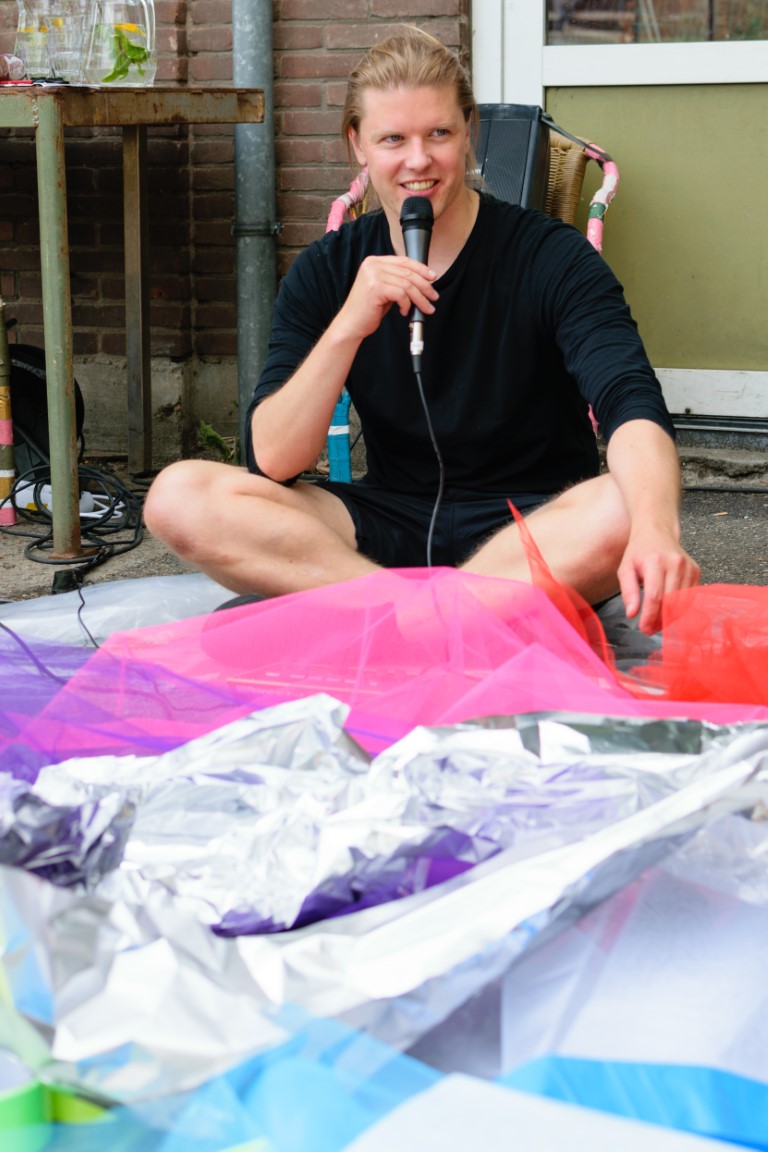
    I hosted a workshop on “playing with strangers” together with Robb Mitchell, which was great fun, and I was once again amazed how strangers courageously jump into whichever challenge we threw at them. We used Robb’s design cards (read more here) to inspire the participants to prototype playful solutions for cultivating interaction between strangers in public space, and let us just say they got really creative (you can see my short presentation here).

    [/et_pb_text][et_pb_image _builder_version=”3.1.1″ src=”http://www.counterplay.org/wp-content/uploads/2018/06/ProJuventute-7459-Large.jpg” /][et_pb_text _builder_version=”3.1.1″]

    On Saturday, I also hosted a session with two inspiring talks by Jeanette Fich Jespersen from the KOMPAN Play Institute and Ellen Weaver (I found this blog post by Ellen that covers some of the same). Both were talking about “playing outside”, but more than that, they talked about creating a wide range of opportunities for play, allowing those playing to tailor the experience to their taste and needs. Take kids with disabilities, who are usually looking for the same play mood as anyone else, but might need to get there in slightly different ways:

    [/et_pb_text][et_pb_text _builder_version=”3.1.1″]

    One of the essential themes, for me, was “liberating play from the playgrounds”. It was introduced at the opening, and struck a chord with me. We tend to think of creating playgrounds as spaces for play, helping play to thrive, but it often feels more like we confine play to the playground. “Ok, you can play there, but certainly not anywhere else”. I’ve written before about “the problem with playgrounds“, and a big issue is that of player agency. Apart from boxing in the play experience, playgrounds often leave little meaning to be interpreted by the player, no “loose parts” to be used in new and surprising ways.

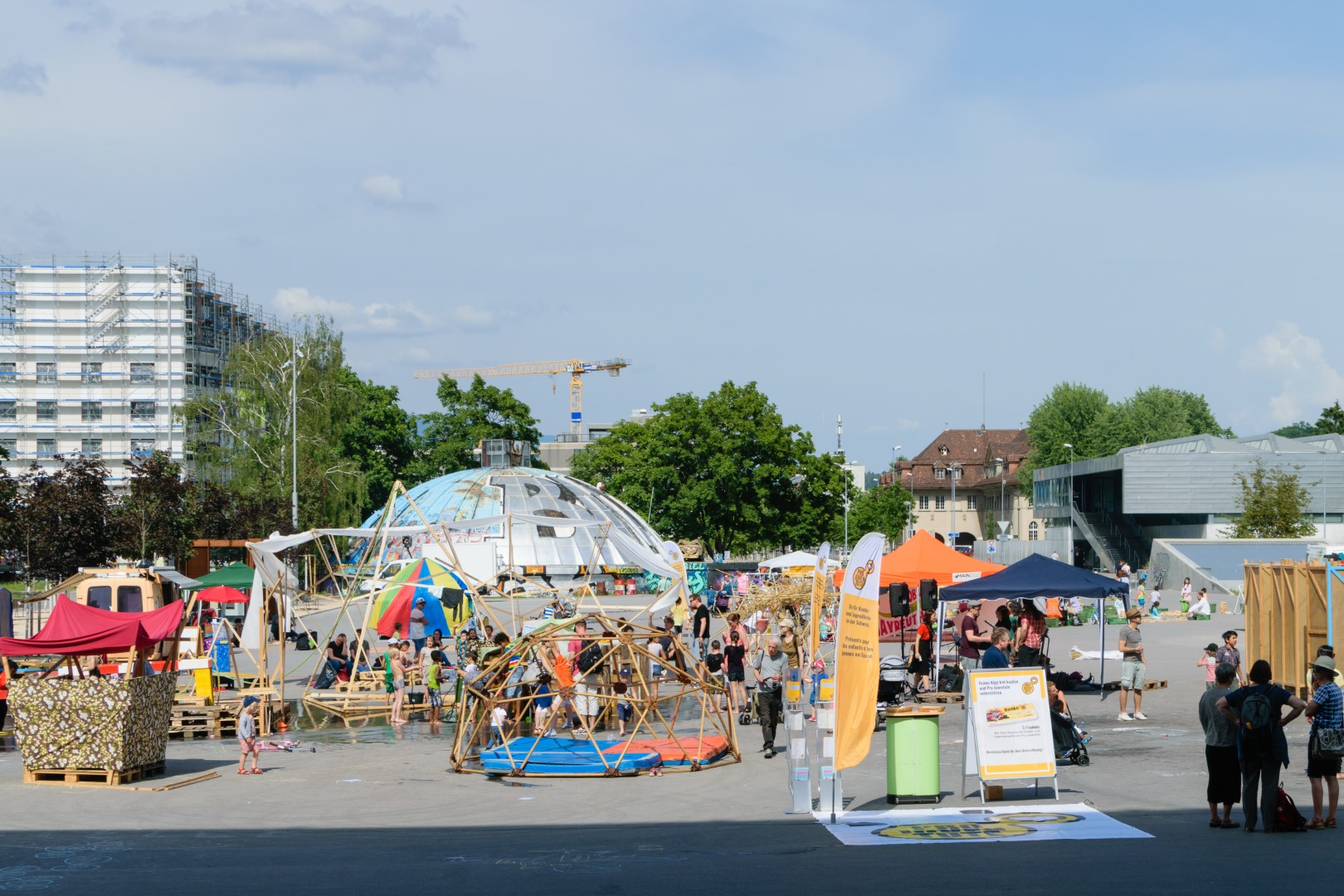
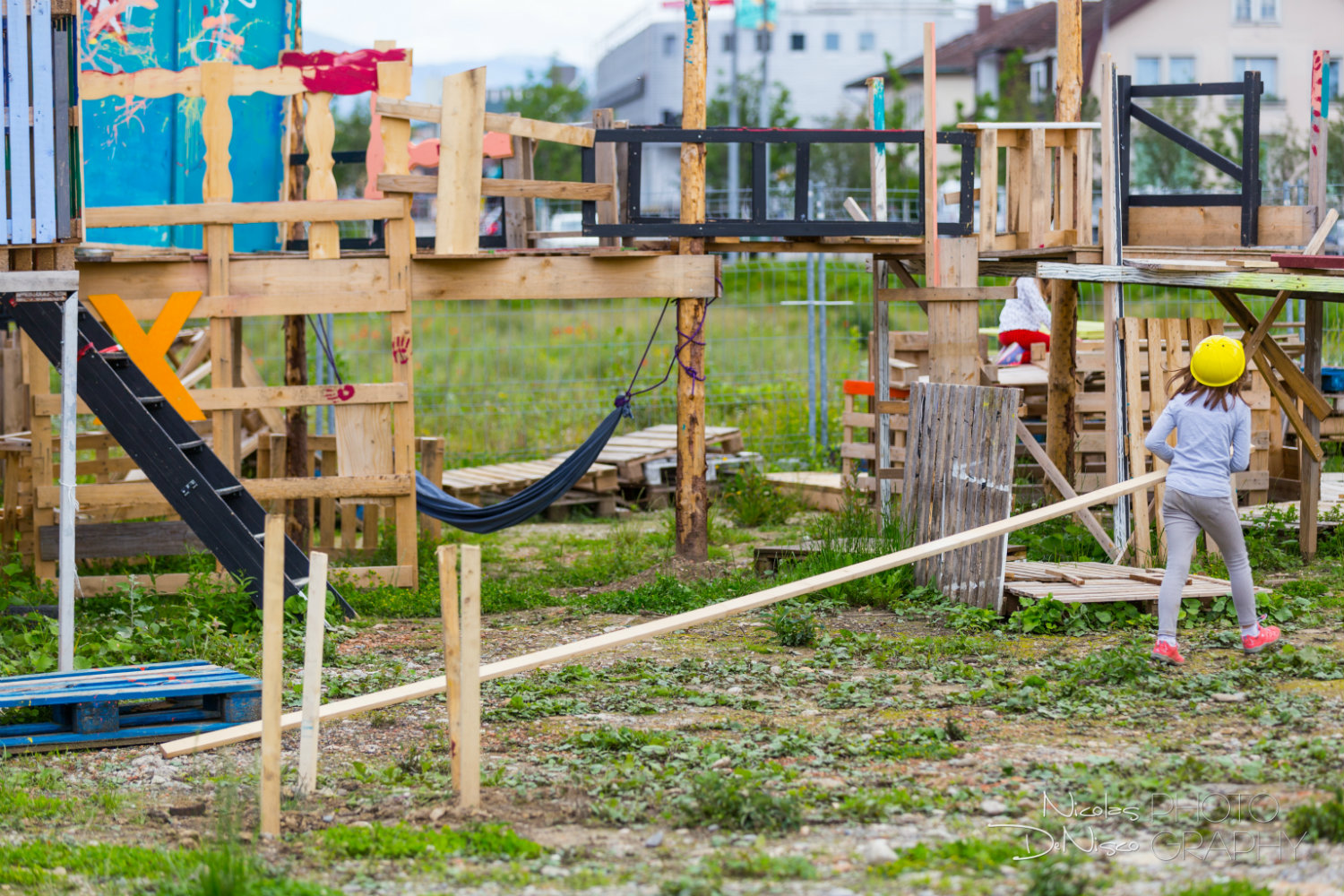
    I think this was beautifully illustrated by the events taking place outside the conference venue, on the big square, or “Playable Esplanade”, as it was appropriately called. As the festival evolved, so did the esplanada, coming ever more alive with people playing.

    [/et_pb_text][et_pb_image _builder_version=”3.1.1″ src=”http://www.counterplay.org/wp-content/uploads/2018/06/ProJuventute-7647-Large.jpg” /][et_pb_text _builder_version=”3.1.1″]

    Now, I found myself quoting and paying tribute to Bernie DeKoven more than once. This has happened a lot, not least since he died earlier this year, and I’ve been thinking so much about his incredible legacy to the play community. I had reread his wonderful “The Well-Played Game” on the trip. If you haven’t read it (at least once) yet, I recommend you do it. It’s so full of deep insight, and there’s so much to appreciate and learn from that book, even now, 40 years on. When he talks about The New Games Movement and not least their The New Games Tournament, I feel like I have missed out on something monumental in the history of play, but at the same time, I feel encouraged and inspired to follow in their playful footsteps:

    One of its activities was called the “New Games Tournament.” A group of people would come together—a group that may number as many as ten thousand people—and they’d play games in what became an actual celebration of the willingness to play.

    The energy, the vitality was everywhere. The potential, actual. In all that strangeness, we discovered that none of us were strangers. We all liked to play. There was nothing—age, ability, profession, language, status, nationality—that could separate us any longer. We had left everything else behind, and we were all just playing.

    This is the sentiment that has really stuck with me, as I had a similar feeling several times during the festival. At the esplanade, especially during the Saturday, lots of people were playing together, engaging in a vast range of activities: water fights, blowing bubbles (with the ever so amazing Bart Durand), exploring the maze (almost getting lost in there), drawing with chalk, building with small blacks and wood, climbing around, driving the small “train” and much more. It was a beautiful, playful mess.

    Playing like that has a certain fluidity, where you can play together, being part of the same, feeling a sense of belonging, even when you seem to be on your own. Maybe you’re suddenly completely immersed in building a huge tower, but you do so surrounded by likeminded players, and the togetherness is palpable. It’s a dance, where everybody knows (or learns) that this only works if you show a degree of openness, empathy, respect and generosity towards the other players. It can never just be about you and your little experience, but we must all pay attention to the play community at large.

    In a world where we more often than not fail to connect with each other, there’s something magical about experiencing this way of being together, where the delicate balance between individual and community feels far more effortless. I have no doubt in my mind that we could live more like this, naive as it may sound.

    I, for one, look forward to staying in touch with the Pro Juventute play community, exploring together the meaning of space(s) and how we can truly liberate play from the playgrounds!

    [/et_pb_text][et_pb_image _builder_version=”3.1.1″ src=”http://www.counterplay.org/wp-content/uploads/2018/06/ProJuventute-7520-Large.jpg” /][/et_pb_column][/et_pb_row][/et_pb_section]
  • Celebrating Play Professors

    Celebrating Play Professors

    [et_pb_section bb_built=”1″][et_pb_row][et_pb_column type=”4_4″][et_pb_text admin_label=”Intro” _builder_version=”3.1.1″]

    I fundamentally believe that the world needs more play. It’s hardly possible to live a good, fulfilling life without play, and it’s our big dream to cultivate play communities that, in turn, can contribute to more playful societies.

    To achieve these goals, we have to understand play better. Oh, the amount of times I’ve met the assumption that it’s “just play” and that, apparently, there’s not much to understand, really. It mirrors some widespread, underlying idea that play is a simple, trivial matter that doesn’t require serious intellectual effort.

    We all know what play feels like”, right?

    It’s baffling to me, since play is one of the most complex phenomena I can think of. It’s inherently tied to human nature, a sincere expression of our shared humanity, and the diversity of play must thus be assumed to mirror the diversity of humankind.

    Play is a common human experience that enables participants to explore who they are through their relationship to the world, to other people, and to the materials they have access to. To be in play is to explore what it means to be human (Helle Marie Skovbjerg)

    It’s downright ludicrous to believe it won’t take a massive, collective effort to ever get a better grasp of something like that.

    I remember a talk with the English learning theorist Peter Jarvis on his “big” project – “Towards a Comprehensive Theory of Human Learning”. While it was and is an ambitious project, he underlined that “it can only ever be towards”, stressing that we’ll never fully understand human learning. It’s simply too complex, dynamic and diverse for any one person to fully fathom.

    The same, I’d argue, goes for play. The best we can do is to stay curious, keep asking questions, talking, thinking, playing. We’ll learn more, understand play better, but “full comprehension” is impossible. That’s ok.

    Anyway, there’s a point to all this, I promise.


    [/et_pb_text][et_pb_image admin_label=”Helle_photo” _builder_version=”3.1.1″ src=”http://www.counterplay.org/wp-content/uploads/2018/05/Inauguration-35-Large.jpg” /][et_pb_text admin_label=”Helle” _builder_version=”3.1.1″]

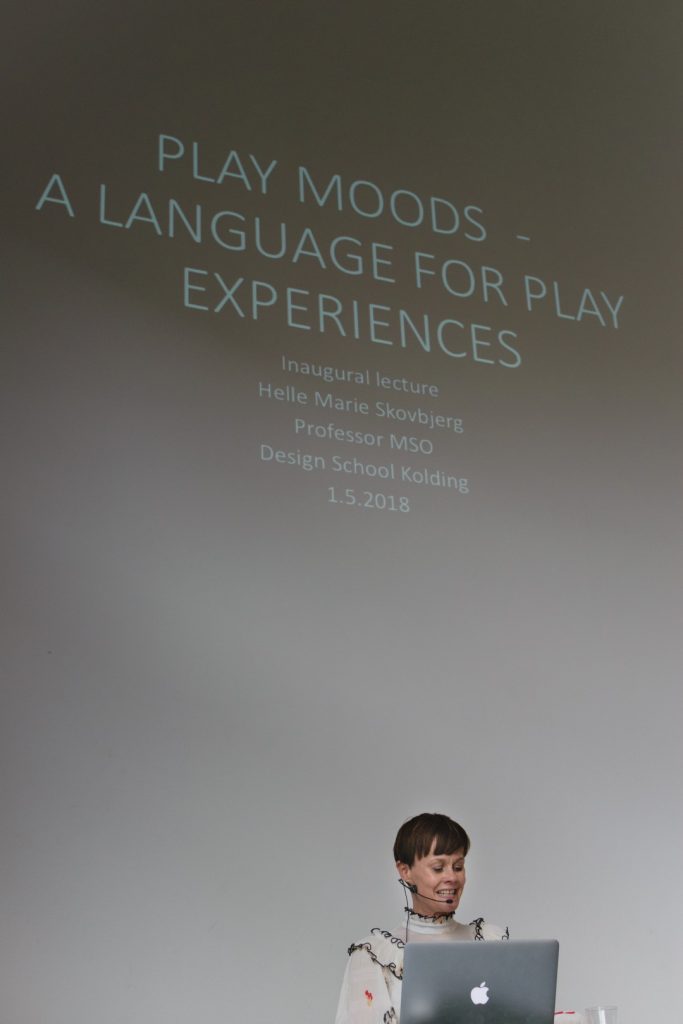
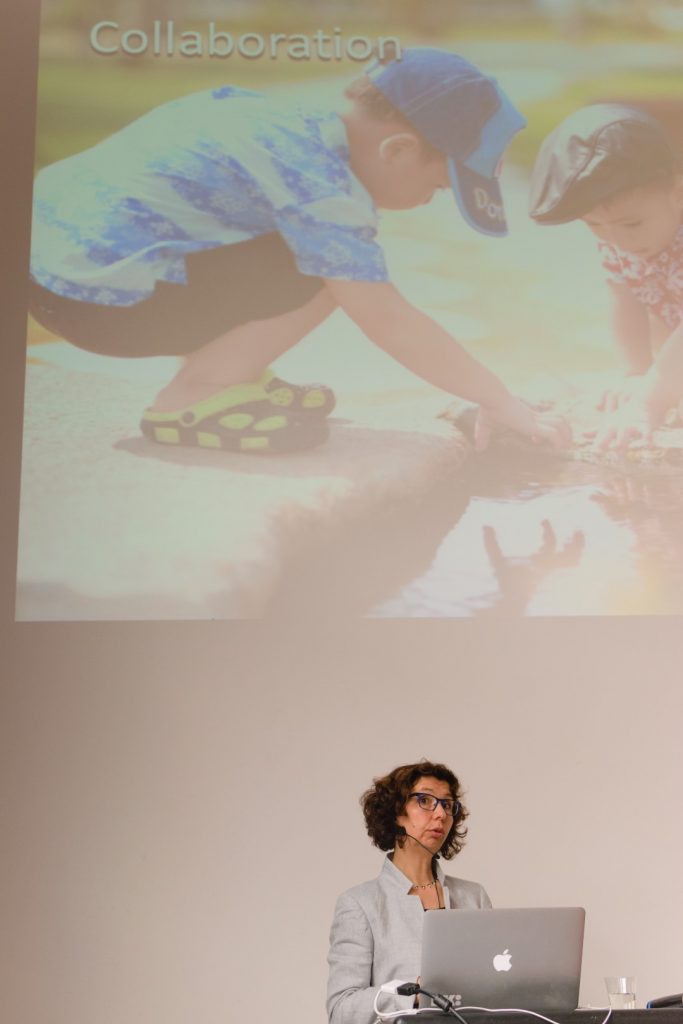
    Last week, May 1st, my good friend and “play ally”, Helle Marie Skovbjerg, along with her Dutch colleague, Tilde Bekker, gave their inaugural lectures at Design School Kolding. Both of them were to be professors of play, which is a beautiful declaration of dedication to the intellectual pursuit of understanding play.

    They both gave incredibly engaging and inspiring speeches, more than worthy of their new titles (read more in this booklet, where I also got the following quotes from):

    Helle began with her “mood perspective”, which she’s been working on for several years (see this):

    “As a way to grasp the poetics of play as a human experience, today I would like to present what I term the ‘mood perspective’. Comprehending and formulating language that fits the experience of play may lead to new types of design decisions”

    “The poetics of play”. Ahh. It’s somehow soothing and uplifting to have that as a starting point for exploring the unpredictable nature of play:

    “Mood is a non-specific way of being in which one is prepared to make sense of something without knowing exactly what it is. In relation to play, we can understand this open attitude as a playful way of being. We are prepared for something to provide us with a particular meaning, without yet knowing precisely what it is. Our attitude is filled with hope and the expectation of something meaningful”

    She went on to describe four types of play moods:

    • Sliding for devotion
    • Shifting for intensity
    • Displaying for tension
    • Exceeding for euphoria

    When I’m in the mood for it (sorry), the latter is my favorite:

    “And the crazier it gets, the better it is […] The mood related to this practice is called euphoria, and is characterized by an intense expectation of silliness. You are ready to do silly things, and you expect others to not only accept those silly things, but to come up with even sillier things. […] The players have to maintain real openness toward moving beyond earlier practices in order to continue exceeding. Whereas devotion is quiet and safe, euphoria is about surprise and uncertainty.”

    The beauty of this particular approach is that it aims to understand the “being in play”, not any particular outcome of play. In Helle’s work, play is assumed to be inherently valuable. Just because.

    She always ties her theoretical work closely to the actual practice of play, stating that “we must become knowledgeable practitioners of play, make sense of the moods of practices, and take part in them. To understand play, we must be close to the unfolding, sharing and emergence of play.”

    I have only recently realized that what Helle captures with her idea of a “ludotorium” is not far from what we’ve been hoping to create with CounterPlay: a space for examining and taking part in a diverse range of play practices, deploying various lenses for a somewhat kaleidoscopic view:

    “It is possible to understand the idea of the ludotorium as a design exploration about play that favours and explores unsettled and imagined possibilities that make it possible to draw a productive line of connection between participation, ethnography and design. The underlying assumption in this scenario is that it is crucial to participate in play in order to understand play, with a strong emphasis on the relationship between doing and knowing. It is through experience with the practices of play that it is possible to understand what play is.”


    [/et_pb_text][et_pb_image admin_label=”Tilde – photo” _builder_version=”3.1.1″ src=”http://www.counterplay.org/wp-content/uploads/2018/05/Inauguration-28-Large.jpg” /][et_pb_text admin_label=”Tilde” _builder_version=”3.1.1″]

    Tilde then went on to talk about “designing for open-ended play, which I find to be a compelling way to insist on the inherent unpredictability of play:

    “designing for open-endedness could be a very powerful key feature, because it supports a wide range of important qualities of play. It can support creativity, as children can develop their own game goals and rules; it can support social interaction, as children have to negotiate how they want to play, and, if designed well, it can support emergence over time, because children can keep on adjusting how they create meaning and games as they play”


    It’s not just about children, of course, but this whole idea of designing with “empty spaces” for the players to fill is essential for allowing play to thrive. No matter if you’re designing playgrounds, changing organisational culture or developing a play festival, it needs to be open-ended. If it’s not, if the materials, the rules, the potential outcome have all been determined in advance, it ceases to be play.

    She also mentioned her work with “ the Lenses of Play card tool” , which I find quite useful:

    We have worked on the development of a hands-on design tool that presents different perspectives on play and emergence and that can support designers in creating interactive designs for play.

    • open-ended play
    • playful experiences
    • forms of play
    • stages of play
    • emergence

    Finally, I appreciate her argument that the “properties of play” “are related to each other in a sort of dynamic spider web of playful properties of design”:

    “ The properties are related to each other, and just like in a web, if you pull somewhere and change a design decision about one property, you probably also have to adjust another design decision related to another property”

    Again, play is such a complex phenomenon and the many different properties are related and intertwined in intricate ways, changing one will inevitably change the others and their mutual relationship to each other.

    [/et_pb_text][et_pb_image admin_label=”HelleTilde” _builder_version=”3.1.1″ src=”http://www.counterplay.org/wp-content/uploads/2018/05/Inauguration-30-Large.jpg” /][et_pb_text admin_label=”Play intermezzo” _builder_version=”3.1.1″]

    I had the immense pleasure of contributing to the playful atmosphere with a “play intermezzo” between the two great speeches. Helle had shown me tremendous (too much?) confidence, giving me free reins, only asking for play that would get a little silly and involve the body. “You can’t have an inauguration for play professors without play, can you? Wouldn’t that be too boring?”.

    Well, maybe, but in any case, I was way to honored by the request to do anything but jump with joy. How often do you get to facilitate play at the inauguration of not one, but TWO play professors? It was certainly a first for me, and it was not until later I realized that this was quite a daunting task, making me quite nervous about the whole endeavour.

    Will people accept my invitations to play? Will my suggestions be too banal or silly? Will I do something inappropriate (it’s a fine line, you know)?

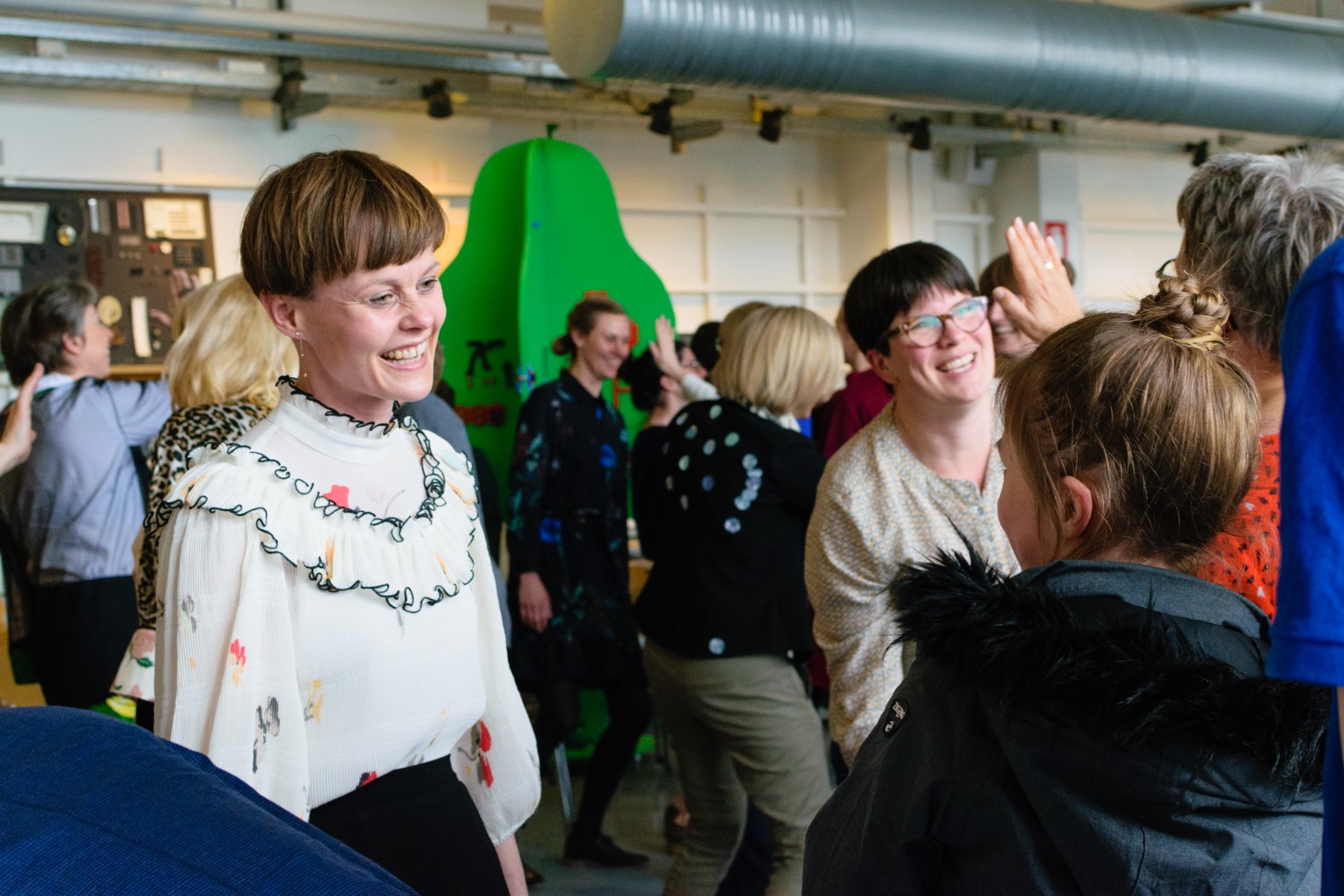
    I needn’t have worried, of course, since the crowd showing up for a celebration of play professors were eager to play. I mean: really eager! To embrace the sillines, I had framed this session as a “play tasting menu”, trying out small “dishes” of different ways of playing.

    I had chosen to pay tribute to a couple of great players. First I drew on Augusto Boal by playing “Colombian Hypnosis” to warm up and remember how even the smallest act of play is always tied to bigger questions about participation, agency, citizenship and democracy (read more in “Games for actors and non actors”).


    [/et_pb_text][et_pb_image admin_label=”Tilde_hypnosis” _builder_version=”3.1.1″ src=”http://www.counterplay.org/wp-content/uploads/2018/05/Inauguration-7-Large.jpg” /][et_pb_text admin_label=”Play intermezzo 2″ _builder_version=”3.1.1″]

    The second activity I borrowed from my friend Bernie Dekoven, who passed away recently (read my tribute to Bernie). He literally spent his entire life playing, insisting on the importance of walking “the playful path” and cultivating play communities everywhere this path took him. The game I chose (from his huge catalog over at deepfun.com) was “Prui”, both joyfully silly and a brilliant example of the trust we show each other when we truly play.

    [/et_pb_text][et_pb_image admin_label=”Stine” _builder_version=”3.1.1″ src=”http://www.counterplay.org/wp-content/uploads/2018/05/Inauguration-19-Large.jpg” /][et_pb_text admin_label=”Play intermezzo 3″ _builder_version=”3.1.1″]

    The last activity was inspired by my friend Lynn Parker, who’s drawing small doodles with chalk everywhere she goes, sharing with #oneplaything on Twitter. The lesson here was that it’s the play community that can only ever really change the conditions for play in society, and we need to invite more people to join us on this journey. By playing in public, the play community and the play opportunities suddenly become visible.

    People jumped right in, started doodling, writing and playing – inside and outside. Safe to say there were many traces of play afterwards (some would say it was a mess, but a joyful mess, if so).

    It was a wonderful day and I look forward to following the play professor(s) on new adventures!

    [/et_pb_text][et_pb_image _builder_version=”3.1.1″ src=”http://www.counterplay.org/wp-content/uploads/2018/05/Inauguration-24-Large.jpg” /][/et_pb_column][/et_pb_row][/et_pb_section]
  • Interview with Petra Stocker, Pro Juventute

    Interview with Petra Stocker, Pro Juventute

    [et_pb_section bb_built=”1″][et_pb_row][et_pb_column type=”4_4″][et_pb_text _builder_version=”3.0.91″ background_layout=”light”]

    Interview with Petra Stocker, Pro Juventute, Play Space and Playing Culture Programme Manager, Play Festival Project Management

    The aim of the Pro Juventute Play Festival 2018 is to support the development of cities of play and to help to further develop discussion of the role of play in urban development processes. In addition to the conference on the topic of “Playable Cities”, a Play Event will take place to mark World Play Day.

    Pro Juventute is organising a play festival in Biel on 25 and 26 May. What will it involve?

    It will actually be two events in one. We are organising a conference on the subject of “Playable Cities”. Experts from architecture, spatial planning, landscape architecture, social work, play space design, and art and design will discuss the potential of play on towns and cities as a place to live and, on the other hand, will discuss the design, use and importance of play spaces for a town or city. The conference offers more than 30 in-depth topics and practical examples such as, for example, planning play spaces and places to live, play as a catalyst for district development processes, architecture and playful building sites, playful access to creative technologies in public spaces, etc., and will take place in French, German and English. We are looking forward to promoting professional discourse and exchanges on the topic of playable cities beyond the linguistic regions.

    And, of course, we will be playing as well. After all, it is World Play Day on 26 May. We will be creating what we believe will be an ideal play space on the Esplanade fairground in Biel, which will run in parallel to the conference: an exciting place which can be shaped and modified, a Robinson playground or adventure playground of the future, or simply: a “playable city”.

    Why is such an event necessary?

    There are various trends which are driving play and play spaces out of the cities. We know from studies that, nowadays, children in Switzerland only spend 29 minutes a day playing outdoors independently and without supervision. One of the reasons for this is the reduction in open spaces. Designing the remaining open spaces is becoming an increasingly important topic. Outdoor spaces are being claimed by many different interests and uses. Children’s right to play must not be at the back of the queue – on the contrary! We would like to remove play from the recesses of the playground and place it front and centre, make the city playable. Not only is playing a foundation for child development, but in those places where play is possible, there is also an opportunity for local recreation and exercise and to meet others – even in the most urban environments. Places where children can move freely and which they can shape and modify have a positive impact on a city as a whole. In addition, play has enormous potential to set processes of change in motion, so that spaces can be transformed from non-places into attractive places. This subject is given far too little consideration in our society and in current professional discourse, and it is this that we would like to change with the play festival.

    Is this subject new to Pro Juventute?

    No. Pro Juventute’s involvement in the subject of play and play spaces started approximately 80 years ago. The success of the Robinson playgrounds in Switzerland is thanks to Pro Juventute’s involvement. “Normal” playgrounds were also designed against the backdrop of encouraging free play. Up to 2005, Pro Juventute even imparted this know-how in the form of playground consultancy. The community centres in the Zurich region were also originally launched by Pro Juventute. The community centres, which were partly created as Robinson playgrounds, are good examples of play spaces which have become meeting places for the district. The play conference also takes up this idea of the playable city as a meeting space. Open spaces and play spaces for children are significant for society as a whole.

    Would Pro Juventute like to revive this tradition?

    Yes. However, the requirements today are very different to those of 40 years ago. There are far fewer open spaces and more and more people in the cities. In line with the trend towards increasing urbanisation, cities will become the most central places where the next generations of children will grow up. Pro Juventute is committed to ensuring that children’s right to play is not forgotten in this development. In order to prepare themselves for the future, cities must be designed, and allow themselves to be designed, to be child-friendly and play-friendly. There exists a close relationship between the play-friendly design of urban spaces and the objectives of the cities to support an active, healthy and sustainable community. A city in which children can play and move independently is also a place where older people feel safe. A city where children can play freely – including beyond the playground – is a place with a high quality of life for all ages.

    How does the play conference hope to influence this?

    The use of open spaces and play spaces in our towns and cities and the deliberate interdisciplinary examination of this represent an important issue. The understanding of the importance of play must also be debated. Ultimately, the conference will tackle the question of how communal life in our towns and cities should be shaped, and whether play could be used as a method to bring about real change. To this end, the play conference will bring together stakeholders from different disciplines – for example, sociocultural, architectural and spatial and urban planning experts. They can learn a great deal from each other. Architects and urban planners can benefit from the knowledge of the proponents of action-based education when it comes to designing participation processes. Conversely, sociocultural experts, for example, should be able to assist with spatial planning processes.

    And what is specifically required to make our towns and cities more play-friendly again?

    Children’s needs should be firmly integrated into the spatial planning processes. This is not the case today. And courage is needed to leave gaps, namely less rigidity in the planning and design of areas, so that these can still be shaped and allow a variety of uses. Children must be able to change things and integrate them into their play. This also requires non-specific equipment, not just play equipment which can only be used in one way. This has positive effects on communal life in a district and a city, as a whole. And this is becoming increasingly important, because the quality of life of the urban population, particularly of the children, will determine our future.

    Petra Stocker is the manager of the Play Space and Playing Culture Programme with the Pro Juventute foundation. She is a qualified sociocultural animator (facilitator and coordinator).

    [/et_pb_text][et_pb_image _builder_version=”3.0.91″ src=”http://www.counterplay.org/wp-content/uploads/2018/04/IMG_0320-2.jpg” show_in_lightbox=”off” url_new_window=”off” use_overlay=”off” always_center_on_mobile=”on” force_fullwidth=”off” show_bottom_space=”on” /][et_pb_text _builder_version=”3.0.91″ background_layout=”light”]

    [su_box title=”About the event” box_color=”#014341″ title_color=”#ffffff” radius=”5″]Pro Juventute Play Festival 2018 – Play Conference
    “Playable Cities” & Pop-up Play Event
    Experts will discuss play as a tool for helping to shape urban culture, and the design, use and importance of play spaces for a city. Different perspectives and experiences will be highlighted by means of exchanges between people playing in spaces from the disciplines of urban design, architecture, landscape architecture, spatial planning, social work, and art and design.
    The conference combines specialist input and presentations with specific pop-up play activities and workshops to create a playful atmosphere and to bring the theme of “Playable Cities” in urban areas to life.

    Dates: 25 May 2018 and 26 May 2018
    Venue: Biel/Bienne Congress Centre
    Further information[/su_box]

    [/et_pb_text][/et_pb_column][/et_pb_row][/et_pb_section]
  • Pro Juventute Play Festival 2018

    Pro Juventute Play Festival 2018

    [et_pb_section bb_built=”1″][et_pb_row][et_pb_column type=”4_4″][et_pb_text _builder_version=”3.0.89″ background_layout=”light”]

    There may not be a “regular” CounterPlay festival again before 2019, but that certainly doesn’t mean we’re not having fun experimenting with new formats and friends!

    After our wonderful experience with CounterPlay Leeds, we’re incredibly excited to announce that we’re now working together with the Swiss youth organization “Pro Juventute” to organise a play festival in Switzerland on May 25th & 26th next year!

    The festival will focus on “Playable Cities” and “Pop up Play Action”, so we’ll most certainly get out and play in public, but we’ll also insist on thinking and talking about the implications of this! We’ll make sure to carry with us the playful atmosphere from CounterPlay, of course, and it will be a phenomenal experience!

    There is currently an open call for proposals running, so if you’re as interested in this as we are, do consider submitting something:

    How can public urban areas be organised to improve play for children and adults? Can play be used in the public domain as a catalyst for urban development? How can play instigate participative processes of appropriation? How can playgrounds become spaces for the live culture of play and encounter? Can playgrounds also be challenging and playable for adults?

    Play is rarely actively promoted in urban areas and is even more rarely integrated into the actual urban planning process. Yet play offers a wide range of resources, methods, processes of appropriation and atmospheric potential for change so as to radically improve cities. The Pro Juventute Play Festival 2018 should support the development of cities of play and further develop discussion of the role of play in urban development processes. The Play Festival 2018 is composed of a conference on the topic of «Playable Cities» and a Play Event for World Play Day 2018 whereby the right to play is celebrated at an international level.

    Read the full call below:

    [/et_pb_text][/et_pb_column][/et_pb_row][et_pb_row][et_pb_column type=”1_2″][et_pb_button admin_label=”Button – English” _builder_version=”3.0.89″ button_text=”Call for proposals (English)” url_new_window=”on” background_layout=”light” custom_button=”off” button_icon_placement=”right” button_url=”http://counterplay.org/files/Spielfestival_ENG.pdf” /][et_pb_button _builder_version=”3.0.89″ button_text=”Call for proposals (German)” url_new_window=”on” background_layout=”light” custom_button=”off” button_icon_placement=”right” button_url=”http://www.counterplay.org/files/Spielfestival_DT.pdf” /][et_pb_button _builder_version=”3.0.89″ button_text=”Call for proposals (French)” url_new_window=”on” background_layout=”light” custom_button=”off” button_icon_placement=”right” button_url=”http://www.counterplay.org/files/Spielfestival_FR.pdf” /][/et_pb_column][et_pb_column type=”1_2″][et_pb_text _builder_version=”3.0.89″ background_layout=”light” background_color=”#ffd204″ border_radii=”on|5px|5px|5px|5px” custom_margin=”0px|0px|0px|0px” custom_padding=”10px|10px|10px|10px”]

    Call for proposals

    Anyone interested in giving a talk or workshop should send an abstract of max. 1 A4 to spielraumprojekte@projuventute.ch.
    Conference documentation is envisaged.

    Deadline for submissions: 31 January 2018.

    Contact:

    Petra Stocker,
    Project Coordinator Playscapes and Play Culture
    Pro Juventute,
    Thurgauerstrasse 39, Postfach, 8050 Zürich
    Mobile +41 78 501 24 23
    petra.stocker@projuventute.ch

    [/et_pb_text][/et_pb_column][/et_pb_row][/et_pb_section]
  • CounterPlay Leeds #3 – Action!

    CounterPlay Leeds #3 – Action!

    [et_pb_section bb_built=”1″][et_pb_row][et_pb_column type=”4_4″][et_pb_text _builder_version=”3.0.86″ background_layout=”light”]

    [toc]

    In previous blog posts, I’ve talked about the context and themes of CounterPlay Leeds and now it’s time for action!

    When hosting or participating in play events, I always aim to 1) play, 2) think about play and 3) talk about play. As part of the latter, I find it important to have a conversation about the future: where do we go from here? How do we create better conditions for play and the playful society?

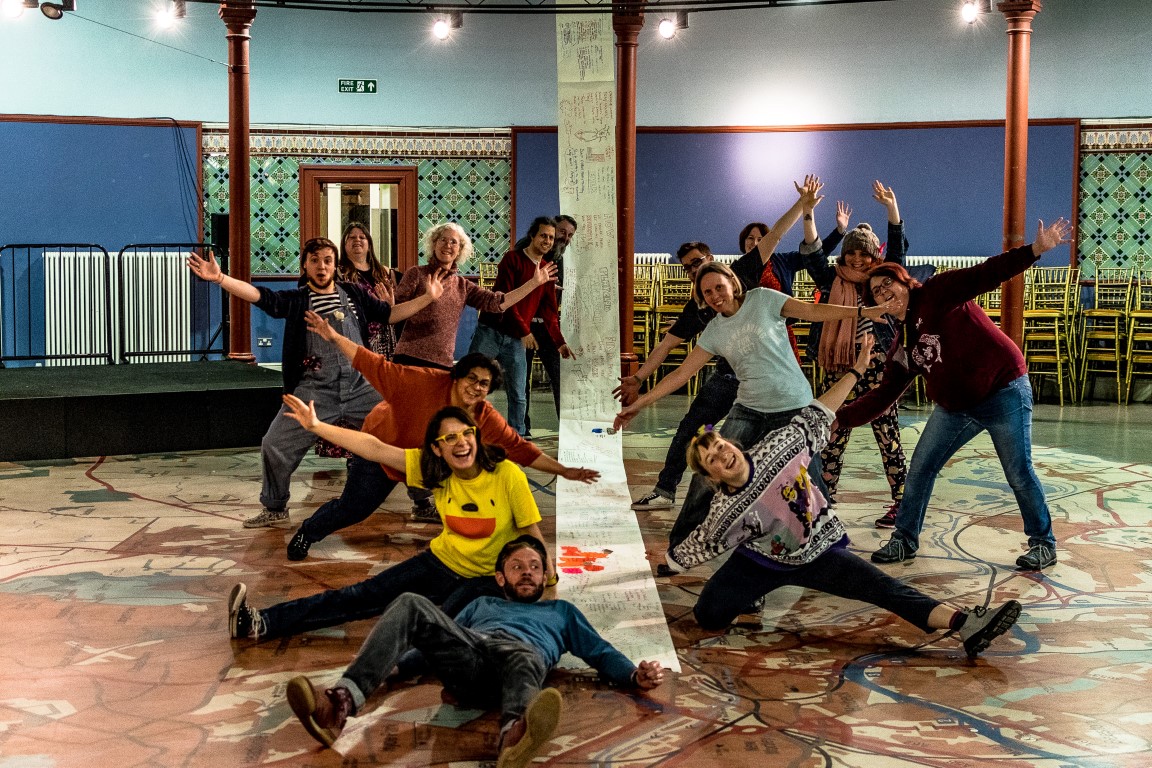
    So many of the wonderful people in Leeds seemed really eager to explore these questions, and many good suggestions grew out of it. Actually, an entire scroll of ideas that (almost) crossed the entire room grew out of it!

    Let’s look at some of them:

    More CounterPlay events!

    This was the first ever CounterPlay event outside Denmark, and I’m eager to support as many people as possible to build on our work and experiences from the first four festivals. There are currently something in the works in the Netherlands, Switzerland and again in the UK. This is very, very exciting, to say the least, and we’re preparing a guide to be used as inspiration, and if you’re interested in this, let us know.

    Guardians of Play

    This was an idea suggested by Portia Tung from School of Play: let’s be the playful, joyful, silly but earnest and dedicated Guardians of Play (like, you know, those other Guardians). It’s a nice way of framing our collective effort in a appropriately lighthearted manner, while reminding each other of the bigger picture:

    We guard play to set it free and help it thrive.

    [/et_pb_text][et_pb_image _builder_version=”3.0.86″ src=”http://www.counterplay.org/wp-content/uploads/2017/11/CounterPlayLeeds-1866-Medium.jpg” show_in_lightbox=”off” url_new_window=”off” use_overlay=”off” always_center_on_mobile=”on” force_fullwidth=”off” show_bottom_space=”on” /][et_pb_text _builder_version=”3.0.86″ background_layout=”light”]

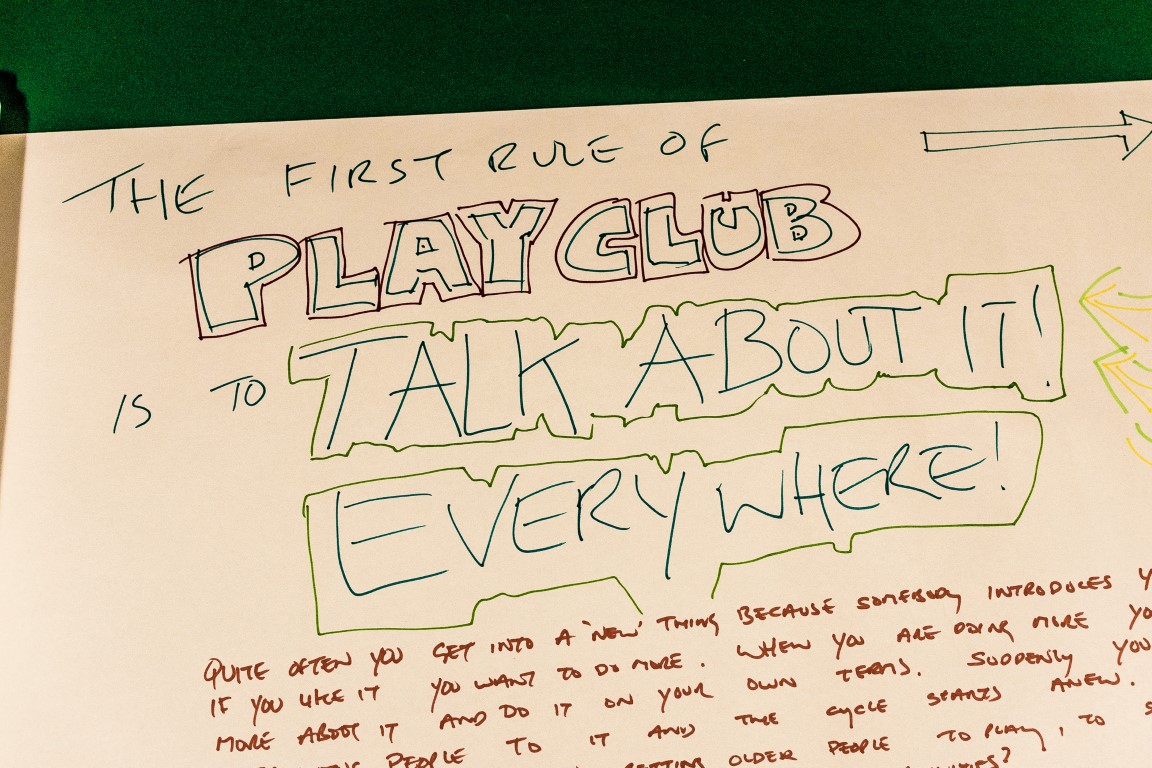
    First rule of Play Club

    With a thinly veiled reference to another, more insidious club, one of my new playful friends, Jim Thompson, suggested this wonderful rule for our play community: talk about it everywhere, to anyone, as much as possible.

    Talk is cheap” some say, but I say we need more of it. We need to tell stories about play and to develop a stronger, more nuanced language that more properly can capture the elusiveness of play. If we truly want to invite more people into our play community and to make society as a whole more playful, we need these stories and we need increased visibility.

    Let’s meetup and talk more frequently; let’s write blog posts, articles and books; let’s host online conversations, seminars and courses; let’s make YouTube channels and videos; let’s get out into the streets and play.

    In short, let’s make sure everyone knows play is a fully legitimate thing to engage in.

    A hub for conversations

    While many of us manage to stay in touch across borders using social media, we still need better ways of maintaining our connections and conversations. I actually think we may need something as old-school as an online forum. Yes, we have Twitter and Facebook and all that, but maybe we should have a thing that is our own? Where we can talk about everything and where conversations can unfold over time?

    We’re currently looking into the forum service “Discourse” with the tagline “Civilized Discussion”. We could certainly use more of that, right? Any such forum will be open and free for anyone to use, but should also be properly moderated to ensure it remains friendly and welcoming.

    If you have any experience with building forums, we’d love to hear from you. None of us are experts here.

    [/et_pb_text][et_pb_image _builder_version=”3.0.86″ src=”http://www.counterplay.org/wp-content/uploads/2017/11/CounterPlayLeeds-1655-Medium.jpg” show_in_lightbox=”off” url_new_window=”off” use_overlay=”off” always_center_on_mobile=”on” force_fullwidth=”off” show_bottom_space=”on” /][et_pb_text _builder_version=”3.0.86″ background_layout=”light”]

    The Chalk Brigade

    I *love* chalk!

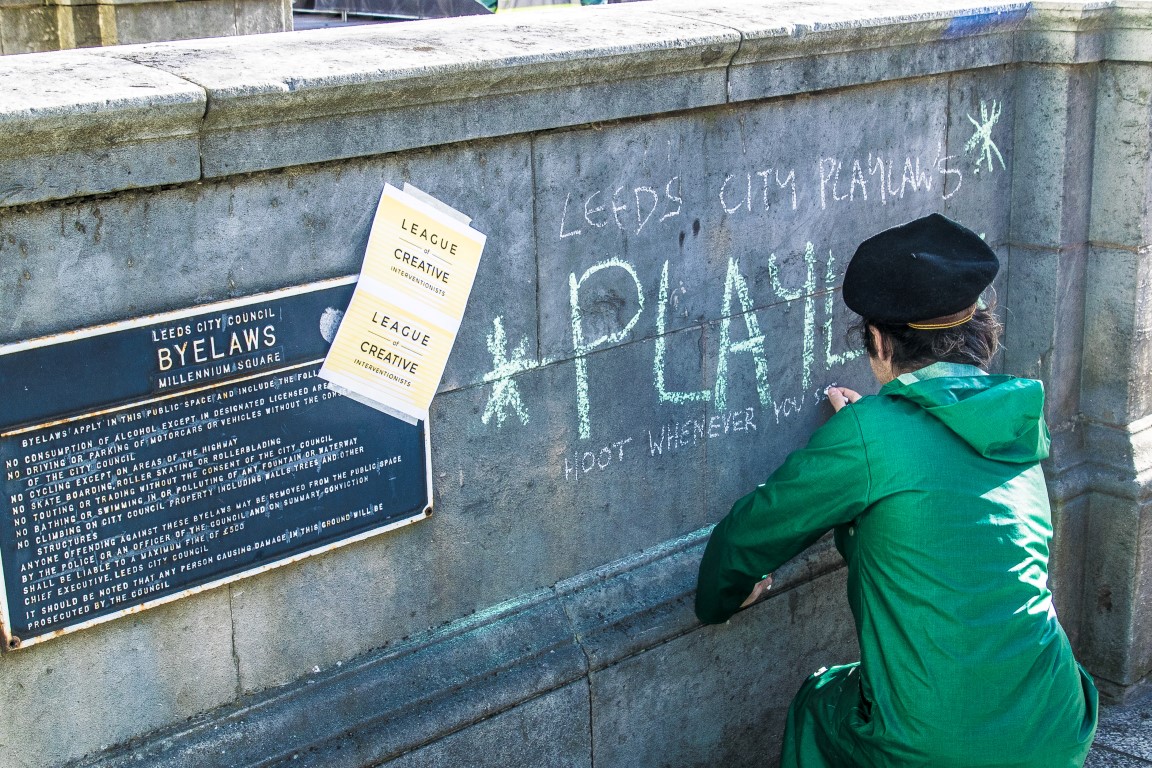
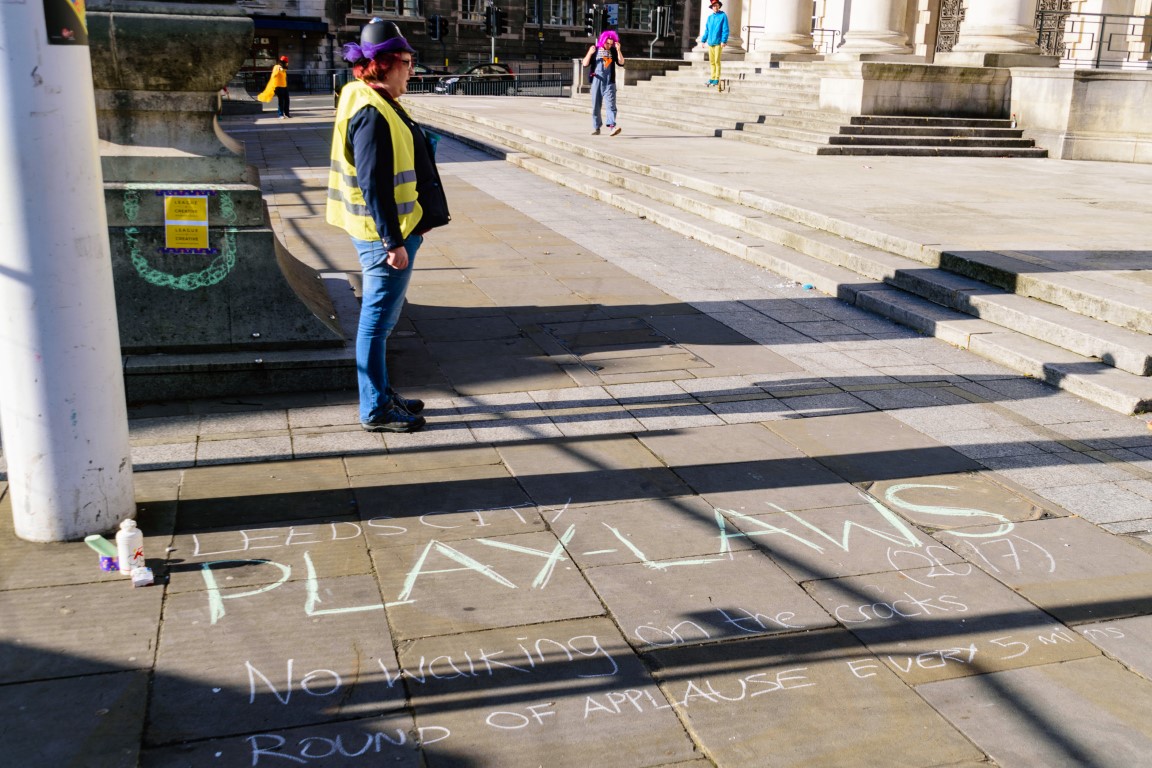
    Making the “play-laws” in Leeds (read about it here) again reminded me how powerful this cheap, simple tool actually is. With a single piece of chalk you can become a rebel, challenging the ownership of public space and inviting play on the streets.

    We talked about making “mission cards” for a playful “chalk brigade”, print the cards, stick a piece of chalk to each card and distribute them as far and wide as we can.

    A Play Toolkit

    In the conversation ensuing CounterPlay Leeds, Lynn Parker came upon the idea of a shared “Play Toolkit” and started unpacking the idea here. We think of it as an open-source project that can hopefully lead to both a set of instructions/principles and an actual, physical box. Stay tuned!

    #OnePlayThing

    Finally, we invented the hashtag #OnePlayThing to remind each other and everyone else how it’s often the small things, the small acts of play, that make a difference. If you wish to join, just share a photo, video or description of “one play thing”, one way of playing, on social media and tag it #OnePlayThing.

    https://twitter.com/muftigames/status/929684958318399490

    If you were among the participants, help me out: what am I forgetting? If you were not, which actions do you think we should take to make society more playful?

    [/et_pb_text][/et_pb_column][/et_pb_row][/et_pb_section]

  • CounterPlay Leeds #2 – Themes

    CounterPlay Leeds #2 – Themes

    [et_pb_section bb_built=”1″][et_pb_row][et_pb_column type=”4_4″][et_pb_text admin_label=”Diversity” _builder_version=”3.0.76″ background_layout=”light” border_style=”solid”]

    [toc]

    In my last post, I got into the background and context of the recent CounterPlay Leeds event. Now it’s time to explore the central themes as they emerged through play.

    Diversity of play

    Play reminds us that diversity and ambiguity are not something to be avoided, but rather to be embraced and encouraged. Play can be meaningful and important for all of us because it can take on so many forms and only those playing can determine whether or not this or that form of play is meaningful. If we can learn to accept and understand this, well, maybe we can carry that knowledge and respect with us into all aspects of life.

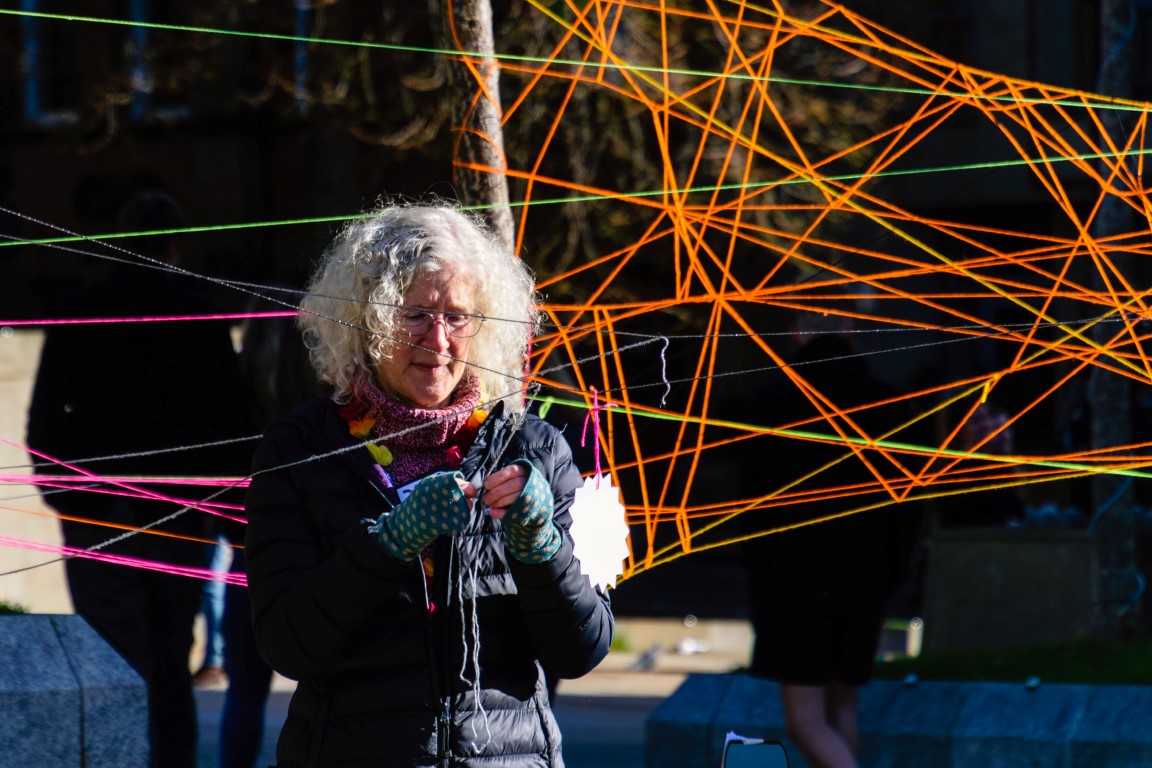
    During CounterPlay in Leeds, I saw this flourish. Nobody wanted to tell anyone that this or that was the right way to play, but lots of wildly different invitations presented themselves. We greeted each other playfully. We spend a long time decorating nametags that were pretty or silly or both. We transported colorful feathers by blowing them from hand to hand. We made so many funny noises and gestures. We played with recorded sound loops. We made the slimiest slime. We made beautiful woolen spider webs between trees. We “flocked” and jumped around. We made new “play-laws” for Leeds to encourage play in public. We dressed up in cardboard. We had a fierce “tug of war” outside.

    All of this amounts to a wonderful demonstration of the diversity of play.

    [/et_pb_text][et_pb_image _builder_version=”3.0.76″ src=”http://www.counterplay.org/wp-content/uploads/2017/11/CounterPlayLeeds-1670-Medium.jpg” show_in_lightbox=”off” url_new_window=”off” use_overlay=”off” always_center_on_mobile=”on” border_style=”solid” force_fullwidth=”off” show_bottom_space=”on” /][et_pb_text admin_label=”Imagination1″ _builder_version=”3.0.76″ background_layout=”light” border_style=”solid”]

    Imagination

    Play is a catalyst of imagination, because imagination is required to keep play evolving and moving in new, surprising directions. Imagination keeps play alive and vice versa.

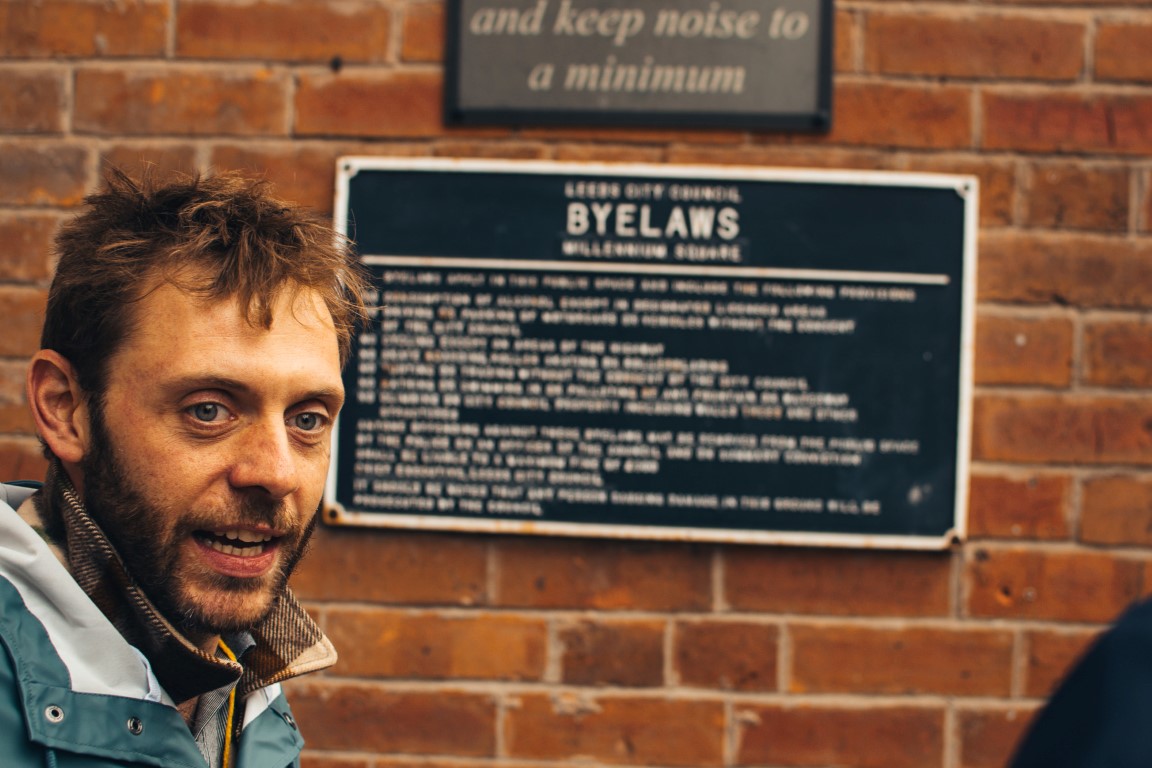
    Guided by Malcolm Hamilton of Mufti Games, we went out and explored the urban space around the museum, where we found some pretty sad by-laws telling us all the things we couldn’t do:

    [/et_pb_text][/et_pb_column][/et_pb_row][et_pb_row][et_pb_column type=”1_2″][et_pb_image _builder_version=”3.0.76″ src=”http://www.counterplay.org/wp-content/uploads/2017/11/CounterPlayLeeds-1586-Medium.jpg” show_in_lightbox=”off” url_new_window=”off” use_overlay=”off” always_center_on_mobile=”on” border_style=”solid” force_fullwidth=”off” show_bottom_space=”on” /][/et_pb_column][et_pb_column type=”1_2″][et_pb_image _builder_version=”3.0.76″ src=”http://www.counterplay.org/wp-content/uploads/2017/11/CounterPlayLeeds-1587-Medium.jpg” show_in_lightbox=”off” url_new_window=”off” use_overlay=”off” always_center_on_mobile=”on” border_style=”solid” force_fullwidth=”off” show_bottom_space=”on” /][/et_pb_column][/et_pb_row][et_pb_row][et_pb_column type=”4_4″][et_pb_text admin_label=”Imagination2″ _builder_version=”3.0.76″ background_layout=”light” border_style=”solid”]

    Enthused by play, we quickly we imagined a different world where by-laws became playlaws, and instead of telling you what you’re not allowed to do, we started listing stuff you had to do:

    “Don’t walk on the cracks. Walk like a bird. Avoid the lava. Point to an owl. Shake hands with someone. Don’t slip on the banana skin. Walk backwards. Jump! Spin!”

    When someone walked by, we invited them to play and cheered them on when they chose to participate. Many people did, often with a combination of surprise and joy. “What is this? Am I allowed to play here?”

    Even this somewhat serious-looking guy, who turned out to get more involved than anyone else. Apparently, it was his birthday and our little silly intervention made his day.

    [/et_pb_text][et_pb_image _builder_version=”3.0.76″ src=”http://www.counterplay.org/wp-content/uploads/2017/11/CounterPlayLeeds-1664-Medium.jpg” show_in_lightbox=”off” url_new_window=”off” use_overlay=”off” always_center_on_mobile=”on” border_style=”solid” force_fullwidth=”off” show_bottom_space=”on” /][et_pb_text admin_label=”Inclusiveness” _builder_version=”3.0.76″ background_layout=”light” border_style=”solid”]

    Inclusiveness

    I always insist that play shouldn’t be restricted to any one group in society (like, say, children), but should rather be expanded to include all of us. It doesn’t matter if we’re young or old, if we’re male of female or something else, if we’re physically strong or less so. None of that is of any consequence, because none of us should be forced to live a playless life.

    I don’t know the age of any of the participants, and it didn’t matter one bit. There were a bunch of families with small kids, some of whom stayed for a very long time, so immersed in play that they apparently couldn’t leave. Sometimes we were playing alongside each other, sometimes everyone came together across generations in joyous silliness like this round of human bowling:

    [/et_pb_text][et_pb_text admin_label=”Generosity” _builder_version=”3.0.76″ background_layout=”light” border_style=”solid”]

    Generosity

    Playing with other people, we develop a shared interest in keeping the play alive and we have a shared responsibility for this. This brings to the fore a certain kind of generosity, where we care less about our personal needs and more about contributing to the shared experience. We stretch a little bit more, take a few additional steps towards the other, trying to do and be a little bit better for the greater good.

    Drawing on Anthea Moys’ brilliant performance at CounterPlay ‘17, Ben Ross had us “flocking” all over the place and it was a beautiful:

    It’s a simple “game”, inspired by flocking birds, where everyone follows the leader of the flock. Whenever the leader turns , the entire flock turns and whoever is in front becomes the new leader.

    What’s remarkable about flocking is how quickly you start to feel like an (somewhat) cohesive organism, and you take it upon you to extend the experience. Generosity in action.

    [/et_pb_text][et_pb_image _builder_version=”3.0.76″ src=”http://www.counterplay.org/wp-content/uploads/2017/11/CounterPlayLeeds-1701-Medium.jpg” show_in_lightbox=”off” url_new_window=”off” use_overlay=”off” always_center_on_mobile=”on” border_style=”solid” force_fullwidth=”off” show_bottom_space=”on” /][et_pb_text admin_label=”Permission” _builder_version=”3.0.76″ background_layout=”light” border_style=”solid”]

    Permission

    During the weekend, we kept coming back to the question of “permission”. How do we know if we have permission to play? Who can grant that permission? Is it ours for the taking? Maybe we can collectively, as a community, bestow the permission on each other?

    While it might seem a trivial matter – playing is generally not prohibited – it actually appears to be holding us back more often than you’d think. We have grown accustomed to not playing and we need someone to renew our invitation.

    This issue becomes even more evident when we don’t always know who owns . Due to what has been labelled “the insidious creep of pseudo-public space”, public space is longer always public, further blurring the actual ownership and the permissions we citizens might have. When some of the organisers started making woolen spider webs, a woman and her son joined them. It was only afterwards she learned that no official permission had been given, which made her quite surprised that we’d dare do it all.

    We need to renegotiate the rules of engagement, reclaiming our permission to play in public!

    In the next post, I’ll explore some of the actionable ideas that emerged during the weekend, so we can keep the playful spirit spreading.

    [/et_pb_text][et_pb_image _builder_version=”3.0.76″ src=”http://www.counterplay.org/wp-content/uploads/2017/11/CounterPlayLeeds-1684-Medium.jpg” show_in_lightbox=”off” url_new_window=”off” use_overlay=”off” always_center_on_mobile=”on” border_style=”solid” force_fullwidth=”off” show_bottom_space=”on” /][/et_pb_column][/et_pb_row][/et_pb_section]