Blog

  • Loving the Play Community

    Loving the Play Community

    [et_pb_section bb_built=”1″][et_pb_row][et_pb_column type=”4_4″][et_pb_text _builder_version=”3.15″]

    I try to embrace every possible adventure I stumble upon. Immer ein Abenteuer. When the nice, brilliant people at Playable City invited me to speak at their conference in Tokyo, I jumped with joy.

    “Would you come over and talk about your work with play communities?” 

    Since that just happens to be my favorite topic, the answer was a resounding YES, of course.

    It’s a few weeks ago now, and all the many, many impressions from the conference (and Tokyo in general) have had time to settle in.

    There were a good blend of inspiring talks by Kei Wakabayashi, Motoko Tanaka, Tine Bech and Jo Verrent from Unlimited, as well as workshops organised by members of the “Creative Producers International” programme (see the full timetable here).

    It was deeply fascinating to explore some of the cultural differences between Japan and Western Europe (like the way use public parks!), but also to be reaffirmed in our shared desire to play. I maintain that play reminds us of everything we have common as humans, all the similarities that we often tend to overlook. When we play together, the differences fall away, and we’re able to just be in and extend that moment together.

    I would have appreciated more to talk and play, since it was all over so fast. Maybe more than one day the next time? It’s hard to get really deep into the more substantial questions and conversations in such a fairly short time, but other than that, it was a blast.

    [/et_pb_text][et_pb_image _builder_version=”3.15″ src=”http://www.counterplay.org/wp-content/uploads/2018/10/PlayableCityTokyo-2464-Large.jpg” /][et_pb_text admin_label=”Play community talk 1″ _builder_version=”3.15″]

    My own talk was basically an attempt to convey my deep love for the play community (you can download a pdf of my presentation)

    The assumptions underpinning all my work are the ideas that we all have a desire to play, and that playful people are better equipped to live in this complex, weird and chaotic world.

    We can all become more playful, and the best way to practice is to simply play. If play serves any greater purpose, it is helping us reconnect with our inherent playfulness (I wrote a little bit more about that in “Play to Live“).

    It’s almost impossible to make play thrive unless it is embedded in a friendly play community. As I wrote in our book, “The Power of Play” on “The Global Play Community“:

    “Cultivating a diverse play community where people are actively participating to explore and spread play is probably our best bet to foster a strong movement towards a more playful world. When we know for certain that we are not alone that other people feel the same urge to be playful, then we can easier muster the courage that is necessary to challenge the non-playful structures around us.”

    Now, I can’t talk about play communities without acknowleding how much I’m drawing on Bernie DeKoven’s work (which is a lot). He’s gone now, sadly, but throughout his life he explored the true meaning of play and the communities where play flourishes:

    “But we are a play community, and playing the way we do, for fun, for everyone’s fun, in public – our fun little community becomes something else. To those who want to be seen as people who embrace life, embrace each other, embrace spontaneity, freedom, laughter; we are an alternative. An invitation. We play as if the game isn’t important. The rules aren’t important. As if the only really important thing is each other”

    This resonates with Lynne Segal’s writing in “Radical Happiness: Moments of Collective Joy“:

    ”As the world becomes an ever lonelier place, it is sustaining relationships, in whatever form they take, which must become ever more important. An act of defiance, even”

    What can be more helpful in “sustaining relationships” than playing together? Especially if every single act of play takes us deeper into the play community, while also extending the invitation for people on the outside to join.

    If you’re still with me, let’s say we agree that yes, play and play communities are indeed important, but how do we cultivate them?

    I don’t have a simple recipe, but rather a handful of somewhat intangible, demanding pieces of advice. There’s no reason to pretend that it’s easy, because, well, it’s not. It’s a lot like love in that regard. It’s complicated, it takes a lot of effort, and there are no guarantees or predictable outcomes, but we probably can’t live without it.

    [/et_pb_text][et_pb_image _builder_version=”3.15″ src=”http://www.counterplay.org/wp-content/uploads/2018/10/PlayableCityTokyo-2390-Large.jpg” /][et_pb_text admin_label=”Play community talk 2″ _builder_version=”3.15″]

    My most important message was to dare to be guided by play. To me, play is my one guiding principle. My compass. When I doubt what I’m doing, when I fear I’m moving in the wrong direction, I ask myself: ”what would play have done?”. ”Am I respecting the values of play?”. I have images of play in my head, the feeling of play in my body. I found myself talking as play as this imaginary friend, who I would always consult and ask for advice. “Am I doing this right?” Our manifesto is an attempt to describe how we see play, and I frequently revisit it, keeping me on the right track.

    From here, you have to lead by example. Someone has to muster the courage to stand up and make a statement, demonstrating how play is not only permitted, but actively encouraged. You can do that, you can change the direction, the atmosphere, the culture, the rules. This is exactly what Clare Reddington and her partner in crime, Seiichi Saito, did when they were running around like this all day:


    [/et_pb_text][et_pb_image _builder_version=”3.15″ src=”http://www.counterplay.org/wp-content/uploads/2018/10/PlayableCityTokyo-2399-Large.jpg” /][et_pb_text admin_label=”Play community talk 3″ _builder_version=”3.15″]

    What does it mean to lead a community while being guided by play?

    To name a few principles that are important to me, you have to embrace the diversity of play. There are as many ways to play as there are people on earth. Just like we should embrace diversity among people, we should encourage it in play. There is no right way to play, but there are many ways we haven’t seen yet. Play is uncertain and you shouldn’t try to eliminate that uncertainty. It’s not knowing what will happen in a moment that keeps play alive and vibrant, because anything might happen. Play is sincere and playing together, our mental barriers and facades fall away. We stop hiding and show who we really are. I’m pretty sure that if you’re not being sincere, if you don’t really mean it, the play community will wither and die. Finally, play is hugely generous. Play is not primarily about competing or winning, but about being in that moment together, keeping the play alive and everyone playing takes upon them part of the responsibility. This nurtures a generosity, where we care less about our personal needs and more about contributing to the shared experience. We have to be as generous to our play communities, also without always expecting anything in return.

    Throughout all this, your efforts only ever really matter when you dare to trust the play community. If you do, they will perform magic. If you don’t, well, they won’t do much of anything. Trust is risky, intimidating, even. What if your trust is misguided? If those you trust will let you down? …but I honestly believe there is no other way to make play thrive (or to cultivate healthy societies, for that matter).

    I ended with a few simple recommendations that might be helpful for anyone aspiring to cultivate local play communities:

    • Create spaces for play to thrive – in our cities and our minds
    • Start small – let play grow organically
    • Be courageous – dare to experiment, embrace uncertainty
    • Trust the play community

    I will keep working for greater diversity in the play communities I’m part of, creating stronger ties across the globe, bridging gaps and bringing more people together. As for next year’s CounterPlay festival, there’s a call for proposals out now, and we’re working to get the play community much more involved in the process than ever:

    https://twitter.com/mathiaspoulsen/status/1049721289391464449

    [/et_pb_text][/et_pb_column][/et_pb_row][/et_pb_section]
  • Playing at the Edge

    Playing at the Edge

    [et_pb_section bb_built=”1″][et_pb_row][et_pb_column type=”4_4″][et_pb_button _builder_version=”3.15″ button_text=”Go to Call for Proposals” button_url=”http://www.counterplay.org/call-for-proposals/” /][et_pb_text _builder_version=”3.15″]

    [toc]

    The theme of CounterPlay ’19 is “playing at the edge”, and we welcome different forms of proposals that reflect this in one way or another. As always, we are eager to explore play from as many different angles as possible, building on our three pillars: playful learning, playful working and playful living. The theme is open for interpretation and fresh ideas: we invite you to play with the theme and identify your own ways of approaching the edge.

    [/et_pb_text][et_pb_text admin_label=”The Edge of Certainty” _builder_version=”3.15″]

    The edge of certainty

    When we’re playing at the edge, we give up on certainty. We can tip-toe, jump, and dance at the edge, and no one knows exactly what will happen. Will we stumble and fall or regain our balance? Playing like this is not without risk, and while that may hold us back, it might be worth it for the thrill alone? Take the Scottish trials cyclist, Danny MacAskill, who made a living out of playing at very literal edges. In his aptly titled biography “At the Edge”, he describes the fear of “facing the unknown”.

    The unknown. That’s exactly where play can take us, right to the edge of the unknown, staring into unfamiliar territory. Is it here, right at the edge, that we can see the farthest? Can the edge be a unique vantage point? It takes courage to pursue this distant horizon, leaving the familiar behind, to where you risk exposing yourself, laying bare your vulnerabilities and insecurities. Sometimes, we find ourself playing at the edge of our current capacity. Perhaps it is at the edge that we reach the much desired “flow state” (Csikszentmihalyi, 1990), but then, as play encourages us to “de-stabilize (our) own understandings and inhabit new circumstances” (Henricks, 2016), we stretch a little more.

    This is where playing at the edge might eventually take us to the edge of play, and “noticing where play leaves off also offers a view of where play begins” (Eberle, 2009). The edge can be a very literal, hard edge, a clear delineation between where you can and cannot play. You can play at the playground, but not outside of it. You can play on the sidewalk, but not on the street. You can play at home, but certainly not at work.

    [/et_pb_text][et_pb_image _builder_version=”3.15″ src=”http://www.counterplay.org/wp-content/uploads/2018/06/ProJuventute-7520-Large.jpg” /][et_pb_text admin_label=”Blurring the edge” _builder_version=”3.15″]

    Blurring the Edge

    The edge of play can also be a more blurry, intangible one, resulting from conflicting notions of what it means to play. Whereas some forms of play enjoy widespread awareness, much play takes place at the edge of sight, almost invisible to most of us as it might fall between established categories, and is thus deemed as irrelevant or unacceptable. To some, play is not supposed to contain “conflict, noise and the unpredictable” (Skovbjerg, 2017), and there is often a preference for orderly rather than disorderly play (Henricks, 2009). Others are playing with ideas on the edge of what is currently accepted:

    https://www.instagram.com/p/BmAo3T7AR5I/?utm_source=ig_embed&utm_campaign=embed_loading_state_control

    Sometimes, the blurring means we’re not sure when we’re playing and when we’re not: many pervasive/street/community games draw on this confusion (Montola, 2009). Maybe we can even use that to our advantage: to flit into play when times are too serious. We ‘game the system’ or perform acts of minor subversion – a form of “critical play”? (Flanagan, 2009).

    [/et_pb_text][et_pb_image _builder_version=”3.15″ src=”http://www.counterplay.org/wp-content/uploads/2018/06/PlayfulArts2018-8563-Large.jpg” /][et_pb_text admin_label=”Over the edge” _builder_version=”3.15″]

    Crossing the edge

    At one point, we arrive upon that complex, often somewhat obscure situation, where play ceases to be play and mutates into something else. Maybe we run out of energy, falling flat on the ground, maybe it’s just not fun any longer. Or maybe we experience an undesirable shift in power, like the “false play” (Huizinga,1955 ), “that perversion of human creativity that occurs when organizations take over and manage play for their own ends” (Henricks, 2006). Then, all of a sudden, you’re playing someone else’s game, and are expected to follow someone else’s rules. Not everyone in society has been granted the privilege to play freely, (Henricks, 2015) and there are several forms of control and regulation put in place, including a kind of affective governance (Reestorff, 2017), where even happiness and who is allowed to experience it is dictated by forces outside our control (Ahmed, 2010). Another kind of regulation takes place through representation in toys and games, since “representation provides evidence for what forms of existence are possible” (Shaw, 2014), and the common forms of representation only represent a narrow subset of possible identities. What is the message to all those people, who can’t find anything or anyone to identify with in common ways of framing play? What are the barriers that prevent us from making playful experiences more accessible and inclusive?

    As Hannah Arendt argued, happiness can’t be relegated to the private realm only, but hinges also on being “participator in public affairs” (Arendt, “On Revolution”). Playing in public is exactly to be a “participator in public affairs”, sparking our imagination to see new forms of social possibility, opening up the realm of civic participation through play. Cultivating play communities by demonstrating our willingness to play could also be a way of building trust (Svendsen, 2018) and deepening social connections:

    “As the world becomes an ever lonelier place, it is sustaining relationships, in whatever form they take, which must become ever more important. An act of defiance, even.” (Segal, 2017)

    [/et_pb_text][et_pb_image _builder_version=”3.15″ src=”http://www.counterplay.org/wp-content/uploads/2017/11/CounterPlayLeeds-1664-Medium.jpg” /][et_pb_text admin_label=”Creative friction at the edge” _builder_version=”3.15″]

    Creative friction at the edge

    According to the so-called “edge effect” in ecology, there is potential for increased diversity where the edges of two adjacent ecosystems overlap. The edge provides an interface to another edge, bridging the gap between two (or more) ecosystems, cultivating a sphere where new forms of life can emerge (assumed that there is still sufficient “interior habitat” for the species that need it). We like to think there is a similar “play edge effect”, when “ecosystems of play” collide, where new ways of playing, and, consequently, new ways of being are possible.

    [/et_pb_text][et_pb_image _builder_version=”3.15″ src=”http://www.counterplay.org/wp-content/uploads/2018/04/170401-CounterPlay17-6970-Large.jpg” /][et_pb_text admin_label=”The edge of our grasp” _builder_version=”3.15″]

    The edge of our grasp

    Perhaps play is always situated right there at the edge of all the many disciplines required to understand it, and of understanding itself. Play remains at the edge of our grasp, “as an embodied, affective experience that cannot be fully conveyed using conventional language” (Shields, 2015). What happens at the edge of what we know about play, and how do we push that edge together, making our collective understanding deeper and richer?

    “the continued advancement of play studies depends on the recognition of varieties of disciplinary contributions and on strategies to integrate these” (Henricks, 2016)

    What we call for is exactly that – bridges to be built between the different disciplines and domains, bringing people together from across the edges, to talk, think and play together. There are edges between research and practice, between public institutions and private companies, between children and adults.

    Let’s tear down the barriers and insist that edges are interfaces rather than boundaries, allowing us to create new connections, foster new ideas and cultivate new possibilities.

    [/et_pb_text][et_pb_image _builder_version=”3.15″ src=”http://www.counterplay.org/wp-content/uploads/2017/11/CounterPlayLeeds-1670-Medium.jpg” /][et_pb_text admin_label=”References:” _builder_version=”3.15″]

    References:

    Ahmed, Sara (2010): The Promise of Happiness
    Arendt, Hannah (1963): On Revolution
    Csikszentmihalyi, Mihaly (1990): Flow: The Psychology of Optimal Experience
    Eberle, Scott G. (2009): Exploring the Uncanny Valley to Find the Edge of Play
    Flanagan, Mary (2009): Critical Play – Radical Game Design
    Henricks, Thomas S. (2006): Play Reconsidered – Sociological Perspectives on Human Expression
    Henricks, Thomas S. (2015): Play and the Human Condition
    Henricks, Thomas S. (2016): Playing into the Future – in “Celebrating 40 Years of Play Research Connecting Our Past, Present, and Future
    Huizinga, Johan (1955): Homo Ludens – a Study of the Play-Element in Human Culture
    Reestorff, Camilla (2017): Culture War: Affective Cultural Politics, Tepid Nationalism and Art Activism
    Segal, Lynne (2017): Radical Happiness: Moments of Collective Joy
    Shaw, Adrienne (2014): Gaming at the Edge Sexuality and Gender at the Margins of Gamer Culture
    Shields, Rachel (2015): Ludic Ontology – Play’s Relationship to Language, Cultural Forms, and Transformative Politics
    Skovbjerg, Helle Marie (2017): Play revolts and breaks in the service of time and conflict
    Svendsen, Gert Tinggaard (2018): Trust

    [/et_pb_text][/et_pb_column][/et_pb_row][/et_pb_section]
  • Protected: “Må jeg være med?” – Legeworkshop

    Protected: “Må jeg være med?” – Legeworkshop

    This content is password-protected. To view it, please enter the password below.

  • Playful Arts Festival 2018

    Playful Arts Festival 2018

    [et_pb_section bb_built=”1″][et_pb_row][et_pb_column type=”4_4″][et_pb_text _builder_version=”3.1.1″]

    When I was recently driving back from Playful Arts Festival in Den Bosch, the Netherlands, even the dreadful traffic on the Autobahn was not nearly enough to kill my enthusiasm for this great event!

    While I haven’t been at Playful Arts before (big mistake!), I’ve been friends with one of the organizers, Zuraida Buter, for several years and we’ve talked a lot about our shared curse and blessing of running play events. I don’t think it’s unfair to say that we’re both somewhat stubborn (maybe “perseverant” is a nicer word? Anyway, you know what I mean) in our efforts to explore the role of playfulness in games, art and our lives. We share the fundamental belief that it’s important to have these events in the world, and that there should be (more, always more!) regular opportunities for the play community to congregate. Otherwise, why keep doing this work? It’s mighty challenging, frustrating (to the point of screaming into the void) at times, and it certainly doesn’t make us rich (but oh, it’s so immensely rewarding in so many other ways and I wouldn’t ever want to live without it).

    It goes without saying, then, that I was curious to join their community, learn more about their approach to play and not least their position right on the intersection of play and art. This is a connection I’m deeply intrigued by, but also one I feel a desire to explore in much more depth.

    [/et_pb_text][et_pb_image _builder_version=”3.1.1″ src=”http://www.counterplay.org/wp-content/uploads/2018/06/PlayfulArts2018-8254-Large.jpg” /][et_pb_text _builder_version=”3.1.1″]

    More than anything, Playful Arts Festival was an important reminder that, for all of us interested in understanding play better, art should be one of the first places we look. Art and play share the fundamental trait that they must both be allowed to exist for no other reason than the experience, with no expectation of any specific outcome (and they both suffer from the contemporary desire to focus solely on results and measurable outcomes – what I have called “ROI Society”). It seems to me that becoming an artist is often also a matter of embracing your playfulness, carving out a space for it to thrive in your work and life. Deep down, I believe we all have this urge to stay playful, and art might be a strategy for maintaining the link to that dimension. Most artists, like other playful people, are always curious, asking questions, exploring the world, turning it upside down, insisting that everything could be different. Or as the (Dutch, as it happens) artist M. C. Escher, famous for his impossibly endless stairs, phrased it:

    ‘I can’t keep from fooling around with our irrefutable certainties. It is, for example, a pleasure knowingly to mix up two- and three-dimensionalities, flat and spatial, and to make fun of gravity.’

    While I’m certainly no artist, I also “can’t keep from fooling around with our irrefutable certainties”. In fact, few things cause more frustration than “the politics of necessity” and the widespread beliefs that there’s an almost destiny-like reason for things being the way they are. Play – and art – reminds us that it’s a big, fat lie, but only if we dare to embrace it, and for that, we need each other. We need our play communities, which often emerges around events like Playful Arts.

    So what was this festival all about?

    [/et_pb_text][et_pb_text admin_label=”JakobLaCour” _builder_version=”3.1.1″]

    On the first day of the festival, arriving on my own, feeling a little overwhelmed, I was eager to get into the proper playful mood. Now, I’m the weird kind of person who absolutely loves play, will go to great lengths to improve the understanding of and conditions for play, yet I’m often intimidated by certain ways of playing. I’m a somewhat picky player, you might say. I’m a little shy by nature, and when play feels more like a performance, I’m usually struggling. It’s a good thing, I guess, since it frequently reminds me that not all forms of play are appealing to all people and diversity and inclusiveness must always be a priority.

    I’m still practicing my play skills, and I always try to seek out experiences that are out of my comfort zone. My friend Jakob La Cour, a Danish artist, is usually guaranteed to deliver somewhat intimidating experiences, so I jumped on his contribution – “Random Magic”. He took us on a journey into a mystical dimension, drawing on “the power of the mask”, hiding our faces and trusting the strength of the group. Dressed up, we ventured out into town, communicating only by sounds, running and jumping around before lying on the ground in the middle of a public square. It was a very strange and demanding journey indeed, but one I cherish nonetheless. Jakob manges to truly demonstrate how playing in public can effectively subvert established expectations about the “normal” behavior. Like one participant said:

    “I felt sad for all those people looking at us, making such an effort to uphold their serious facades, pretending to be “normal””.

    [/et_pb_text][et_pb_text admin_label=”Anthea” _builder_version=”3.1.1″]

    It took some time to gather my thoughts and recalibrate my energy levels after this, but it was followed by the official opening with a lovely speech by Zuraida and then another friend, the artist Anthea Moys from Johannesburg, introduced people to her always amazing “Portrait Exchange”. Two and two, people draw portraits of each other – without looking at the paper. Nobody can do this particularly well, so it’s essentially a space for strangers to look intensely at each other, to see each other, and to laugh together. It’s a hilarious activity, but also one that profoundly demonstrates how even the most simple forms of play can bring us a little bit closer together.

    [/et_pb_text][et_pb_image _builder_version=”3.1.1″ src=”http://www.counterplay.org/wp-content/uploads/2018/06/PlayfulArts2018-8339-Large.jpg” /][et_pb_text admin_label=”Maaike” _builder_version=”3.1.1″]

    The festival was also an occasion for me to meet Maaike de Jong, a philosopher who, among other things, wrote a PhD with the intriguing title “The Paradox of Playfulness” (of which I’ve only read bits and pieces, I’m afraid). At Playful Arts, she attended as “the driving philosopher”, offering “a moment to catch up on impressions, grab ‘a bite to think’ and explore thoughts and ideas in the intersecting fields of playfulness and philosophy”. While I’ve been connected online with Maaike for a while, this was the first time we met in old-fashioned person. I enjoyed our many conversations, and not least her tribute to our mutual friend, the late Bernie DeKoven, titled “Bernie’s Delight”, a short meditation on his idea of the “inner playground”.

    [/et_pb_text][et_pb_image admin_label=”Maaike” _builder_version=”3.1.1″ src=”http://www.counterplay.org/wp-content/uploads/2018/06/PlayfulArts2018-8387-Large.jpg” /][et_pb_text admin_label=”Chair_Jump_Chute” _builder_version=”3.1.1″]

    Right after this beautiful, touching experience, something rare and surprising happened, as the artwork “Chair_Jump_Chute” by Marloeke van der Vlugt had me dancing around in a public space with people sitting around and I completely forgot about them. I think this was the most pure play experience I had during the festival, as nothing mattered but being inside and prolonging this particular moment. You wear either a kind of scarf or a chair (yes!), and when you move around, you remix music and sounds while interacting with three  big installations in the ceilings, shaped like parachutes and dresses. It was magical.

    [/et_pb_text][et_pb_image _builder_version=”3.1.1″ src=”http://www.counterplay.org/wp-content/uploads/2018/06/PlayfulArts2018-8389-Large.jpg” /][et_pb_text admin_label=”Bodies in urban space” _builder_version=”3.1.1″]

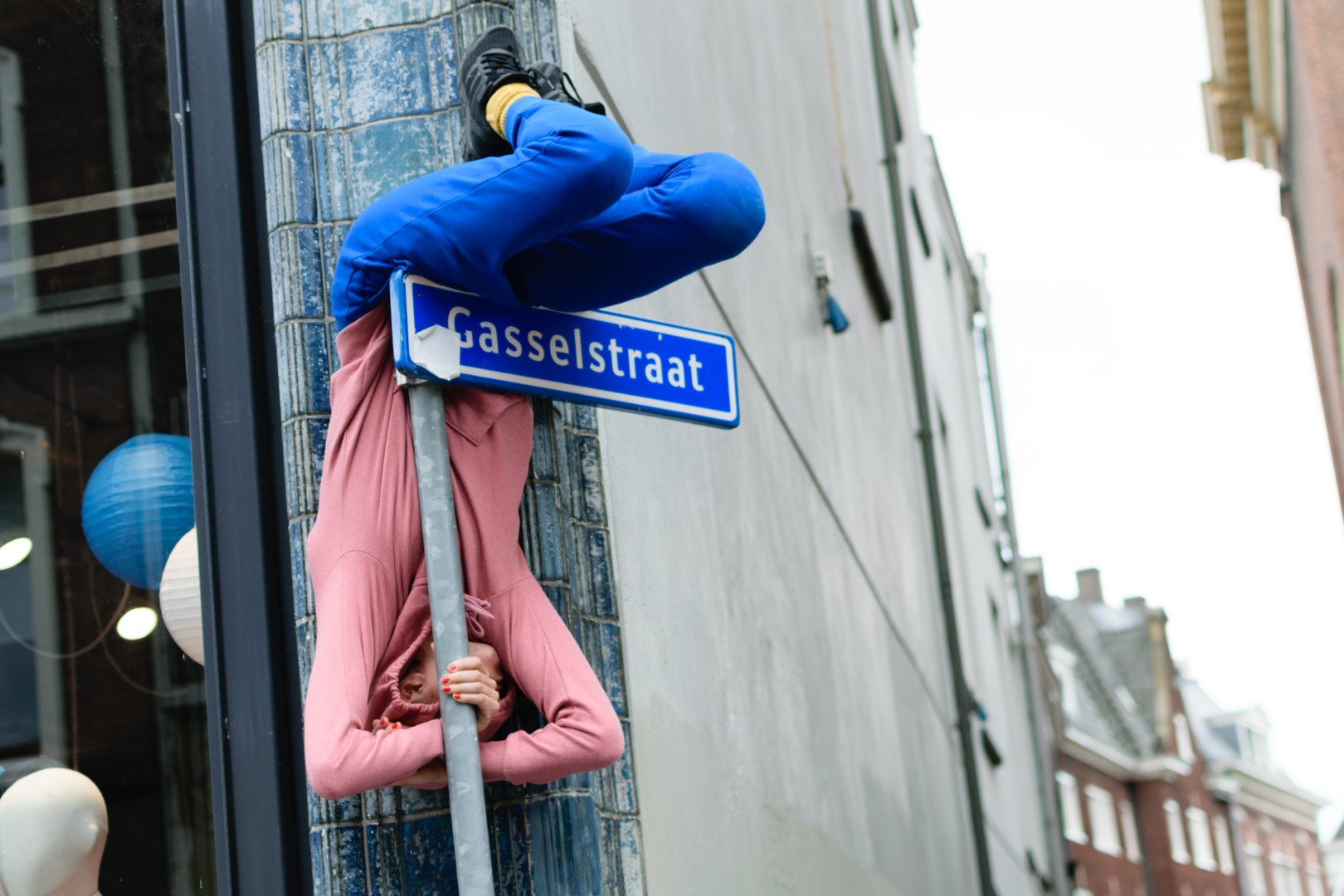
    Next up was the performance “Bodies in Urban Spaces” by Willi Dorner. The team had been picked from applicants coming from Den Bosch, the Netherlands and abroad They only came together for this one performance and had been practicing intensely for a week. It was a kind of parkour, bodies stacked on top of each other in surprising places. I particularly liked that moment when the performers got up from the ground and ran to their next location. The sudden shift, jumping from static posture to a quick dash, produced a compelling energy. The whole thing was just incredible, demonstrating how the playful eye allows you to see the world and a town like Den Bosch from entirely new perspectives.

    [/et_pb_text][et_pb_image _builder_version=”3.1.1″ src=”http://www.counterplay.org/wp-content/uploads/2018/06/PlayfulArts2018-8443-Large.jpg” /][et_pb_text admin_label=”Unfolding routines” _builder_version=”3.1.1″]

    The last thing I’ll mention is “Unfolding Routines” by “Moha Project”, which ran for a day during the festival, inviting participants on a special tour of a local hotel. Sadly, I missed it, but I attended their somewhat alternative “press conference” the next day. Right from the outset, you knew that something was off with all of this and it culminated when they suddenly presented “the Hungarian corpse”, one of the performers played dead and was dragged around the festival site as a very strange “lit de parade” (even among completely innocent non-festival visitors having dinner). It was weird in a David Lynch kinda way. Brilliant.

    [/et_pb_text][et_pb_image _builder_version=”3.1.1″ src=”http://www.counterplay.org/wp-content/uploads/2018/06/PlayfulArts2018-8563-Large.jpg” /][et_pb_image _builder_version=”3.1.1″ src=”http://www.counterplay.org/wp-content/uploads/2018/06/PlayfulArts2018-8564-Large.jpg” /][et_pb_text _builder_version=”3.1.1″]

    While the keen eye will immediately spot many obvious similarities between art and play, it nonetheless takes a concentrated effort to demonstrate these links. Too often when hosting play events, I fail to give art and artists the space they deserve, and I think I’m far from alone. Maybe we think we have to reinvent the field of play, building something from scratch, forgetting the long tradition of play in art? This is why a unique initiative like the Playful Arts Festival is so important, since it is one of the only recurring events (that I know of) to insist on seeing art through the lens of play and play through the lens of art – at the same time and with equal respect for both.

    During the festival, Zuraida had invited some of us to a meeting (a meeting, yes, but it was very playful indeed), asking how we can create closer ties between the many different play events happening around Europe (and the rest of the world). Part of it is
    a matter of helping each other out, reducing the barriers of running events, securing better funding and making logistics less of a hassle. Much more important, however, is our shared capacity to invite more people in, broadening and strengthening the play community across events and borders.

    This, as I’ve said many times before, is how we can really have an impact, making our lives and societies more playful and, hence, better suited for actual, playful human beings.

    I have no doubt that Playful Arts remains a core pillar of this community, and I look forward to going back!

    [/et_pb_text][/et_pb_column][/et_pb_row][/et_pb_section]
  • Materials and Junk-yard Play

    Materials and Junk-yard Play

    [et_pb_section bb_built=”1″][et_pb_row][et_pb_column type=”4_4″][et_pb_text _builder_version=”3.1.1″]

    Together with our friends Helle Marie Skovbjerg, play professor at Design School Kolding, and Ann Charlotte Thorsted, associate professor at Play Lab, Aalborg University, we have formed a small play club. It’s rather informal, and our collaboration simply emerged out of a common wish to play more together, to help each other understand play better and invite more people into the play community.

    This quote from Bernie DeKoven’s phenomenal “The Well Played Game” quite accurately captures our intentions with the club:

    “By empowering each other to create new conventions, by establishing guidelines, we assure each other of a common intention and mutual respect for the willingness to play, for the need for safety and trust”

    That last bit is essential, and quite hard, but more than worth the effort. When we feel safe and trust each other, so much more becomes possible.

    We recently had our second event in the “club”, when we had invited people to join us for an exploration of materials and a celebration of junk-yard play at the Design School – “When junk isn’t junk: materiality, loose parts and junkyard play spaces”.

    It was our intention to explore how different kinds of materials inspire different ways of playing, and how the process of designing and building might lead to surprising results. At the same time, we wanted to pay a small homage to the amazing tradition of junk-yard and adventure playgrounds.

    Pia Schytz, who’s a Design Consultant at Lab for Play and Design at the Design School, gave a talk about the role of materials in her work. It was truly fascinating to learn about her approach, where, as she said, “everything begins with materials”. That’s quite different than my own approach, but I’m pretty sure I should pick up a thing or two (also literally, yes). As a designer, she seems to see the contours of narratives in the materials, ready to unfold in surprising ways when they meet our ideas and intentions.

    I then gave a short introduction to the junk-yard design challenge, where I very, very quickly mentioned the proud tradition of junk-yard playgrounds, lamenting their widespread disappearance due to, among other things, fear of risk, fear of mess, fear of a lack of predictable outcomes (and lack of funding, of course) (see my presentation here).

    Luckily, there’s quite a lot happening in the this field, the entire tradition is being revitalised. Take a look here, here and here. Oh, and here’s a film I mentioned about “The Land”, an adventure playground in Wales – playing with fire:

    https://www.youtube.com/watch?v=4t9vq9bu3II


    [/et_pb_text][et_pb_text admin_label=”Monster” _builder_version=”3.1.1″]

    As soon as I stopped talking, everyone  started building, and it was almost immediately a beautiful, chaotic mess. Some groups formed (and mutated along the way), some went at it alone (me included), but we were certainly in it together.

    It was fun and interesting to observe the many different approaches. This was clearly more about process than the end result, about exploration, experimenting, tinkering, messing around without knowing where we might end up.

    Nonetheless, some of the things created were just brilliant. To mention a few favorites:

    The monster, which was quite frightening when it came alive, chased us all and insisted on eating either a few humans or monster food:

    [/et_pb_text][et_pb_image _builder_version=”3.1.1″ src=”http://www.counterplay.org/wp-content/uploads/2018/06/Junk-yard-play-8081-Large.jpg” /][et_pb_text admin_label=”Mad Max” _builder_version=”3.1.1″]

    This Mad Max themed wearable house / armour for a scavenger trying to survive in the desolate wastelands had a pretty impressive backstory:

    [/et_pb_text][et_pb_image _builder_version=”3.1.1″ src=”http://www.counterplay.org/wp-content/uploads/2018/06/Junk-yard-play-8031-Large.jpg” /][et_pb_text admin_label=”ROI Machine” _builder_version=”3.1.1″]

    Then there was this “ROI machine” (maybe inspired by my comment about the “ROI society” and how we should do more things without considering the potential return on our “investments”). It gave you a a ton of playful experiences, if you had the courage to venture through the (somewhat) dark tunnel full of surprises:

    [/et_pb_text][et_pb_image _builder_version=”3.1.1″ src=”http://www.counterplay.org/wp-content/uploads/2018/06/Junk-yard-play-8042-Large.jpg” /][et_pb_image _builder_version=”3.1.1″ src=”http://www.counterplay.org/wp-content/uploads/2018/06/Junk-yard-play-8040-Large.jpg” /][et_pb_text _builder_version=”3.1.1″]

    During this hilarious process, numerous important insights emerged and were shared afterwards. We always aim to design these spaces, so theoretical knowledge, thoughts and reflections can be mirrored in the experiences of playing. Our understanding of play is bound to be severely limited if we always only talk about it without being close to the sensation of play. Even so, it remains an impossible task to fully capture in words something that is felt by our bodies. As some say, it’s like describing the feeling of being in love. Words are not quite adequate there either. This doesn’t mean we should stop trying, but rather that we should make a real, sincere effort to develop a stronger, shared language about play.

    Several of our amazing participants talked about the immediate difficulty of “letting go”, of just playing in a room full of strangers. I really appreciate this demonstration of vulnerability, admitting that no, “just” playing is actually not that easy. I think we all know this feeling – I certainly know I do. There’s something about the expectations you might think you should adhere to, but it’s not just that. Opening up, showing yourself to strangers, that takes courage.We try to cultivate an atmosphere and a community, where people feel safe enough to dare to be silly and to explore the unknown, momentarily losing control. It’s tough, and it takes a lot of practice.

    [/et_pb_text][et_pb_image _builder_version=”3.1.1″ src=”http://www.counterplay.org/wp-content/uploads/2018/06/Junk-yard-play-8066-Large.jpg” /][et_pb_text _builder_version=”3.1.1″]

    Linked to this, some also mentioned the challenge of getting to play with others. Sometimes you team up with friends, family or colleagues, and sometimes new connections just appear. Other times, and for no evident reason, you don’t find the same rhythm as the other players. Maybe it doesn’t matter, you find your own rhytm, and no matter what, playing around other people playing always means you’re somehow playing together. Playing like that has a certain fluidity, where you can play together, being part of the same, feeling a sense of belonging, even when you seem to be on your own. Maybe you’re suddenly completely immersed in building a huge tower, but you do so surrounded by likeminded players, and the togetherness is palpable. It’s a dance, where everybody knows (or learns) that this only works if you show a degree of openness, empathy, respect and generosity towards the other players. It can never just be about you and your little experience, but we must all pay attention to the play community at large.

    [/et_pb_text][et_pb_image _builder_version=”3.1.1″ src=”http://www.counterplay.org/wp-content/uploads/2018/06/Junk-yard-play-8063-Large.jpg” /][et_pb_text _builder_version=”3.1.1″]

    There’s much to be said about the importance of materials, and how we are somehow drawn to different things, inspired to play around and build something weird. Play is always unpredictable, and having a selection of “loose parts” really demonstrates that. Maybe I had an idea when I found the first pieces of cardboard, but then someone talked about the heat in the room, and my project turned into an AC (before it became a communications device and maybe a creature). Between yourself, the people around you and the materials you engage with, who knows what might happen?

    Finally, one joyfully stated that “I got into a state of flow for the first time in a long time” and what a wonderful testimony to the power of play that was. We may forget so, serious adults as we are, but that sense of being immersed in something for no apparent purpose, losing track of time, forgetting about your obligations, that’s really at the heart of it all; getting into play.

    It was a blast, and certainly reminded me that I want to venture more into this particular field, developing different kinds of “junk-yard” and adventure playgrounds, but also bringing the atmosphere to new arenas.

    Stay in touch, and join the play community when we’re back on November 12th!

    [/et_pb_text][/et_pb_column][/et_pb_row][/et_pb_section]
  • From Biel with love

    From Biel with love

    [et_pb_section bb_built=”1″][et_pb_row][et_pb_column type=”4_4″][et_pb_text admin_label=”Mathias Poulsen” _builder_version=”3.1.1″]

    When I came home from the Pro Juventute play festival a few weeks ago, my head was full of impressions, thoughts and ideas – as it always happens after participating in lovely play events. While I was certainly somewhat challenged due to my limited language skills (much of the conference was in German and/or French), I took a lot with me and I managed to reach that interesting emotional state, where it feels just right:

    I hosted a workshop on “playing with strangers” together with Robb Mitchell, which was great fun, and I was once again amazed how strangers courageously jump into whichever challenge we threw at them. We used Robb’s design cards (read more here) to inspire the participants to prototype playful solutions for cultivating interaction between strangers in public space, and let us just say they got really creative (you can see my short presentation here).

    [/et_pb_text][et_pb_image _builder_version=”3.1.1″ src=”http://www.counterplay.org/wp-content/uploads/2018/06/ProJuventute-7459-Large.jpg” /][et_pb_text _builder_version=”3.1.1″]

    On Saturday, I also hosted a session with two inspiring talks by Jeanette Fich Jespersen from the KOMPAN Play Institute and Ellen Weaver (I found this blog post by Ellen that covers some of the same). Both were talking about “playing outside”, but more than that, they talked about creating a wide range of opportunities for play, allowing those playing to tailor the experience to their taste and needs. Take kids with disabilities, who are usually looking for the same play mood as anyone else, but might need to get there in slightly different ways:

    [/et_pb_text][et_pb_text _builder_version=”3.1.1″]

    One of the essential themes, for me, was “liberating play from the playgrounds”. It was introduced at the opening, and struck a chord with me. We tend to think of creating playgrounds as spaces for play, helping play to thrive, but it often feels more like we confine play to the playground. “Ok, you can play there, but certainly not anywhere else”. I’ve written before about “the problem with playgrounds“, and a big issue is that of player agency. Apart from boxing in the play experience, playgrounds often leave little meaning to be interpreted by the player, no “loose parts” to be used in new and surprising ways.

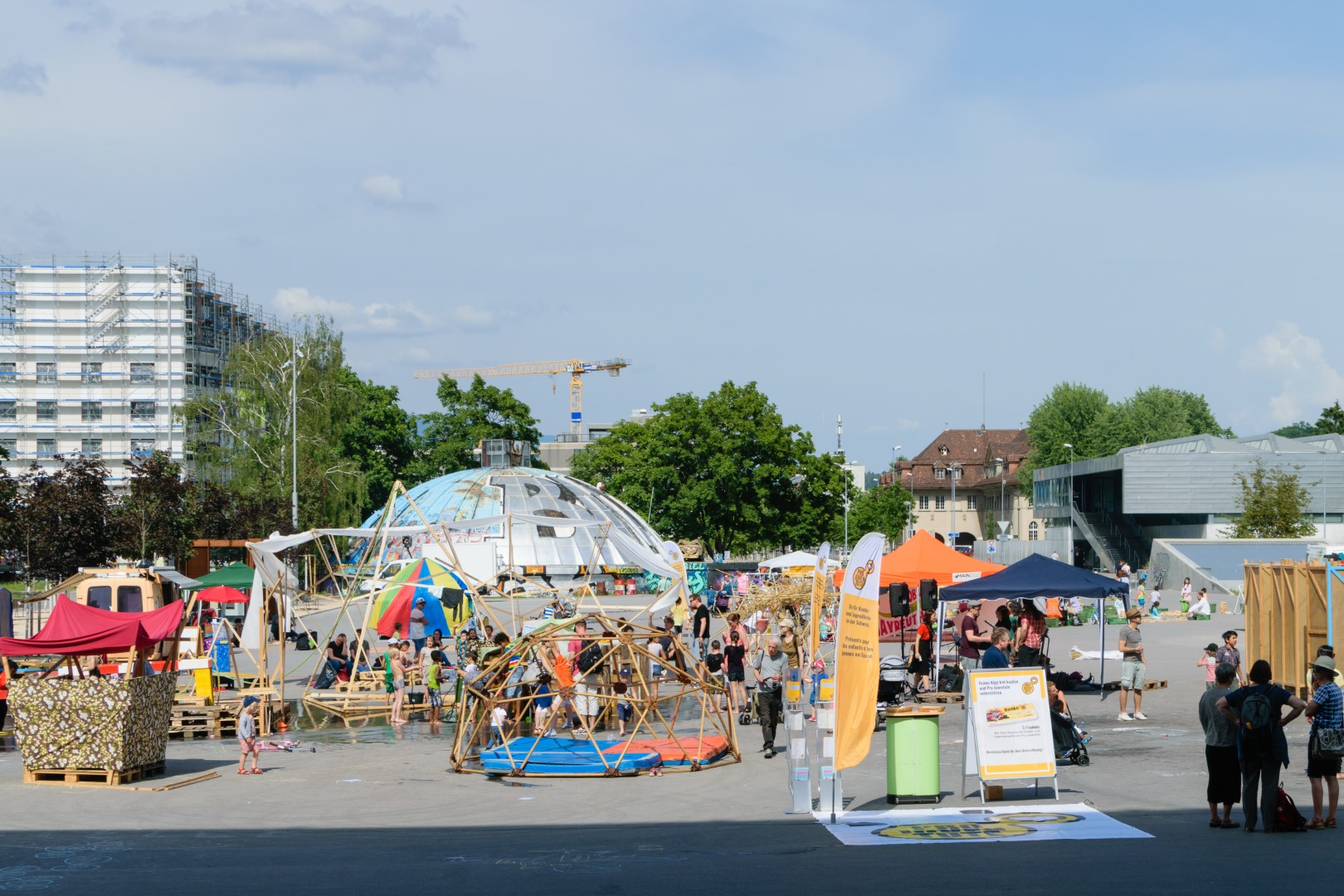
    I think this was beautifully illustrated by the events taking place outside the conference venue, on the big square, or “Playable Esplanade”, as it was appropriately called. As the festival evolved, so did the esplanada, coming ever more alive with people playing.

    [/et_pb_text][et_pb_image _builder_version=”3.1.1″ src=”http://www.counterplay.org/wp-content/uploads/2018/06/ProJuventute-7647-Large.jpg” /][et_pb_text _builder_version=”3.1.1″]

    Now, I found myself quoting and paying tribute to Bernie DeKoven more than once. This has happened a lot, not least since he died earlier this year, and I’ve been thinking so much about his incredible legacy to the play community. I had reread his wonderful “The Well-Played Game” on the trip. If you haven’t read it (at least once) yet, I recommend you do it. It’s so full of deep insight, and there’s so much to appreciate and learn from that book, even now, 40 years on. When he talks about The New Games Movement and not least their The New Games Tournament, I feel like I have missed out on something monumental in the history of play, but at the same time, I feel encouraged and inspired to follow in their playful footsteps:

    One of its activities was called the “New Games Tournament.” A group of people would come together—a group that may number as many as ten thousand people—and they’d play games in what became an actual celebration of the willingness to play.

    The energy, the vitality was everywhere. The potential, actual. In all that strangeness, we discovered that none of us were strangers. We all liked to play. There was nothing—age, ability, profession, language, status, nationality—that could separate us any longer. We had left everything else behind, and we were all just playing.

    This is the sentiment that has really stuck with me, as I had a similar feeling several times during the festival. At the esplanade, especially during the Saturday, lots of people were playing together, engaging in a vast range of activities: water fights, blowing bubbles (with the ever so amazing Bart Durand), exploring the maze (almost getting lost in there), drawing with chalk, building with small blacks and wood, climbing around, driving the small “train” and much more. It was a beautiful, playful mess.

    Playing like that has a certain fluidity, where you can play together, being part of the same, feeling a sense of belonging, even when you seem to be on your own. Maybe you’re suddenly completely immersed in building a huge tower, but you do so surrounded by likeminded players, and the togetherness is palpable. It’s a dance, where everybody knows (or learns) that this only works if you show a degree of openness, empathy, respect and generosity towards the other players. It can never just be about you and your little experience, but we must all pay attention to the play community at large.

    In a world where we more often than not fail to connect with each other, there’s something magical about experiencing this way of being together, where the delicate balance between individual and community feels far more effortless. I have no doubt in my mind that we could live more like this, naive as it may sound.

    I, for one, look forward to staying in touch with the Pro Juventute play community, exploring together the meaning of space(s) and how we can truly liberate play from the playgrounds!

    [/et_pb_text][et_pb_image _builder_version=”3.1.1″ src=”http://www.counterplay.org/wp-content/uploads/2018/06/ProJuventute-7520-Large.jpg” /][/et_pb_column][/et_pb_row][/et_pb_section]
  • IPA Høring: Børn, pædagoger, leg og fremtiden

    IPA Høring: Børn, pædagoger, leg og fremtiden

    [et_pb_section bb_built=”1″][et_pb_row][et_pb_column type=”4_4″][et_pb_text _builder_version=”3.1.1″]

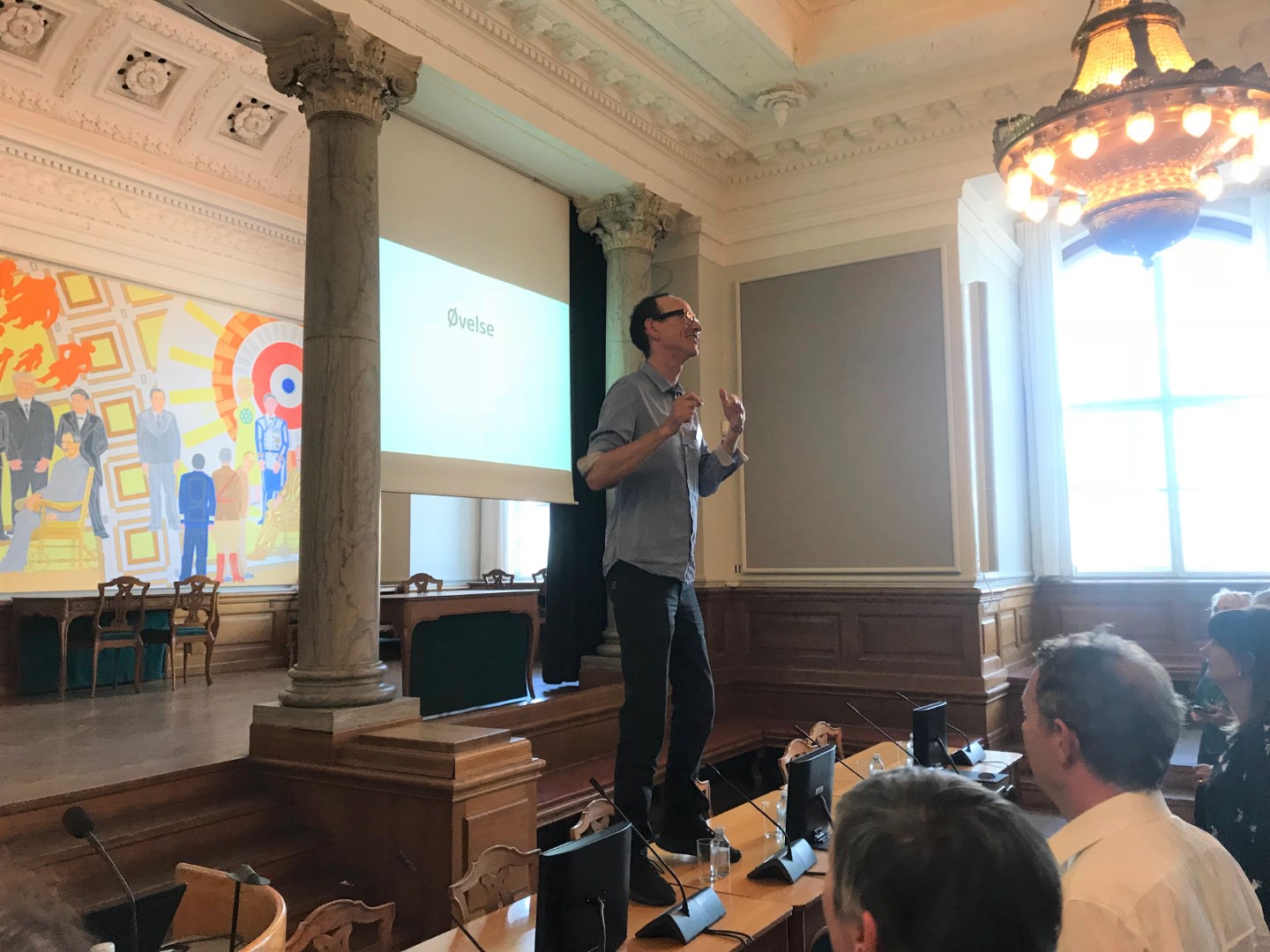
    I går deltog jeg i en høring i den fine fællessal på Christiansborg, der stillede spørgsmålet: “Hvordan kan pædagoguddannelsen bidrage til at ruste børn til en fremtid med robotter og kunstig intelligens?”. Høringen var arrangeret af gode legekammerater i IPA (International Play Association) Danmark, og placerede legen som det centrale omdrejningspunkt. Det er der nu noget umådeligt opløftende over.

    Der var oplæg ved Carsten Jessen, Kjeld Fredens, Helle Marie Skovbjerg og slutteligt Lars Geer Hammershøj, som jeg ikke vil gå direkte ind i. De var alle virkelig gode, faktisk, og pegede på hver deres måde på, hvorfor leg er afgørende for at kunne trives i verden, og hvorfor pædagoger må være “legens helte”., Anden halvdel bestod dels af et oplæg ved Gitte Kampp og Morten Henriksen (hvor vi legede og Morten kravlede op på bordet i fællessalen – points for ustyrlighed!), dels af et debatpanel med Stefan Hermann, Marlene Borst Hansen, Christine Antorini, Carsten Jessen og Elisa Bergmann.

    Det var altså på mange måder et inspirerende arrangement, men ikke helt uden komplikationer.

    Jeg vil prøve at samle lidt op på høringen med 13 pointer i tweet-form. Det er ikke noget referat, men blot mine helt subjektive refleksioner. De 13 punkter er sorteret semi-tilfældigt, men således at de bevæger sig fra det mere abstrakte mod det mere handlingsorienterede.

    1: Leg er en aktivitet, javist, men det er meget mere end det. Det er også en filosofi, en attitude, en livspraksis og et paradigme for hvordan vi kan og vil indrette os og leve sammen. Det er filtret ind i selve vores tilgang til livet og vores måde at være menneske på. Jeg – og flere af talerne – tror sågar på, at legende mennesker er bedre til at leve i en foranderlig, kompleks verden. Ja, faktisk er det for mig et dannelsesideal i sig selv.

    2. Legen er aldrig fri i nogen absolut forstand – og det er helt uproblematisk. Den står altid i en relation til det, der ligger uden for legen, den verden hvor legen udspiller sig. Det er jo ikke mindst her, der hentes inspiration og brændstof til legen, og leg er ofte en udforskning af, hvad der er muligt at gøre og tænke. I forlængelse heraf, så tror jeg ikke nogen med en solid legefaglighed vil modsætte sig pædagogisk reflekterede interventioner i børns leg – tværtimod. Det kan berige legen, hvis det gøres nænsomt og med sans for legens dynamik.

    3. Leg er mere komplekst end nogen af os kan begribe og vi må nødvendigvis nærme os fænomenet med ydmyghed og nysgerrighed. Der findes en ikke ubetydelig mængde legeforskning, både nationalt og internationalt, som mere end antyder dybden. Alligevel er der en tendens til at reducere legens kompleksitet, så det fremstår forfladiget og uden substans. Det skal vi holde op med.

    4. Leg er ikke blot komplekst, men også udtryk for en mangfoldighed, der afspejler menneskehedens uoverstigelige diversitet. Det gør det omsonst at søge én definition eller en måde at nærme sig legen på. Måske skal vi tværtimod, når vi laver arrangementer & projekter, insistere på, at et bredt repertoire af forskellige kreative, kunstneriske udtryksformer er repræsenteret? En udtryksmæssig, kreativ diversitetsforpligtelse, om man vil.

    5. Vi kører ofte i ring og lige lukt ind i blindgyder, når vi taler om leg, hovedsageligt fordi vi simpelthen ikke deler et nænsomt, respektfuldt og nuanceret sprog, der på overbevisende maner kan skildre legens mange nuancer og betydninger. Ord betyder alverden for vores fælles forståelse, der aldrig bliver tilstrækkeligt dyb, hvis sproget skøjter på overfladen.

    6. Apropos sprog: at sige “leg og læring ikke er hinandens modsætninger” er selvfølgelig rigtigt, men det er også uproduktivt og fastholder forestillingen om at de netop ER hinandens modsætninger – hvorfor ellers overhovedet splitte dem op? “Don’t think of an elephant” som lingvisten George Lakoff så fint siger det.

    7. Apropos-apropos sprog og modsætninger: teknologi, uanset om den er digital, analog eller et sted midt imellem, giver ikke i sig selv dårligere vilkår for legen. Som bl.a. Helle (Marie Skovbjerg) og Stine (Liv Johansen) har vist i deres forskning, så kan det meste – en pind, et dæk, en tablet eller et computerspil – blive et “legemedie” der kan bruges til at skabe en medrivende “legepraksis” og komme i den helt rigtige “legestemning”. Det kan godt være, at legen ser anderledes ud end vi er vant til, men stemningen kan sagtens være skøn alligevel.

    8. Leg er ikke sjovt. Eller jo, det kan leg jo selvfølgelig sagtens være, men det kan ikke ses som et definerende træk, det ville være alt for overfladisk. Leg er også dystert, konfliktfyldt, krævende, svært, kritisk, smertefuldt og frustrerende. Det legende menneske er altså ikke blot en lalleglad idiot, men også en nysgerrig, kritisk, modig, aktivt handlende, skabende og tænkende aktør med agens og intention.

    9. Leg gør os måske nok, som flere viste, mere kreative, men det er i mine øjne misforstået at se legen som et instrument til at fremme kreativiteten. Eller noget som helst andet, for den sags skyld. Det bedste vi kan gøre, hvis vi vil “have noget ud af legen”, det er at skabe gode vilkår for leg, at opdyrke en legende kultur, og så i øvrigt acceptere, at vi ikke kan forudsige de nøjagtige resultater.

    10. Vi har brug for at anerkende leg som en faglighed i sig selv. For nu at tage en definition fra sproget.dk, så kan man jo besidde “viden, forudsætninger og kompetencer” inden for leg & leg er et “fagligt el. videnskabeligt område el. felt” i sig selv. Også i den grad. Leg er et fænomen man kan studere, forske i & uddanne sig til at mestre, forstå, (be)gribe, reflektere over, sætte ord på, sanse, praktisere og skabe rum for – og den dedikation fortjener legen.

    11. Leg kræver praksis. Man kan ikke forstå leg uden at lege. Vi voksne har en tendens til at bruge hovedet, gå tænksomt til værks og dykke ned i teorien. Vil man noget med legen, sådan for alvor, så må man imidlertid udvikle en legepraksis, hvor refleksion og diskussion ganske vist spiller en rolle, men hvor det centrale aspekt er legen i sig selv.

    12.Ingen kan begribe eller gribe legen på egen hånd. Kampen for legen er for omfattende og vigtig til, at nogen skal tage den alene. Vi må opdyrke stærke, modige og nysgerrige legefællesskaber, hvor vi, dybt og oprigtigt, sætter pris på hinandens vidt forskellige tanker, erfaringer og perspektiver (og det er i al beskedenhed en væsentlig del af intentionen bag CounterPlay og legetænketanken).

    13. Leg er at risikere noget, at turde sætte sig selv og sine forestillinger på spil, at have mod til at vove sig ud i det ukendte, usikre og uforudsigelige. I legen er der altid en latent ustyrlighed, som man ikke kan eller skal forsøge at tøjle, men som man må kunne være i og omfavne. Hvem skal være legens forkæmpere og rollemodeller, hvis vi ikke tør risikere noget? Det er netop det, jeg foreslår med projektet “Legens Helte” om legemyndiggørelse for pædagoger og pædagogstuderende.

    Jeg slutter lige i den lidt mere selvoptagede ende af spektret, men kun fordi jeg jo faktisk mener, at vi har bidraget med nogle af de ting, der er behov for, hvis legen for alvor skal trives. Med legefestivalen CounterPlay har vi skabt et levende, internationalt legefællesskab, der tager legen og dens mangfoldighed alvorligt, som undersøger legen på tværs af samfundet, og som i den grad giver legen plads til at udfolde sig. Det er ikke (kun) forskning, det er ikke (kun) praksis, men det skaber rum til dialog, diskussion, refleksion og sansning på kryds og tværs i møder mellem forskellige mennesker og perspektiver. Festivalen viser, i sine bedste øjeblikke, hvordan legen er et mulighedsrum, hvor meget mere kan lade sig gøre. I næste uge har vi det andet “officielle” møde i vores relativt nystiftede legetænketank, som er vokset ud af CounterPlay, og som udvikler sig til en stærk, klog og nysgerrig alliance for legen på tværs af Danmark. Den forventer jeg mig meget af.

    Hvis vi skal tage det med sproget alvorligt (og det skal vi!), så tror jeg det er vigtigt at flere går på opdagelse i legen, reflekterer, danner sig indtryk, og bidrager med udtryk i den samtale, der hele tiden foregår – om det er tekst, video, lyd, billede, dans eller noget sjette, det er underordnet.

    Der er meget materiale at kaste sig over, og jeg forsøger selv løbende at formulere og undersøge argumenter her på siden:

    Legemanifest (præsenteret på Højskolernes årsmøde 2018)
    Det legende menneske som dannelsesideal
    The Player as Funambulist (“det legende menneske som linedanser)
    Struggling in a ROI society (efter oplæg på Spilbar på Filmskolen)

    Der er naturligvis også andre, klogere mennesker i det her lille land, der har skrevet vigtige ting – fx kan jeg anbefale disse, der er udkommet bare sådan inden for de senere år:

    Helle Marie Skovbjerg: Perspektiver på Leg
    Herdis Toft og Dion Rüsselbæk Hansen: Ustyrlighedens paradoks
    Miguel Sicart: Play Matters
    Stine Liv Johansen: Børns liv og leg med medier

    [/et_pb_text][/et_pb_column][/et_pb_row][/et_pb_section]
  • Celebrating Play Professors

    Celebrating Play Professors

    [et_pb_section bb_built=”1″][et_pb_row][et_pb_column type=”4_4″][et_pb_text admin_label=”Intro” _builder_version=”3.1.1″]

    I fundamentally believe that the world needs more play. It’s hardly possible to live a good, fulfilling life without play, and it’s our big dream to cultivate play communities that, in turn, can contribute to more playful societies.

    To achieve these goals, we have to understand play better. Oh, the amount of times I’ve met the assumption that it’s “just play” and that, apparently, there’s not much to understand, really. It mirrors some widespread, underlying idea that play is a simple, trivial matter that doesn’t require serious intellectual effort.

    We all know what play feels like”, right?

    It’s baffling to me, since play is one of the most complex phenomena I can think of. It’s inherently tied to human nature, a sincere expression of our shared humanity, and the diversity of play must thus be assumed to mirror the diversity of humankind.

    Play is a common human experience that enables participants to explore who they are through their relationship to the world, to other people, and to the materials they have access to. To be in play is to explore what it means to be human (Helle Marie Skovbjerg)

    It’s downright ludicrous to believe it won’t take a massive, collective effort to ever get a better grasp of something like that.

    I remember a talk with the English learning theorist Peter Jarvis on his “big” project – “Towards a Comprehensive Theory of Human Learning”. While it was and is an ambitious project, he underlined that “it can only ever be towards”, stressing that we’ll never fully understand human learning. It’s simply too complex, dynamic and diverse for any one person to fully fathom.

    The same, I’d argue, goes for play. The best we can do is to stay curious, keep asking questions, talking, thinking, playing. We’ll learn more, understand play better, but “full comprehension” is impossible. That’s ok.

    Anyway, there’s a point to all this, I promise.


    [/et_pb_text][et_pb_image admin_label=”Helle_photo” _builder_version=”3.1.1″ src=”http://www.counterplay.org/wp-content/uploads/2018/05/Inauguration-35-Large.jpg” /][et_pb_text admin_label=”Helle” _builder_version=”3.1.1″]

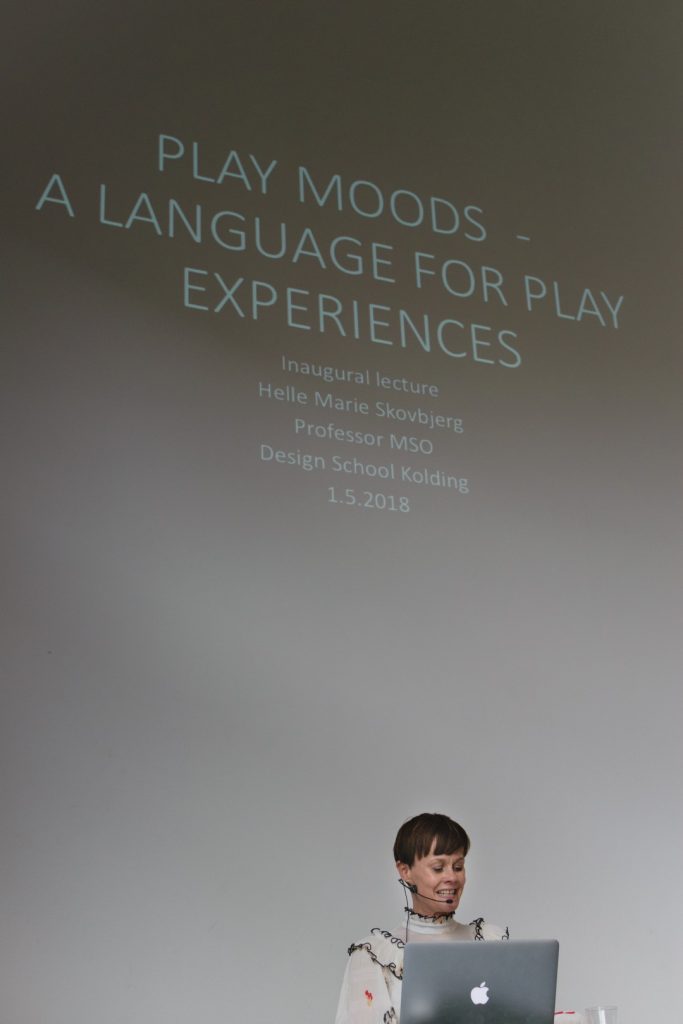
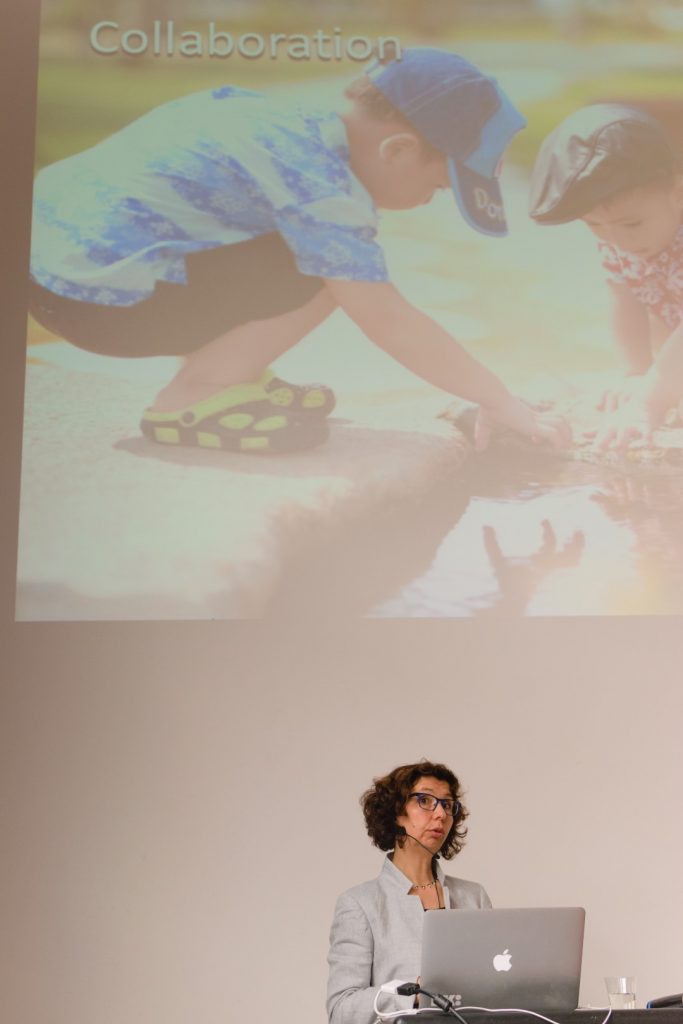
    Last week, May 1st, my good friend and “play ally”, Helle Marie Skovbjerg, along with her Dutch colleague, Tilde Bekker, gave their inaugural lectures at Design School Kolding. Both of them were to be professors of play, which is a beautiful declaration of dedication to the intellectual pursuit of understanding play.

    They both gave incredibly engaging and inspiring speeches, more than worthy of their new titles (read more in this booklet, where I also got the following quotes from):

    Helle began with her “mood perspective”, which she’s been working on for several years (see this):

    “As a way to grasp the poetics of play as a human experience, today I would like to present what I term the ‘mood perspective’. Comprehending and formulating language that fits the experience of play may lead to new types of design decisions”

    “The poetics of play”. Ahh. It’s somehow soothing and uplifting to have that as a starting point for exploring the unpredictable nature of play:

    “Mood is a non-specific way of being in which one is prepared to make sense of something without knowing exactly what it is. In relation to play, we can understand this open attitude as a playful way of being. We are prepared for something to provide us with a particular meaning, without yet knowing precisely what it is. Our attitude is filled with hope and the expectation of something meaningful”

    She went on to describe four types of play moods:

    • Sliding for devotion
    • Shifting for intensity
    • Displaying for tension
    • Exceeding for euphoria

    When I’m in the mood for it (sorry), the latter is my favorite:

    “And the crazier it gets, the better it is […] The mood related to this practice is called euphoria, and is characterized by an intense expectation of silliness. You are ready to do silly things, and you expect others to not only accept those silly things, but to come up with even sillier things. […] The players have to maintain real openness toward moving beyond earlier practices in order to continue exceeding. Whereas devotion is quiet and safe, euphoria is about surprise and uncertainty.”

    The beauty of this particular approach is that it aims to understand the “being in play”, not any particular outcome of play. In Helle’s work, play is assumed to be inherently valuable. Just because.

    She always ties her theoretical work closely to the actual practice of play, stating that “we must become knowledgeable practitioners of play, make sense of the moods of practices, and take part in them. To understand play, we must be close to the unfolding, sharing and emergence of play.”

    I have only recently realized that what Helle captures with her idea of a “ludotorium” is not far from what we’ve been hoping to create with CounterPlay: a space for examining and taking part in a diverse range of play practices, deploying various lenses for a somewhat kaleidoscopic view:

    “It is possible to understand the idea of the ludotorium as a design exploration about play that favours and explores unsettled and imagined possibilities that make it possible to draw a productive line of connection between participation, ethnography and design. The underlying assumption in this scenario is that it is crucial to participate in play in order to understand play, with a strong emphasis on the relationship between doing and knowing. It is through experience with the practices of play that it is possible to understand what play is.”


    [/et_pb_text][et_pb_image admin_label=”Tilde – photo” _builder_version=”3.1.1″ src=”http://www.counterplay.org/wp-content/uploads/2018/05/Inauguration-28-Large.jpg” /][et_pb_text admin_label=”Tilde” _builder_version=”3.1.1″]

    Tilde then went on to talk about “designing for open-ended play, which I find to be a compelling way to insist on the inherent unpredictability of play:

    “designing for open-endedness could be a very powerful key feature, because it supports a wide range of important qualities of play. It can support creativity, as children can develop their own game goals and rules; it can support social interaction, as children have to negotiate how they want to play, and, if designed well, it can support emergence over time, because children can keep on adjusting how they create meaning and games as they play”


    It’s not just about children, of course, but this whole idea of designing with “empty spaces” for the players to fill is essential for allowing play to thrive. No matter if you’re designing playgrounds, changing organisational culture or developing a play festival, it needs to be open-ended. If it’s not, if the materials, the rules, the potential outcome have all been determined in advance, it ceases to be play.

    She also mentioned her work with “ the Lenses of Play card tool” , which I find quite useful:

    We have worked on the development of a hands-on design tool that presents different perspectives on play and emergence and that can support designers in creating interactive designs for play.

    • open-ended play
    • playful experiences
    • forms of play
    • stages of play
    • emergence

    Finally, I appreciate her argument that the “properties of play” “are related to each other in a sort of dynamic spider web of playful properties of design”:

    “ The properties are related to each other, and just like in a web, if you pull somewhere and change a design decision about one property, you probably also have to adjust another design decision related to another property”

    Again, play is such a complex phenomenon and the many different properties are related and intertwined in intricate ways, changing one will inevitably change the others and their mutual relationship to each other.

    [/et_pb_text][et_pb_image admin_label=”HelleTilde” _builder_version=”3.1.1″ src=”http://www.counterplay.org/wp-content/uploads/2018/05/Inauguration-30-Large.jpg” /][et_pb_text admin_label=”Play intermezzo” _builder_version=”3.1.1″]

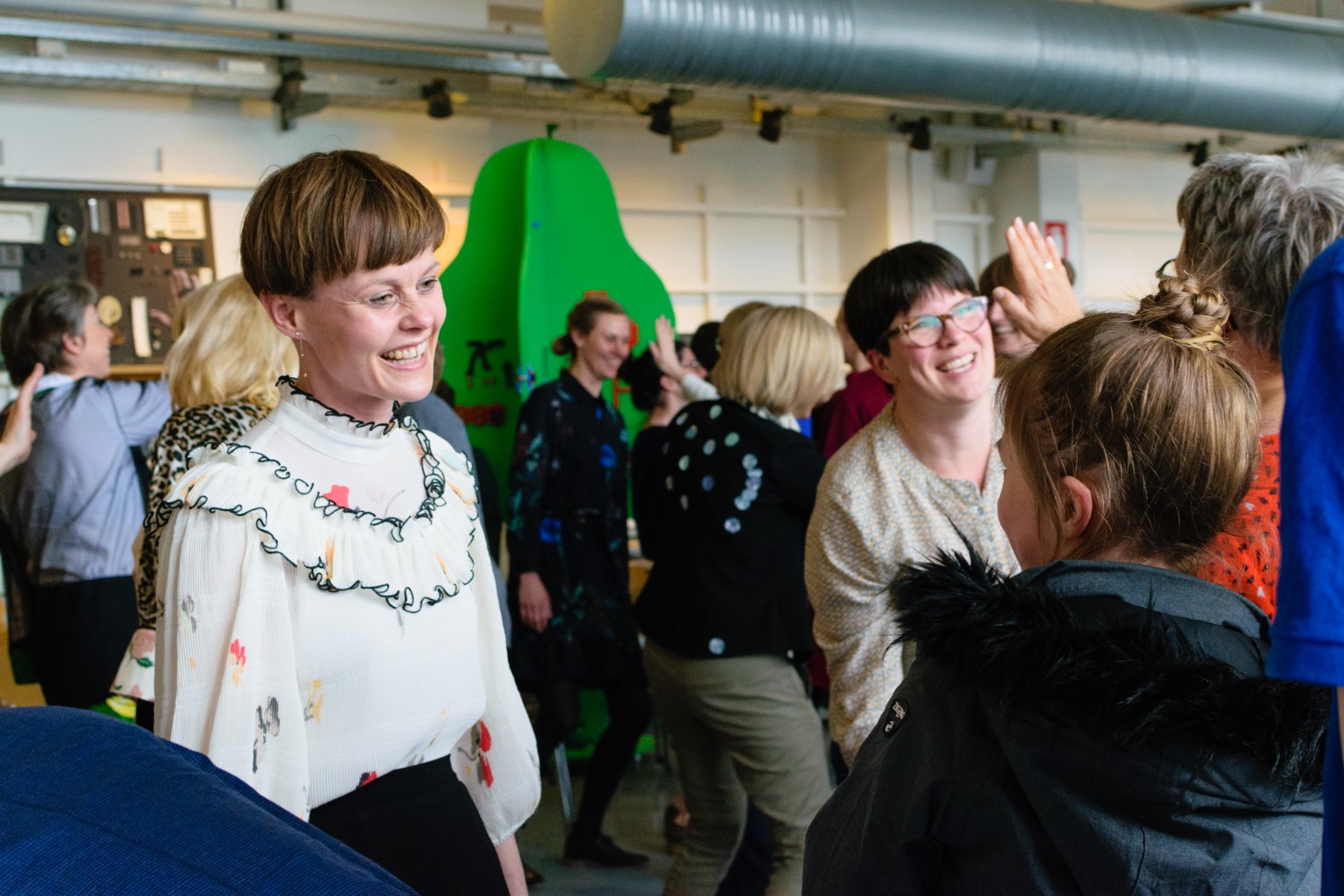
    I had the immense pleasure of contributing to the playful atmosphere with a “play intermezzo” between the two great speeches. Helle had shown me tremendous (too much?) confidence, giving me free reins, only asking for play that would get a little silly and involve the body. “You can’t have an inauguration for play professors without play, can you? Wouldn’t that be too boring?”.

    Well, maybe, but in any case, I was way to honored by the request to do anything but jump with joy. How often do you get to facilitate play at the inauguration of not one, but TWO play professors? It was certainly a first for me, and it was not until later I realized that this was quite a daunting task, making me quite nervous about the whole endeavour.

    Will people accept my invitations to play? Will my suggestions be too banal or silly? Will I do something inappropriate (it’s a fine line, you know)?

    I needn’t have worried, of course, since the crowd showing up for a celebration of play professors were eager to play. I mean: really eager! To embrace the sillines, I had framed this session as a “play tasting menu”, trying out small “dishes” of different ways of playing.

    I had chosen to pay tribute to a couple of great players. First I drew on Augusto Boal by playing “Colombian Hypnosis” to warm up and remember how even the smallest act of play is always tied to bigger questions about participation, agency, citizenship and democracy (read more in “Games for actors and non actors”).


    [/et_pb_text][et_pb_image admin_label=”Tilde_hypnosis” _builder_version=”3.1.1″ src=”http://www.counterplay.org/wp-content/uploads/2018/05/Inauguration-7-Large.jpg” /][et_pb_text admin_label=”Play intermezzo 2″ _builder_version=”3.1.1″]

    The second activity I borrowed from my friend Bernie Dekoven, who passed away recently (read my tribute to Bernie). He literally spent his entire life playing, insisting on the importance of walking “the playful path” and cultivating play communities everywhere this path took him. The game I chose (from his huge catalog over at deepfun.com) was “Prui”, both joyfully silly and a brilliant example of the trust we show each other when we truly play.

    [/et_pb_text][et_pb_image admin_label=”Stine” _builder_version=”3.1.1″ src=”http://www.counterplay.org/wp-content/uploads/2018/05/Inauguration-19-Large.jpg” /][et_pb_text admin_label=”Play intermezzo 3″ _builder_version=”3.1.1″]

    The last activity was inspired by my friend Lynn Parker, who’s drawing small doodles with chalk everywhere she goes, sharing with #oneplaything on Twitter. The lesson here was that it’s the play community that can only ever really change the conditions for play in society, and we need to invite more people to join us on this journey. By playing in public, the play community and the play opportunities suddenly become visible.

    People jumped right in, started doodling, writing and playing – inside and outside. Safe to say there were many traces of play afterwards (some would say it was a mess, but a joyful mess, if so).

    It was a wonderful day and I look forward to following the play professor(s) on new adventures!

    [/et_pb_text][et_pb_image _builder_version=”3.1.1″ src=”http://www.counterplay.org/wp-content/uploads/2018/05/Inauguration-24-Large.jpg” /][/et_pb_column][/et_pb_row][/et_pb_section]
  • På sporet af et Legemanifest

    På sporet af et Legemanifest

    [et_pb_section bb_built=”1″][et_pb_row][et_pb_column type=”4_4″][et_pb_text _builder_version=”3.1.1″]

    Jeg havde tidligere i dag fornøjelsen af at holde et kort oplæg efterfulgt af en god samtale om leg. Det føles altid så umådeligt privilegeret, sådan bare at kunne tale om leg, og jeg er meget taknemmelig for de muligheder, der opstår. Det foregik denne gang på Højskolernes Årsmøde, der blev afholdt på Egmont Højskolen i Hou.

    Jeg var blevet bedt om at tale legens sag, være begejstret for leg og vise hvorfor leg er vigtigt. Det falder mig efterhånden ret naturligt. Egentlig var titlen på mit oplæg “10 gode grunde til at være et legende menneske”, men jeg havde lyst til at udfordre den lidt, og fokuserede i stedet for på 10 ting man skal være god til for at blive et legende menneske.

    Det opleves for mig stadig mere vigtigt, at vi taler om, og skaber både sprog og forståelse for, hvordan vi kommer ind i legen, ikke hvad der kommer ud af legen. Hvad skal vi kunne, for at blive gode legere og legende mennesker?

    Her får I mine slides med kommentarer:

    [/et_pb_text][et_pb_button _builder_version=”3.1.1″ button_text=”Hent præsentation som pdf” button_url=”http://counterplay.org/files/Legemanifest.pdf” /][et_pb_image admin_label=”Slide 2″ _builder_version=”3.1.1″ src=”http://www.counterplay.org/wp-content/uploads/2018/05/Slide2.jpg” /][et_pb_text admin_label=”Tekst2″ _builder_version=”3.1.1″]

    Efter ti år som selvstændig er det stadig ikke lykkedes mig at finde en titel, der føles rigtig. Jeg er måske nok i en vis forstand konsulent, men det lyder så trist og siger ingenting. Efter flere mislykkede forsøg på alternative titler forsøger jeg mig nu med legeaktivist – uden helt at vide, præcis hvad det dækker over. Jeg ved dog, at jeg vil gøre rigtig, rigtig meget for at få legen til at trives, og jeg har nok egentlig en lidt aktivistisk tilgang til tingene. Ja, den holder jeg lige fast i.

    [/et_pb_text][et_pb_image admin_label=”Slide 3″ _builder_version=”3.1.1″ src=”http://www.counterplay.org/wp-content/uploads/2018/05/Slide3.jpg” /][et_pb_text admin_label=”Tekst3″ _builder_version=”3.1.1″]

    Jeg har jo startet CounterPlay festivalen for at skabe et mangfoldigt, internationalt legefællesskab, der sammen kan udforske og fremme legen. Efter fire år har festivalen udviklet sig meget, og har uden tvivl bidraget til både legeforskning og legepraksis.

    Senere har jeg taget initiativ til en national legetænketank, der skal blive en stærk, klog og nysgerrig alliance for legen.

    Mest af alt er jeg optaget af at opdyrke legefællesskaber, og invitere flere mennesker med, der kan se legen fra andre perspektiver. Jeg er altid afsøgende og undrende på vej i nye retninger, hvor jeg fornemmer legen kan slå rod.

    [/et_pb_text][et_pb_image admin_label=”Slide4″ _builder_version=”3.1.1″ src=”http://www.counterplay.org/wp-content/uploads/2018/05/Slide4.jpg” /][et_pb_text admin_label=”Tekst4″ _builder_version=”3.1.1″]

    Fordi leg er livsglæde, og målet – for mig – er at lege os til at være mere legende, så har legen jo en enorm værdi i sig selv.

    De ti pointer i mit lille legemanifest sigter derfor ikke på, hvad der kan komme ud af legen, men hvordan vi kommer ind i legen, hvordan vi kan give os hen til den, og hvad der skal til, for at vi kan blive mere legende mennesker i et mere legende samfund

    [/et_pb_text][et_pb_image admin_label=”Slide5″ _builder_version=”3.1.1″ src=”http://www.counterplay.org/wp-content/uploads/2018/05/Slide5.jpg” /][et_pb_text admin_label=”Tekst5″ _builder_version=”3.1.1″]

    Legen minder os netop om, at noget kan have værdi i sig selv. Det har vi tilsyneladende næsten glemt i vores stræben efter effektivitet og return-on-investment, så vi skal øve os på at være i det tilsyneladende formålsløse – fordi legen er formålet.

    [/et_pb_text][et_pb_image admin_label=”Slide6″ _builder_version=”3.1.1″ src=”http://www.counterplay.org/wp-content/uploads/2018/05/Slide6.jpg” /][et_pb_text admin_label=”Tekst6″ _builder_version=”3.1.1″]

    Legens vidunderlige energi kommer i første omgang fra, at nogen – mindst én, gerne flere – siger “ja” til legen, omfavner legens åbenhed, og accepterer, at meget mere med ét kan lade sig gøre.

    [/et_pb_text][et_pb_image admin_label=”Slide7″ _builder_version=”3.1.1″ src=”http://www.counterplay.org/wp-content/uploads/2018/05/Slide7.jpg” /][et_pb_text admin_label=”Tekst7″ _builder_version=”3.1.1″]

    I legen har vi alle mulighed for at blive aktive deltagere med agens i dynamiske fællesskaber, hvor vi hver især har en vis indflydelse på legen, der først bliver rigtig god, når vi hver især bidrager aktivt til de forhandlinger, der er centrale for legen.

    [/et_pb_text][et_pb_image admin_label=”Slide8″ _builder_version=”3.1.1″ src=”http://www.counterplay.org/wp-content/uploads/2018/05/Slide8.jpg” /][et_pb_text admin_label=”Tekst8″ _builder_version=”3.1.1″]

    Trods ihærdige forsøg kan ingen entydigt sige hvad leg er, hvordan “rigtig” leg ser ud eller føles. I stedet må vi nænsomt omfavne legens mangfoldighed, og udvikle en forståelse og et repertoire, der afspejler den nærmest ubegribelige diversitet.

    [/et_pb_text][et_pb_image admin_label=”Slide9″ _builder_version=”3.1.1″ src=”http://www.counterplay.org/wp-content/uploads/2018/05/Slide9.jpg” /][et_pb_text admin_label=”Tekst9″ _builder_version=”3.1.1″]

    Legen er aldrig helt afsondret fra resten af verden, men er derimod næsten altid udtryk for en nysgerrig, vilter afsøgning af, hvad der er muligt; hvordan verden, reglerne, konventionerne og vores måde at være sammen på måske kunne se anderledes ud.

    Her udfordrer vi fx reglerne for det offentlige rum i Leeds – bevæbnet med kridt (læs mere om CounterPlay Leeds).

    [/et_pb_text][et_pb_image admin_label=”Slide10″ _builder_version=”3.1.1″ src=”http://www.counterplay.org/wp-content/uploads/2018/05/Slide10.jpg” /][et_pb_text admin_label=”Tekst10″ _builder_version=”3.1.1″]

    Leg kræver mod til at vove sig ud i det ukendte, det usikre og uforudsigelige, hvor man sætter sig selv på spil, risikerer at blotte sig, blive til grin og begå noget, der normalt ville opfattes som fejltrin. Man må have mod til at stole på de andre og på legen i sig selv.

    Her er det fx min gode ven Stine, der tager mod til sig og leger med lukkede øjne – fordi hun stoler på mig, fællesskabet og legen. Det er virkelig modigt!

    [/et_pb_text][et_pb_image admin_label=”Slide11″ _builder_version=”3.1.1″ src=”http://www.counterplay.org/wp-content/uploads/2018/05/Slide11.jpg” /][et_pb_text admin_label=”Tekst11″ _builder_version=”3.1.1″]

    Jo bedre vi bliver til at forstå hinanden, at lege os ind i hinandens perspektiver, se verden med andre øjne, jo bedre kan vi lege sammen. Det fordrer at vi vil det fælles og at vi generøst strækker os for at nå de andre. I legen skal vi ville den anden det godt.

    [/et_pb_text][et_pb_image admin_label=”Slide12″ _builder_version=”3.1.1″ src=”http://www.counterplay.org/wp-content/uploads/2018/05/Slide12.jpg” /][et_pb_text admin_label=”Tekst12″ _builder_version=”3.1.1″]

    Når vi for alvor giver os hen til legen viser vi et nærvær, et inderligt, oprigtigt nærvær, der bringer os tættere på øjeblikket og hinanden. Her lader vi facaderne falde, viser mere af det, vi normalt gemmer væk, og bruger færre kræfter på at præstere og imponere. Vi er der bare. Sammen.

    [/et_pb_text][et_pb_image admin_label=”Slide13″ _builder_version=”3.1.1″ src=”http://www.counterplay.org/wp-content/uploads/2018/05/Slide13.jpg” /][et_pb_text admin_label=”Tekst13″ _builder_version=”3.1.1″]

    Fantasien er vores “indre legeplads”, og det er fantasien, der er legens bedste brændstof. Når vi leger skaber vi nye verdener, hvor legen kan udfolde sig og trives. Jo bedre vores individuelle og kollektive fantasi, jo mere medrivende bliver legen.

    Og man kan fx øve sig ved at tage sine tøjdyr til til Salar de Uyuni – hvis man altså gerne vil fremstå ret mærkelig og excentrisk (man kan bilde sig selv og andre ind, at man har i sinde at skrive en børnbog med billederne af dyrene).

    [/et_pb_text][et_pb_image admin_label=”Slide14″ _builder_version=”3.1.1″ src=”http://www.counterplay.org/wp-content/uploads/2018/05/Slide14.jpg” /][et_pb_text admin_label=”Tekst14″ _builder_version=”3.1.1″]

    Uanset hvordan vi leger, om det er inde i vores hoveder eller ude i verden, roligt og afdæmpet eller vildt og larmende, så har legen altid en latent ustyrlighed, der pludselig kan sende os i nye og uforudsete retninger. Legen lader sig aldrig styre helt, hverken af kedelige voksne, regler eller læringsmål.

    [/et_pb_text][et_pb_image admin_label=”Slide15″ _builder_version=”3.1.1″ src=”http://www.counterplay.org/wp-content/uploads/2018/05/Slide15.jpg” /][et_pb_text admin_label=”Tekst15″ _builder_version=”3.1.1″]

    Hvis vi skal lege godt med hinanden skal vi turde række hånden ud og håbe at nogen tager imod den, at nogen vil os og legen det godt.

    Leg kræver håb, men leg giver også håb om, at vi kan skabe nye muligheder sammen.

    Det gælder også, når livet er svært, skulle jeg hilse og sige. Da Camilla, min kæreste, var indlagt på Rigshospitalet for at blive behandlet for hendes sclerose, var det i høj grad legen og den legende måde at være i det, der gav os håb. Noget så simpelt som en high-five efter vellykket genindsættelse af stamceller, det skaber en lidt anden stemning, hvor det er lidt nemmere at se og mærke håbet.

    [/et_pb_text][/et_pb_column][/et_pb_row][/et_pb_section]
  • CounterPlay Manifesto

    CounterPlay Manifesto

    CounterPlay is founded on a firm belief that the mere existence of play will make our lives better. We wish to contribute to the ongoing exploration of play in order to allow everyone to live more playful lives in playful societies. We insist that any such attempt must build on a deep and sincere respect for play, where we strive to fully embrace and appreciate the inherent and beautiful ambiguity of play with all its many possible meanings and perspectives.

    Hence, this manifesto is not an attempt to capture the one true meaning of play, because there is no such truth. However, we do maintain that some ways of perceiving play are more beneficial and meaningful than others. While retaining a fundamental openness, curiosity and the capacity to always learn more about the nature of play, we wish to put a stake in the ground and make our position clearly visible.

    Principles of Play:

    Purpose

    Play is never primarily a means to an end, but the end itself. To play is not to pursue a fixed outcome, but to simply enjoy and extend the current moment as far into the future as possible. We fully acknowledge that play has many, many extremely valuable side-effects, but they are always secondary to play itself.

    Joy

    We play, more than anything, in order to experience the immense joy it brings, to see the smiles, hear the laughter and sense the deep satisfaction that it instills in us. In a society obsessed with measurable outcomes, it can be challenging, even provocative, to insist that something as seemingly frivolous as play has immeasurable inherent value. When you’ve seen play turn on the light in people’s eyes, how can you need any other purpose than that?

    Diversity

    Play is a beautifully diverse, wild phenomenon that mirror the diversity of humankind and thus stubbornly resists our attempts to capture it, transcending our carefully prepared categories and definitions. Play can come in any shape or size, and there is no right or wrong way to play. To embrace and respect play is to insist on this diversity, and to maintain the necessary curiosity to keep exploring the many meanings of play.

    Openness

    When we really get into play, we drastically expand our openness towards the world, the people we interact with and the scope of possible actions. We don’t hide from the world when we play, but rather engage with it and reinterpret it to catapult the play experience further ahead.

    Sincerity

    While play invites us to experiment with our established roles and identities, it also encourages us to fully embrace our true and most playful self. We feel confident enough to come out of hiding, to shed the usual facade and be present in the moment.

    Curiosity

    As a consequence of the openness cultivated by play, we immediately increase our innate desire to explore and learn about our surroundings. We want to know more, see more, try more, be more and we are much less constrained in our pursuit, sometimes following our vibrant curiosity in surprising directions.

    Imagination

    In play, we shed the usual restrictions put on our imagination, we refuse “business as usual” and we supercharge our capacity to conjure up mental images of things and ideas that are not yet part of reality. Our imagination becomes a powerful catalyst of play, as it creates alternative worlds for us to explore and play with.

    Courage

    To step into play is to accept risk and unpredictability, and to present yourself to the world without the usual facade. This can be quite daunting and sometimes require all the courage you can muster, but in play, we are no longer limited by our otherwise prevalent fear of failing, as the consequences of failure can be renegotiated and have a completely different meaning.

    Connection

    Anyone can play with anyone, regardless of age and position, and in play, we transcend our many differences to reach common ground, where we can truly see eye to eye. Through these connections, communities of play emerge, and as we play with more people, the community is consolidated and grows.

    Empathy

    The deep human connections are only possible because play is also an exercise in empathy, where we can see the world through the eyes of the other. Setting aside our immediate needs, we become more dedicated to reaching a common understanding, so we can play in the world together.

    Trust

    Opening up to play makes you vulnerable, as To play with someone is to trust them, to trust that their intentions are sincere, to trust that they will reach out to you and that they will respect your approach.

    Agency

    Play bestows upon us a remarkable agency, the capacity to actively participate, to shape the course of play and, in turn, to change the world. Play always holds the potential to challenge existing hierarchies and power structures, making it a thoroughly political affair.

    Negotiation

    To play with others is to enter into a dynamic, unpredictable process of negotiation, a shared act of meaning-making and exploration. Together, we determine what the play can become, and we pay earnest attention to the other players, observing and listening to their actions and decisions.

    Freedom

    Play can take place anywhere, at any time, and we can play with anything and anyone. We all have the power to turn a space into a play space and to challenge rules and expectations. Play is a celebration of our freedom to act, and even to do so without a clearly defined purpose.

    Unruliness

    Players follow their instincts, their emboldened curiosity, and care less about the common norms and expectations. This can sometimes lead to play that is wild, messy, risky, full of conflicts and impossible to control or predict.

    Transformation

    Play is so intricately tied to our humanity, reaching such inner depths, that getting engaged in any act of play will inevitably change who we are. Play is transformational and has an intense impact on our path through life.

    Generosity

    Play is not primarily about competing or winning, but about keeping the play alive and everyone playing takes upon them part of the responsibility. This brings to the fore a certain kind of generosity, where we care less about our personal needs and more about contributing to the shared experience. We stretch a little bit more, take a few additional steps towards the other, trying to do and be a little bit better for the greater good of play.

    Hope

    Because play allows us to see the world differently, to imagine how there are always another way, play gives us hope, even in times of tremendous hardship. Any such sense of hope is amplified by realising that we are no longer alone, that we potentially belong to a vibrant play community, and that together, we can create magnificent things.

    Love

    All the other traits of play comes together in a show of our emotional dedication. To play is to express and nurture a strong affection – for the people playing, for the freedom to play and for life itself. Play is, in essence, a manifestation of love.

    Dimensions of Play:

    Our work and this manifesto relates to three connected dimensions of play:

    Play can be seen as a more or less structured activity you engage in for any given period of time, alone or with other people. At some point, the activity ends, you step out of play and back into the world in which it took place. Play can also mutate into something less tangible, better understood as an attitude and approach to life and the world. This is similar to what we call “playfulness”. Finally, play can inform new images or models to inspire the way we organise everything from workplaces and organisations to cities and societies. If you look at our “principles of play” on the following pages, you may also see the contours of this, where play becomes a paradigm of its own.

    Play as an activity is usually the first and most concrete step you can take to turn your life in a more playful direction. To develop a playful attitude and pursue play as paradigm, you must dare to play, for it is only through the act of playing that we can hope to become (more) playful in our everyday lives and only deeply playful people can create a playful society.

    Call to Play:

    This manifesto describes the way we at CounterPlay see and frame play. We are on a long-term voyage of discovery, exploring the diverse nature of play to better understand it and, in turn, better support the transition to a more playful society.

    More than that, we also see the entirety of this manifesto as a “call to play”, an invitation to take action and choose a more playful direction. At the heart of our work lies the hope that we can help more people embrace their inherent desire to play and to be the playful person we were all born to be. We can’t teach people the right way to play, but we can provide a wide range of invitations and the encouragement to pursue play in your life.

    We’re all too painfully aware that many people are indifferent towards play. It’s not for them, they tell us. They don’t have time for these silly, frivolous matters. Life is short, there’s no time to waste, and play is often thought to be just that: a waste of time. While that’s not exactly wrong, it is a deeply meaningful way to waste time; “Time you enjoy wasting is not wasted time”.

    When you dig a little deeper, we usually see that the resistance is mostly the kind of facade we all learn to put between us and the world, substituting our vulnerability with something resembling certainty and confidence. This makes us able to pretend that play is something you outgrow, a phenomenon strictly limited to childhood, even when doing so poses a risk to our well-being.

    Whatever the reason for avoiding play, it is no easy task to change the course if you feel like it’s a journey to be taken in solitude. While playfulness is a kind of “true north”, the direction we’d instinctively pursue, the state in which we feel at home, it’s not a journey we should embark upon alone. It’s a ludicrous thought, really, that the responsibility to live playfully lies on the shoulders of any one individual when we live in a society that effectively resists play.

    What we need is a play community. Well, many play communities, actually. Cultivating a diverse play community where people are actively participating to explore and spread play is probably our best bet break down the barriers we face as individuals. When we know for certain that we are not alone and that other people feel the same urge to be playful, then we can more easily muster the courage necessary to challenge the non-playful structures around us.

    Let’s reach out to each other, and do what play does best; let’s connect deeply, let’s see across barriers and differences, and let’s step into each other’s lives to join forces in the movement towards a more playful world.